Europe's Moon lander engine holds steady from half to full power
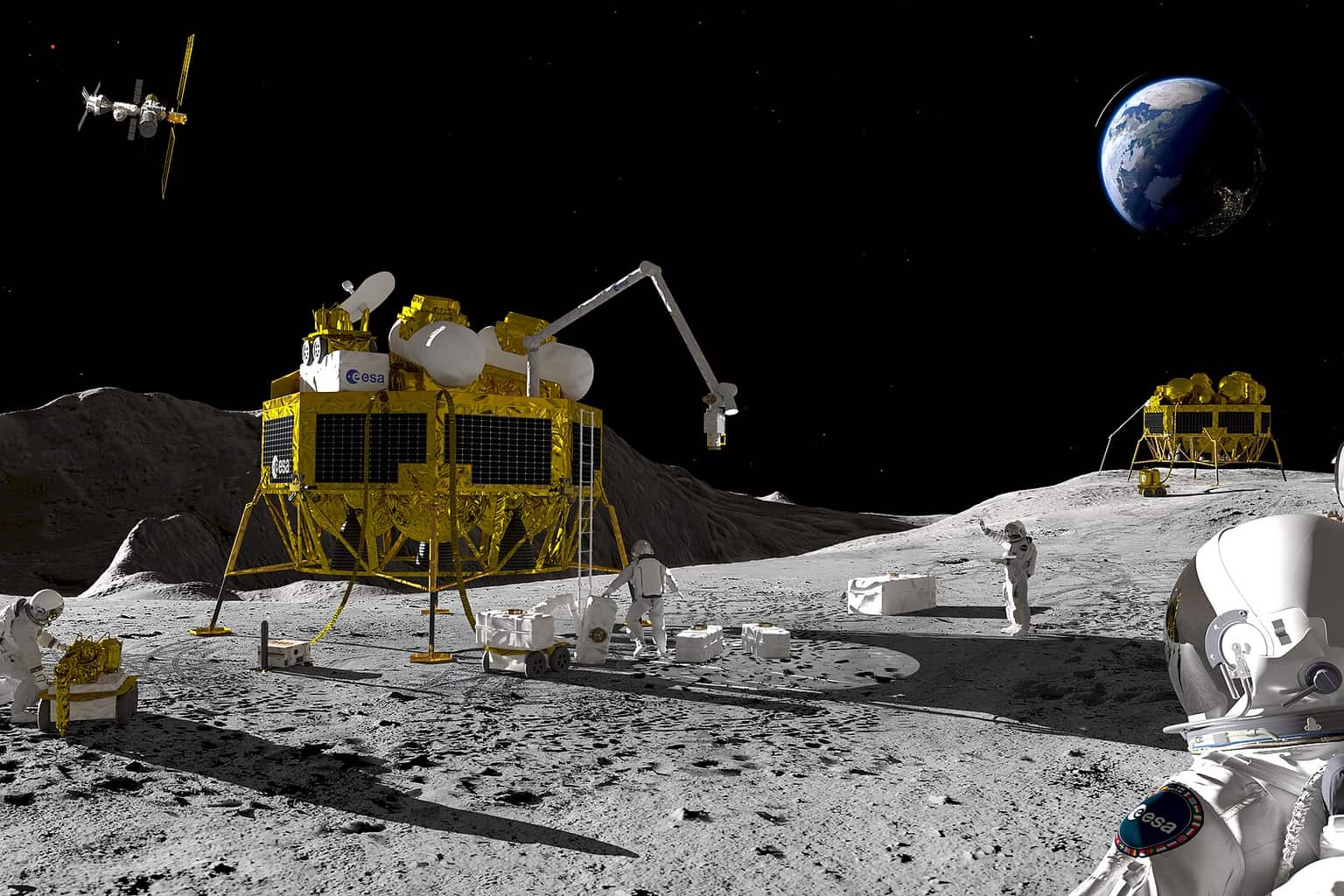
At Nammo UK's site at Westcott Venture Park in Buckinghamshire, a prototype rocket engine has burned steadily across a 50% to 100% range of its power. For Europe's first dedicated Moon lander, that steadiness is the whole job: the engine must hold a precise push while the spacecraft hovers, avoids surface hazards and sets down.
The lander is Argonaut, led by Thales Alenia Space for the European Space Agency (ESA). It is designed to deliver up to 1,500 kg of cargo, scientific instruments, power systems and communications equipment to the Moon, in support of NASA's Artemis campaign, with landings planned near the lunar south pole. Its descent stage will cluster three of these engines. Ludovic Duvet, ESA's Argonaut team leader, calls the engine a key technology step for Europe, one that could also serve later lunar return missions and deep-space vehicles. The aim is autonomous access to the lunar surface by the end of the decade, with the first mission around 2030.
Throttling means changing how hard an engine pushes, moment to moment, and landing has always depended on it. Apollo's lunar module needed the same thing: a simple on-off engine would have been far too crude to make a soft landing possible. Apollo's descent engine could throttle, but it was fed by pressurized tanks, with no pumps at all, and that design gave less fine control over the flow.
RELIANCE changes the plumbing. Instead of pushing propellants out with gas pressure held in heavy tanks, electric pumps drive them into the chamber. That lets the engine's digital controller regulate the flow more finely, while tank pressures stay lower and the tanks themselves are lighter. The two propellants ignite on contact with each other, so the engine needs no separate igniter. The design builds on a family of engines that has already flown, including one that pushed NASA's Juno probe into orbit around Jupiter and another that powered Firefly Aerospace's Blue Ghost on its commercial landing on the Moon in March 2025. Robert Selby, vice president of Nammo Space, calls the test campaign a major development milestone for both the programme and European lunar exploration.
Several things remain open. Reports describe the test unit as a prototype, a breadboard or a brassboard, and none calls it a flight engine. Nammo has not published how long the engine can burn. The Argonaut preliminary design review is now complete, and the company is moving to flight qualification over the next three years, which means proving the hardware for launch.
Engineers are running more hot-fire tests to validate the engine's control logic, alongside component trials and a Risk Reduction Model to refine how the engine is assembled. An Engineering Model build and test campaign is scheduled for 2027, ahead of the first Argonaut mission, which is planned to launch aboard Ariane 6, a European rocket, around 2030.
The next marker on the list is that 2027 build. The first landing attempt follows around 2030.
Sources — read the originals(Paris time)
Pages consulted while writing
Read next
Comments
Loading the thread…
Sign in to leave a comment. Sign in