Breast tomosynthesis catches 83.5% of invasive cancers in screening
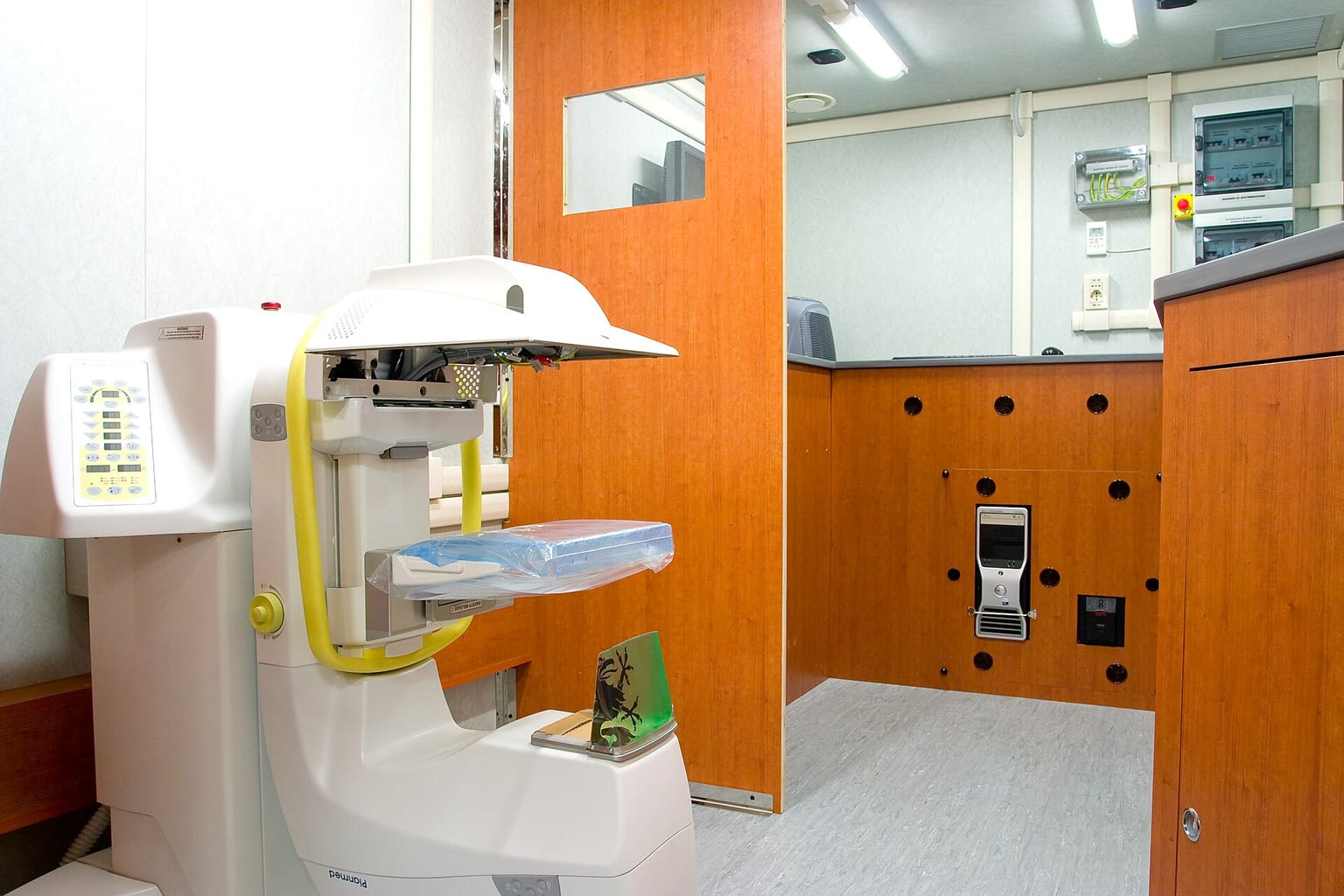
Digital breast tomosynthesis works by taking several low-dose X-ray images from different angles. Those images are then reconstructed into cross-sectional slices of the breast up to one millimeter thick, so that a tumor is less likely to be hidden behind the tissue lying above it. In the TOSYMA study, the team compared this method with standard digital mammography across almost 100,000 women aged 50 to 70, enrolled at 17 screening centers in North Rhine-Westphalia and Lower Saxony between 2018 and 2020. The trial ran inside the nationwide, quality-assured screening program, so the women were examined under ordinary conditions.
The first TOSYMA analysis, published in 2022, had already shown that tomosynthesis detects more invasive cancers: 7.1 versus 4.8 per 1,000 women screened. What remained open was whether this translated into better outcomes. The second analysis answers part of that question by looking at interval cancers, which surface between screening appointments and are used as a proxy for the effectiveness of early detection. Over the first year after a normal result, the rate was 4.5 per 10,000 women with tomosynthesis against 6.3 with mammography, 29% lower. Over two years, the figures were 14.2 against 18.6 per 10,000, a 24% gap. That second difference is not statistically significant, and the authors cite the pandemic, which left about 20,000 fewer women enrolled than planned, as one possible reason.
The effect was most visible among women taking part in a second screening round, where the two-year rate reached 13.5 per 10,000, against 18.8 for women attending their first screening. Interval cancers in the tomosynthesis group were also less often locally advanced or spread to the axillary lymph nodes, features generally regarded as signs of effective early detection. Of all invasive cancers diagnosed in the two years following screening, 83.5% were found at the tomosynthesis examination, against 72.3% with mammography. The reliability with which women without cancer were classified as normal was similar in both groups.
For the women screened, the practical gain is a larger share of cancers caught at the screening appointment itself, rather than between two of them. Stefanie Weigel, of the University of Münster and the UKM, says the study 'decisively strengthens the scientific basis for tomosynthesis in breast cancer screening'. The trial does not yet show whether tomosynthesis catches tumors at more advanced stages than mammography does, and the team has not announced a date for that answer.
The next stage is already set. Walter Heindel, who leads the study, says the team will analyze the carcinomas detected at the regular follow-up screening of women in both groups. 'By analyzing this data, we hope to determine whether tomosynthesis reduces advanced tumor stages more effectively than mammography in screening,' he explains.
Sources — read the originals(Paris time)
Read next
Comments
Loading the thread…
Sign in to leave a comment. Sign in