China's rare-earth rubber passes trial run at Xinjiang plant
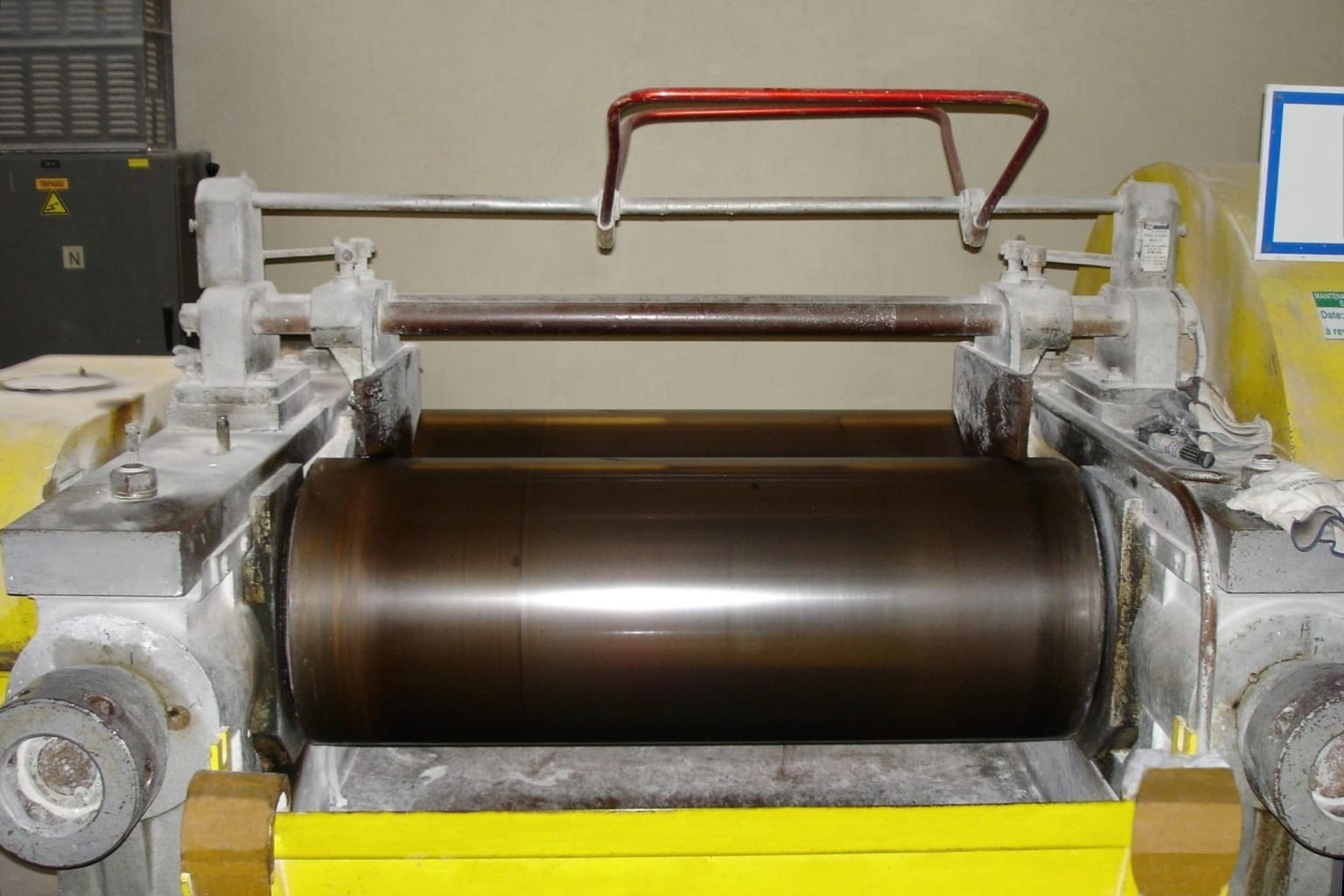
On June 27, a production unit at Dushanzi Petrochemical Company in Karamay, Xinjiang, finished a trial run and produced premium-grade rare-earth cis-butadiene rubber. The Chinese Academy of Sciences’ Changchun Institute of Applied Chemistry announced the result on July 16, calling it a “major breakthrough” with core technologies “fully under domestic control.” The plant is rated at 100,000 metric tons a year.
Electric cars are heavier than comparable gasoline vehicles and deliver high torque when they accelerate, which puts more strain on tires. Low rolling resistance cuts the energy lost each time a tire deforms and rolls, and better wear and fatigue resistance extend its life under repeated stress. The institute says the rare-earth version beats conventional nickel-based butadiene rubber on wear resistance, strength, fatigue and tear resistance, low-temperature performance, heat build-up and rolling resistance.
The rubber is made by polymerizing butadiene with a rare-earth catalyst, which controls the polymer’s molecular structure and, with it, its mechanical properties. The price already reflects that edge. The China Rubber Industry Association quoted grade ND9106 at 22,500 yuan (about US$3,400) per metric ton between Oct. 26 and Nov. 1, against 16,660 yuan for the conventional BR9000 in Shandong province, a premium of about 35%.
The result rests on more than six decades of work. In 1964, Ouyang Jun and Shen Zhiquan published a paper on rare-earth compounds as catalysts for stereospecific polymerization, which the institute describes as the first international publication on using rare-earth catalysts to make butadiene rubber. Work on these catalysts won second prize in China’s National Natural Science Award in 1982. Bi Jifu, Jiang Liansheng and Zhang Xuequan then ran thousands of scale-up experiments and dozens of pilot trials. A second-generation process led by Bi adds automation and domestically developed technology and equipment.
For tire makers, the change is a rubber that wears more slowly and loses less energy as it rolls, and wider domestic production could make it more widely available. The process makes two national-standard grades, BR1240 and BR1260, which differ in Mooney viscosity, a standard measure of how a rubber flows and is worked. The institute gives no date for when volumes will reach tire makers, and the June trial is the stage reached so far.
Sources — read the originals(Paris time)
Read next
Comments
Loading the thread…
Sign in to leave a comment. Sign in