Researchers cut costly magnet metal use by up to 80%
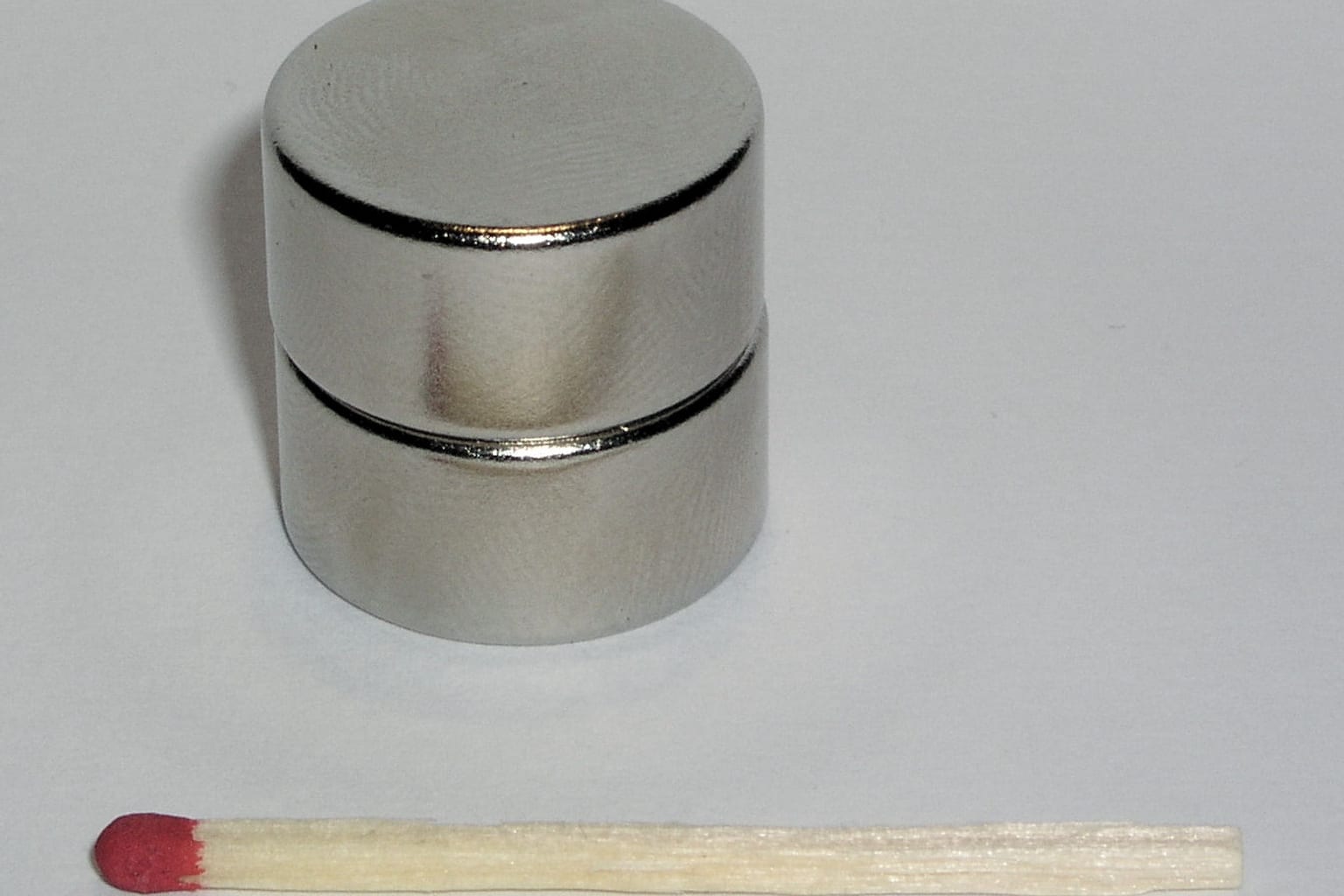
Inside the traction motor of many electric vehicles, and in the generator of many wind turbines, sits a neodymium–iron–boron magnet. Its strength depends on a small addition of heavy rare earths, and one of them, dysprosium, is among the most expensive and least secure materials in the sector. A team led by Jeongmin Kim and Donghwan Kim, of the Division of Nanotechnology at DGIST, has shown that most of that dysprosium can be saved.
The method relies on what engineers call grain boundary diffusion. The heavy rare earths are applied to the magnet's surface, then driven inside by heat treatment. They travel along the boundaries between the magnet's microscopic grains and form a thin shell around each grain, which is what boosts magnetic performance. The problem is uneven spreading. When too much dysprosium accumulates in the grains near the surface, the shells grow thicker than needed, and the extra metal does nothing useful.
The team identified why this happens and changed the composition of the diffusion source, the material applied to the surface, taking into account the proportion of light rare earths already present in the base magnet. In the team's experiments, this reduced the piling-up near the surface and produced thin, uniform shells. Compared with the conventional method, which uses dysprosium alone, the new approach cut dysprosium use by as much as 80%, while keeping magnetic performance equivalent to the standard process. The numbers come from the researchers' own tests, reported in Chemical Engineering Journal, and the paper does not give a cost figure in money.
What changes for the sector is the amount of a scarce metal that a magnet needs. A manufacturer that uses far less dysprosium depends less on a supply chain the source describes as unstable, and the team presents its work as a set of practical materials design guidelines. The study also gives a foundation for magnets that would rely only on cheaper light rare earths. The team's principal researcher, Jeongmin Kim, said the aim is to extend the approach to light rare-earth processes. The paper does not set a date for that step, nor does it announce an industrial trial.
Sources — read the originals(Paris time)
Read next
Comments
Loading the thread…
Sign in to leave a comment. Sign in