Cologne physicists observe predicted quantum states in lab device
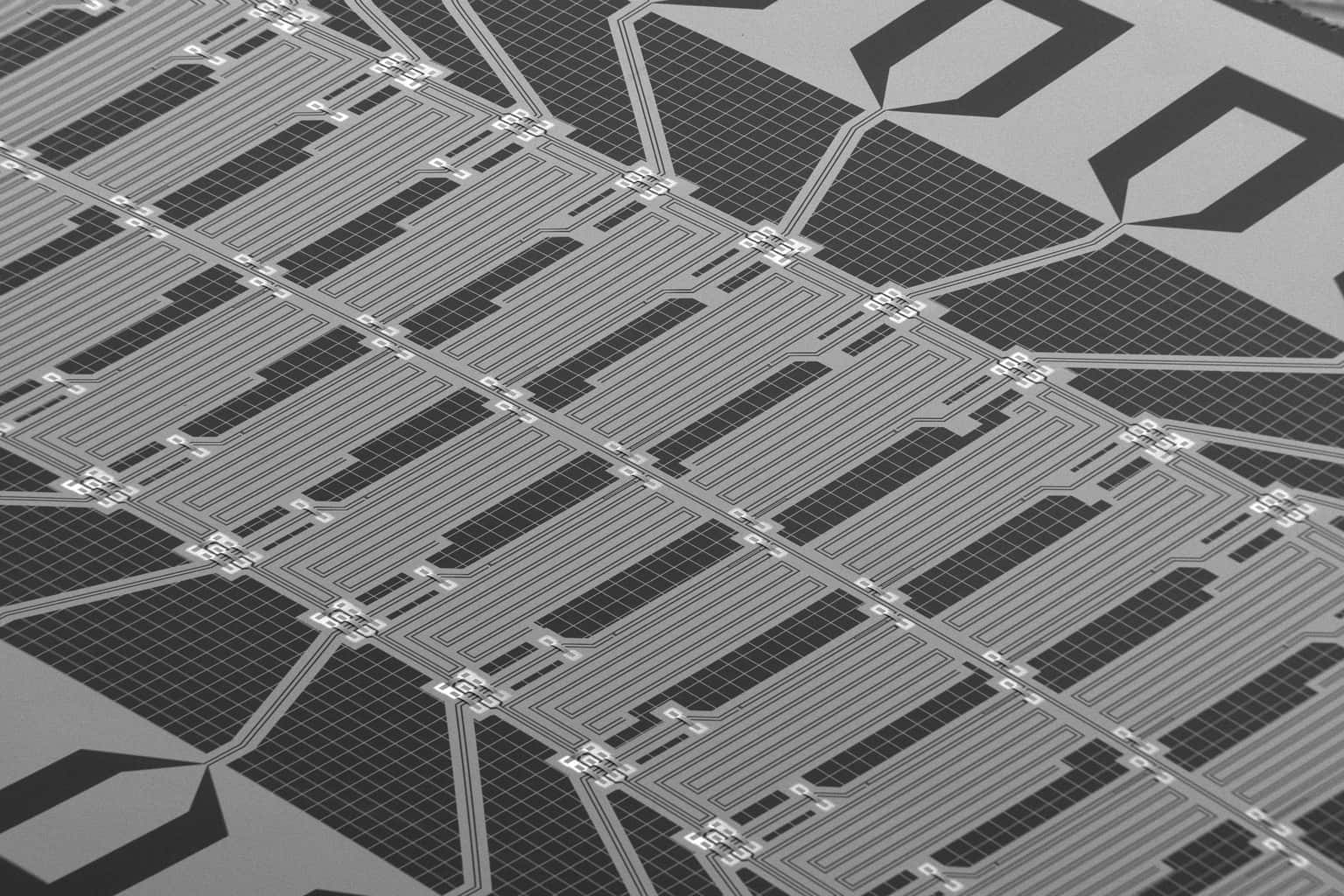
Two superconductors sit on either side of a nonsuperconducting region, and the physicists in Cologne vary the phase difference between them while they probe the quantum states inside. The device is built around a topological insulator, a material that does not conduct electricity in its interior but does along its surface.
When such a surface is joined to a conventional superconductor, theory predicts a special form of superconductivity, called topological superconductivity. If it can be realized, it could give access to Majorana zero modes, quantum states studied for use in topological qubits. The appeal is robustness: certain states of this kind may be protected against local disturbances, which is why the approach is considered a promising route toward sturdier quantum bits. Demonstrating and controlling these states in an experiment has remained the hard part.
Dr. Jakob Schluck, Ella Nikodem and colleagues, led by professor Yoichi Ando, observed highly transmissive Andreev states, which form where electrons and holes interact at a superconducting junction. The states appeared across a range of charge-carrier densities, consistent with the predicted behavior of electrons on the topological insulator's surface. When the researchers applied a magnetic field, the states concentrated in the specific regions of the junction that theory predicts. The results agree with the model proposed by Liang Fu and Charles Kane in 2008 and with numerical simulations from the group of professor Fabian Hassler at RWTH Aachen University. "It is super exciting to see our experimental results align so well with theoretical predictions," Nikodem says.
The key step is not yet taken. The team has not shown whether the states undergo the closing and reopening of an energy gap that would signal a transition to topological superconductivity. Schluck says that to demonstrate this transition, the experiment needs better energy and time resolution, which is the next step on the roadmap of the Ando lab.
What changes for now is the foundation. Topological quantum computing rests on predictions about how superconductivity behaves on these surfaces, and the Cologne measurements confirm those predictions in a real device. For the field, that is a check passed before the harder test. No date for a working topological qubit is given, and the next measurements will decide whether the transition the theory describes can be seen directly.
Sources — read the originals(Paris time)
Read next
Comments
Loading the thread…
Sign in to leave a comment. Sign in