Crew-13 docks at the space station in 7h55, fastest U.S. arrival
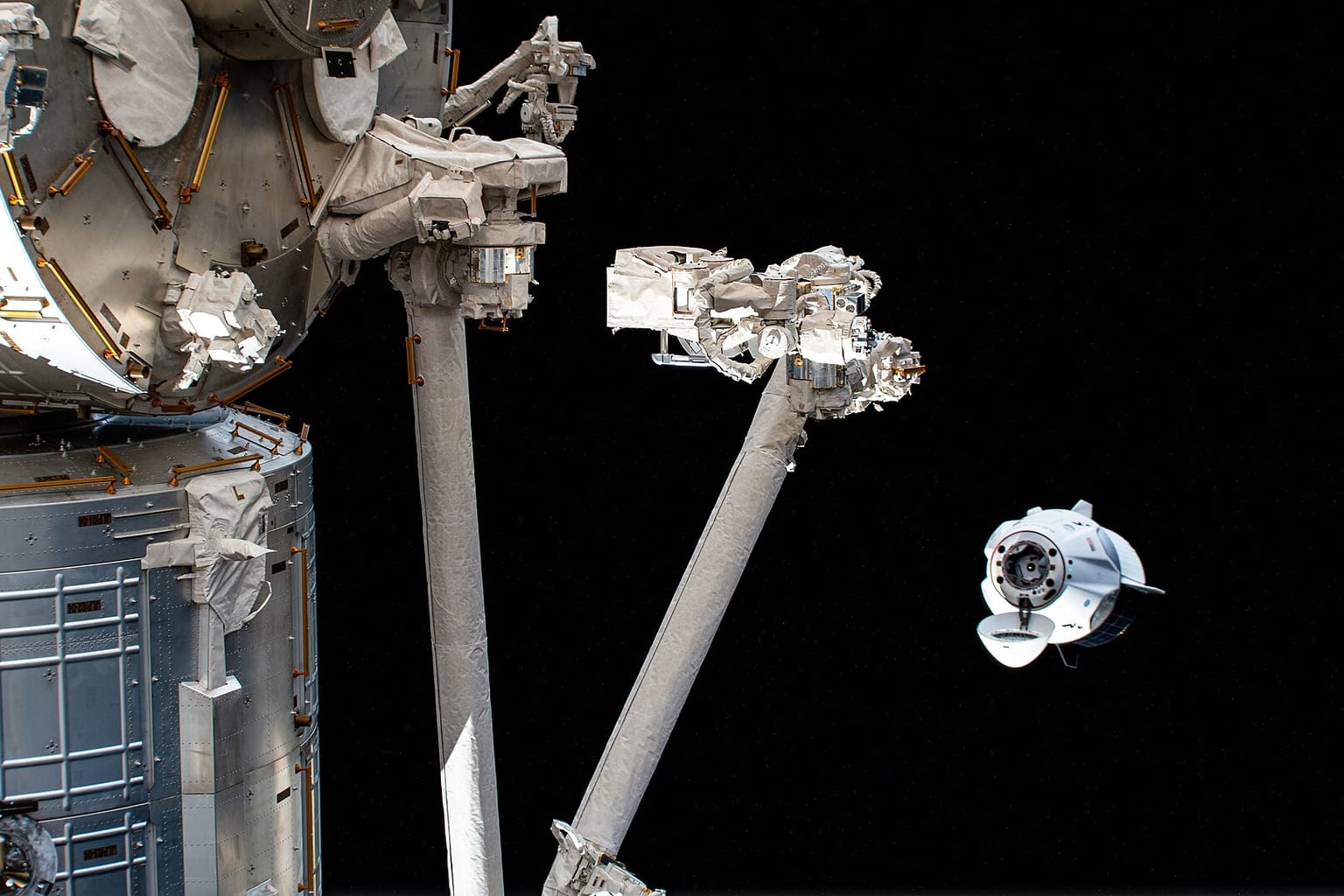
At 23:05 UTC on Oct. 1, a Crew Dragon named Grace docked to the forward port of the Harmony module of the International Space Station. The capsule had launched from Florida on a Falcon 9 rocket 7 hours and 55 minutes earlier, the fastest arrival at the station for a U.S. spacecraft. Aboard were NASA astronauts Jessica Watkins and Luke Delaney, Joshua Kutryk of the Canadian Space Agency, and Roscosmos cosmonaut Sergey Teteryatnikov. After standard leak checks and pressurization, the hatch opened at 01:19 UTC and the four newcomers floated in.
The arrival is part of a planned handover. Expedition 75, the name NASA uses for the station's current crew, saw Jessica Meir hand command to Roscosmos's Pyotr Dubrov on the Soyuz MS-29. The outgoing Crew-12 undocked on Oct. 7 and its capsule, Freedom, splashed down in the Pacific on Oct. 8, where SpaceX's recovery vessel Shannon picked it up. Crew-13 will stay about six months, undocking in March 2027.
The station's supply line kept moving. The Cygnus XL cargo craft of the NG-24 mission left on Oct. 9, after the crew filled it with several thousand kilograms of waste that will burn up harmlessly in the atmosphere. On Oct. 13, SpaceX launched the CRS-35 Cargo Dragon, which docked on Oct. 15 carrying 1,671 kg of pressurized and 1,195 kg of unpressurized cargo. It also carried a new ISS Roll Out Solar Array, the iROSA, which Anil Menon and Joshua Kutryk will install during spacewalks planned for Oct. 29 and Nov. 5. The Cargo Dragon will leave no earlier than November 2026.
For the people who live and work up there, the immediate gains are concrete. Crew-13 gets a new solar array to fit, and the science program keeps running: a Sept. 28 vein scan used an ultrasound device to measure astronaut Anil Menon's jugular vein, and the team says the data could help spot blood clots or changes to blood chemistry during long flights. Cosmonauts Pyotr Dubrov and Anna Kikina also finished a week-long test on Oct. 16 of an exoskeleton suit for controlling robots remotely. For companies that want to fly people to orbit, the larger shift is the successor. NASA released its final request for proposals for Commercial LEO Destinations on Oct. 9, with final proposals due Dec. 8. The agency plans to select about two companies in spring 2027 to develop, build and operate the stations, which would replace the ISS as it is decommissioned by the end of 2030.
Several points remain open. The announcements give no figure for the funding that the selected companies will receive, and they set no price for the stations. The vein-scan and exoskeleton results are described as possible contributions to future crew health and robotic training, not as finished findings. The 2027 selection is the next concrete milestone, and until then the work that matters most is the one already underway: crew rotations, supply flights and the spacewalks that bring the new solar array online.
Sources — read the originals(Paris time)
Read next
Comments
Loading the thread…
Sign in to leave a comment. Sign in