Drone Lands on Live Power Line and Charges Itself
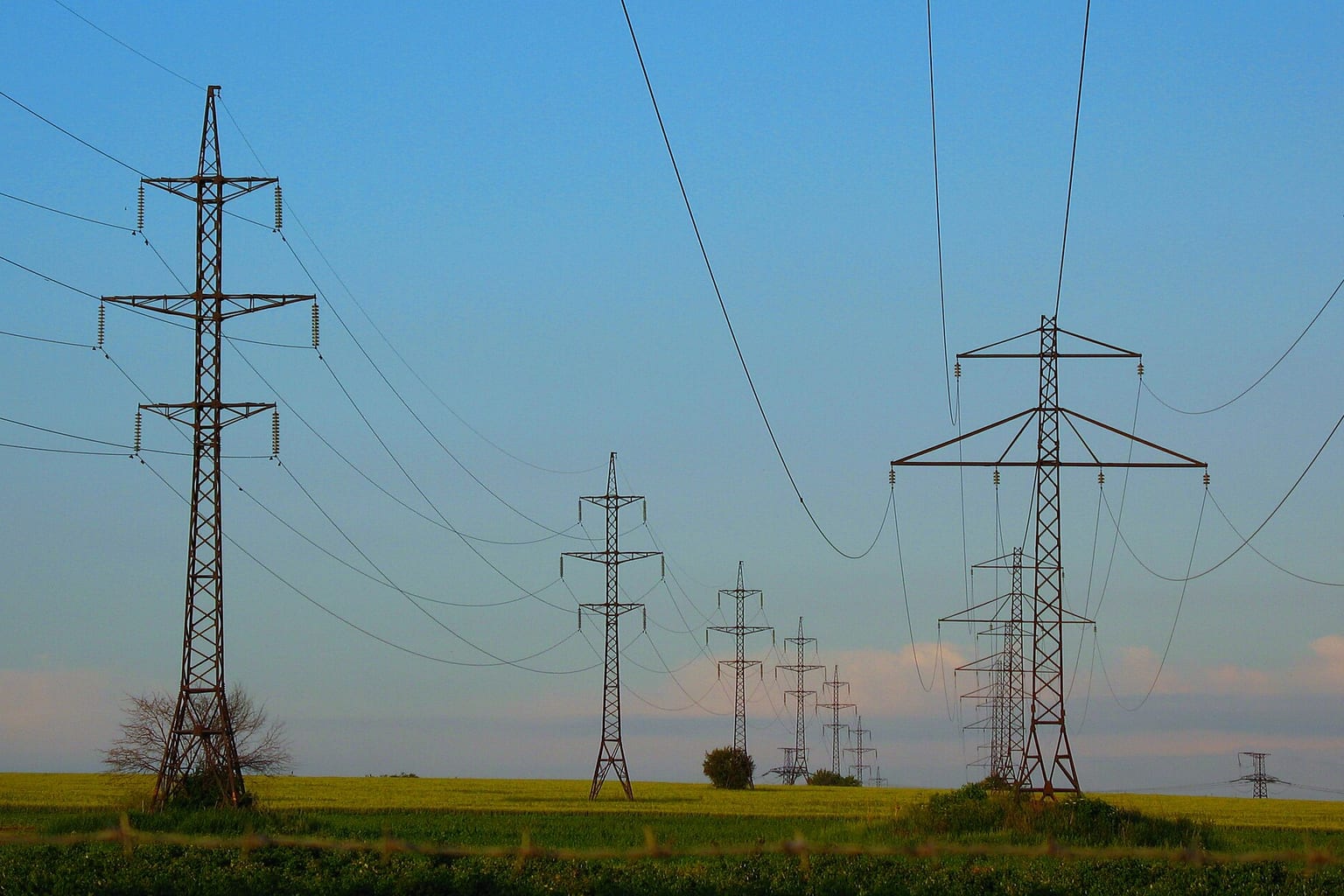
A drone sits on a power line. It is a high-voltage transmission line carrying live current. The “NOMAD” drone, built by German robotics firm Nomadic, weighs about 4 kg and can be installed on a transmission line within minutes without cutting power. Once it has landed, it hangs from the wire, charges its battery and checks the condition of the line while looking for signs of trouble.
Transmission lines are long high-voltage cables that carry electricity from power plants to cities. Fixed sensors used to monitor these lines are typically installed every 1–5 km. According to the company, one drone covers about 25 km of line, so there is no need to fit sensors densely.
The secret to the charging lies in the line itself. When current flows, a magnetic field forms around the wire, and the drone draws energy from that field. The principle is electromagnetic induction, which one report compares to the way a transformer moves electricity. As a result, the drone does not need to return to base to recharge.
The hardest part is landing and taking off. The drone has to settle precisely onto a swaying, electrified wire without switching the line off. Once it touches the wire, it steadies itself, locks on, and draws power from the line.
The performance figures come from the company. Nomadic says the drone operated at -25 degrees Celsius and was validated on high-voltage lines rated at 420,000 volts (420 kV). However, the company's website lists the validation standard as 380 kV-class, so the figures do not match. The drone has been deployed on power grids in Germany, Norway and the United States, and it has logged more than 20,000 hours of cumulative operation on real transmission lines.
The limits are also clear. According to an academic paper, if the current flowing through a line is weak, the magnetic field is not strong enough to hold the drone. A summary of related research also warns that getting too close to a line can cause an electrical discharge, so precise positioning is essential.
That makes the next step important. The company says it will launch a feature in 2027 that allows the drone to move between line sections on its own, following remote commands. For now, a pilot must carry the drone to the site by hand. Nomadic also announced that it had raised roughly $6 million in investment, and said in a press release that the funds will go toward preparing customer deliveries in 2027.
The feature that moves the drone between line sections is scheduled for delivery to customers in 2027.
Sources — read the originals(Paris time)
Pages consulted while writing
Read next
Comments
Loading the thread…
Sign in to leave a comment. Sign in