Electric fields can change how chip materials shed heat
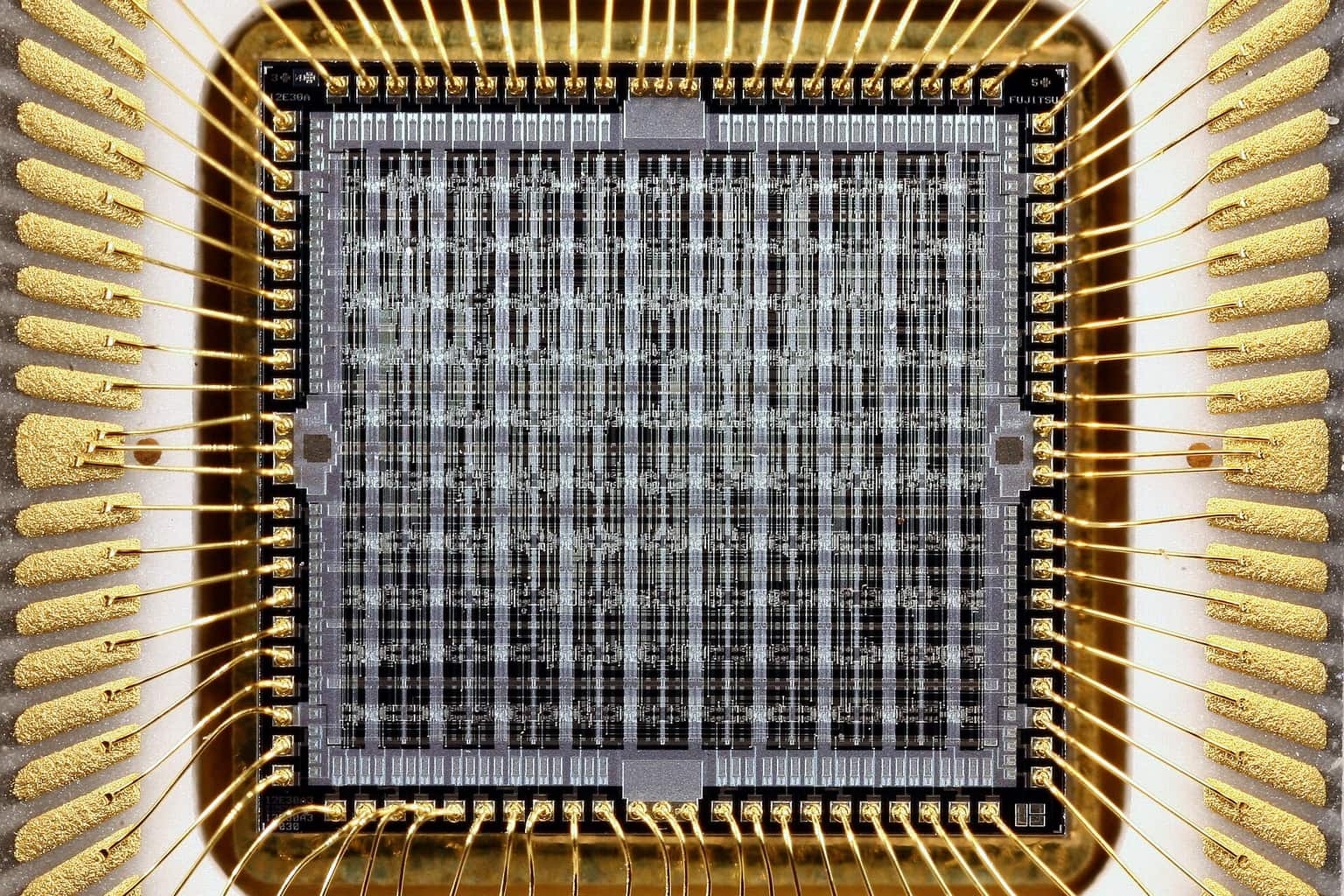
Every new generation of chips packs more power into less space, and the heat that power produces has to leave through an ever smaller area. In a computational study published in npj Computational Materials, Cornell researchers led by Zhiting Tian report that an electric field can change how well aluminum nitride carries heat away, and that the direction of the field decides whether it gets better or worse.
Heat in a crystal travels as phonons, the atomic vibrations that carry thermal energy. As phonons travel, they scatter off one another, and the more they scatter, the slower heat moves. Aluminum nitride is an ultrawide-bandgap semiconductor, able to withstand much higher electric fields than conventional semiconductors, which is why it interests makers of high-power electronics. Engineers usually model its heat conduction with no field present. Tian's team combined density functional theory, which describes a material's electronic structure, with nonequilibrium Green's function, a method for systems pushed out of balance. The combined approach had been used for electron transport but not, until now, to calculate phonon-based heat conduction under a field. In the simulations, crystals sat between electrodes; the field redistributed electrons, changed the forces holding atoms together, and altered how phonons scattered.
With no field, the calculation gives about 334 W/(m·K) for heat flowing perpendicular to the film. A field in one direction raised that figure, and reversing the field lowered it. The team links this to the crystal's built-in polarity: the field can strengthen or weaken certain atomic bonds depending on whether it points with or against that polarity. For a designer, thermal conductivity may have to be treated as something that shifts during operation, not as a fixed property. Tian suggested the consequence could go further: "We could intentionally grow the film in the direction where the electric field is favorable to help dissipate heat."
A companion experiment, published in Nano Letters on Nov. 9, tested the effect in hexagonal boron nitride, a wide-gap material used as an insulator in emerging electronics. The team placed thin single-crystal flakes between metal electrodes, applied strong fields, and used a laser-based technique to measure how much the flake and its contacts resisted heat flow. In one device, that thermal resistance fell by as much as 25% during repeated tests. The changes built up over tens of minutes to hours and recovered during or between measurement cycles. Conventional electrical measurements did not reveal them; only the thermal measurements did.
For makers of high-voltage power systems and high-power radio-frequency devices, the practical change is that a field-dependent heat figure may have to enter the design, and that the direction of the field becomes a design variable. The team gives no timeline for that. The experiments reported alongside the study concern boron nitride, not aluminum nitride, so the aluminum nitride result remains a calculation.
Sources — read the originals(Paris time)
Pages consulted while writing
Read next
Comments
Loading the thread…
Sign in to leave a comment. Sign in