Engineered bacteria shrink aggressive breast tumors
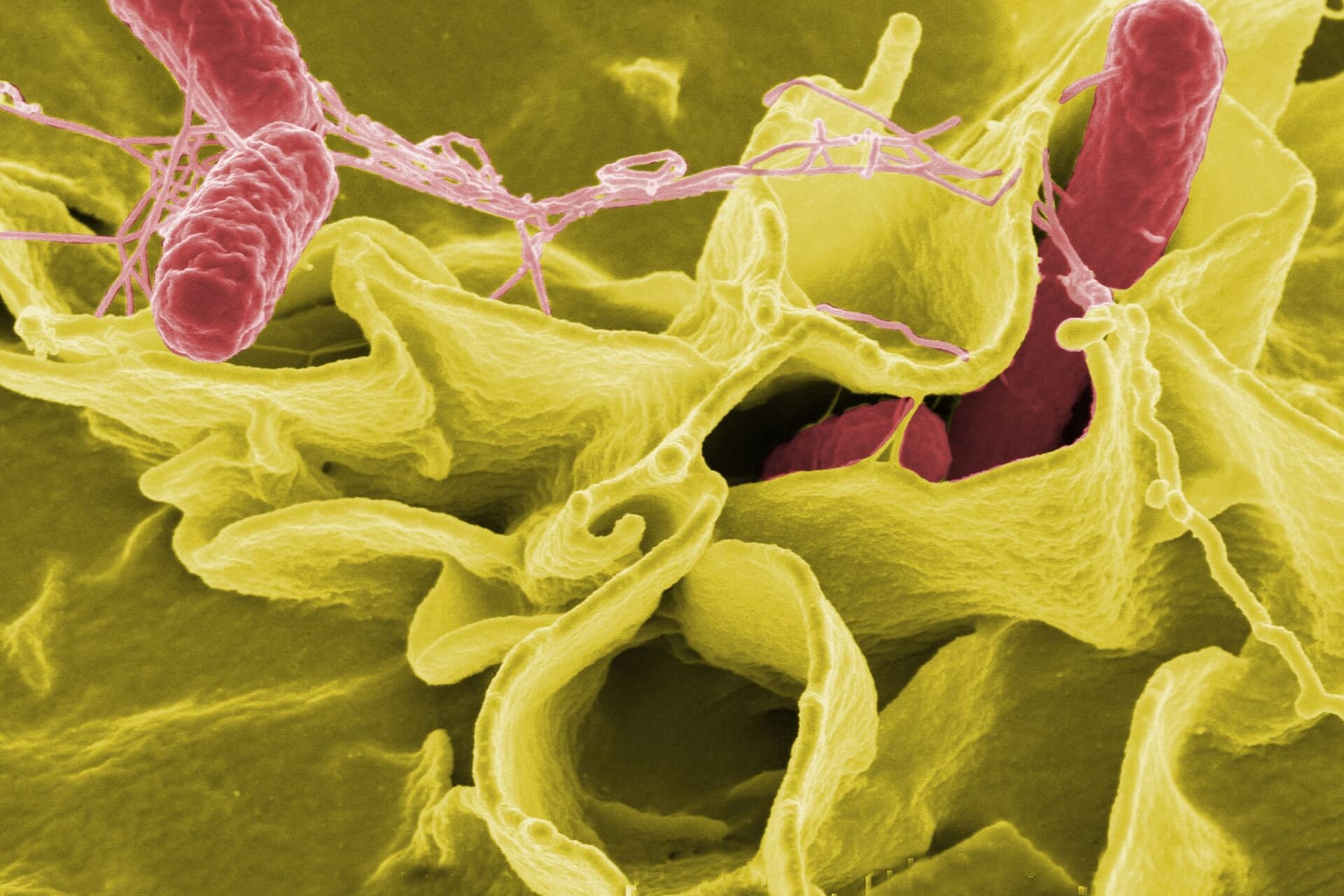
Certain bacteria naturally gather inside tumors, which makes them candidates for carrying drugs straight to cancer. A team led by professor John Hwa Lee at Jeonbuk National University, in South Korea, has used that property to build a Salmonella Typhimurium strain it calls JOL3136. In mice bearing aggressive breast tumors, four weekly doses significantly reduced tumor mass and volume compared with both control groups.
The problem the team set out to address is tumors that resist immune attack, recur and spread. To make the bacterium a usable carrier, the researchers deleted four genes to weaken it and make it depend on tryptophan, an amino acid. They then passed it through tumor-bearing mice to improve its localization in tumors. Finally, they added a plasmid, a small circle of DNA, that makes the bacterium produce two payloads: apoptin, which is expressed inside cancer cells to promote their death, and a fragment of the carcinoembryonic antigen (CEA), placed in the bacterium, which is meant to stimulate antitumor immunity. The team confirmed both proteins, apoptin at 18 kDa and the CEA fragment at 27 kDa. According to the paper's abstract, removing one of the genes, pagL, also reduced the strain's endotoxic responses.
In laboratory tests on 4T1 cells, a highly metastatic mouse breast cancer line, the engineered strain caused more early and late apoptosis, the programmed death of cells, than untreated cells or the bacterial vector alone. In mice, the team gave four weekly doses of a control solution, the empty bacterial vector or JOL3136. The team reports that the tumor-volume reduction in the JOL3136 group exceeded that of the vector-control group by more than 200%. Treated mice also showed more CD49b-positive lymphocytes and higher levels of interferon-gamma, an immune signaling molecule, along with changes in immune cells inside the tumor. In a separate experiment, labeled cancer cells found in the lungs, liver and spleen were significantly fewer in treated mice than in control mice.
The direct beneficiaries are, for now, mice. The study did not establish how much each component contributes, since the bacterial carrier, apoptin and the CEA fragment were not tested separately. Lee said the platform's carrier can be modified to deliver other therapeutic candidates, but that before clinical use can be considered, the approach needs stronger safety safeguards and testing in models that better represent human disease. Live Salmonella treatments also require strict measures to reduce infection risk. No date for human testing is given.
Next, the researchers will need to evaluate the therapy in settings more relevant to humans, tighten biosafety protocols, and separate the independent contributions of the bacterial carrier, apoptin and the targeted antigen.
Sources — read the originals(Paris time)
Pages consulted while writing
Read next
Comments
Loading the thread…
Sign in to leave a comment. Sign in