Engineered microbes detect gold and copper
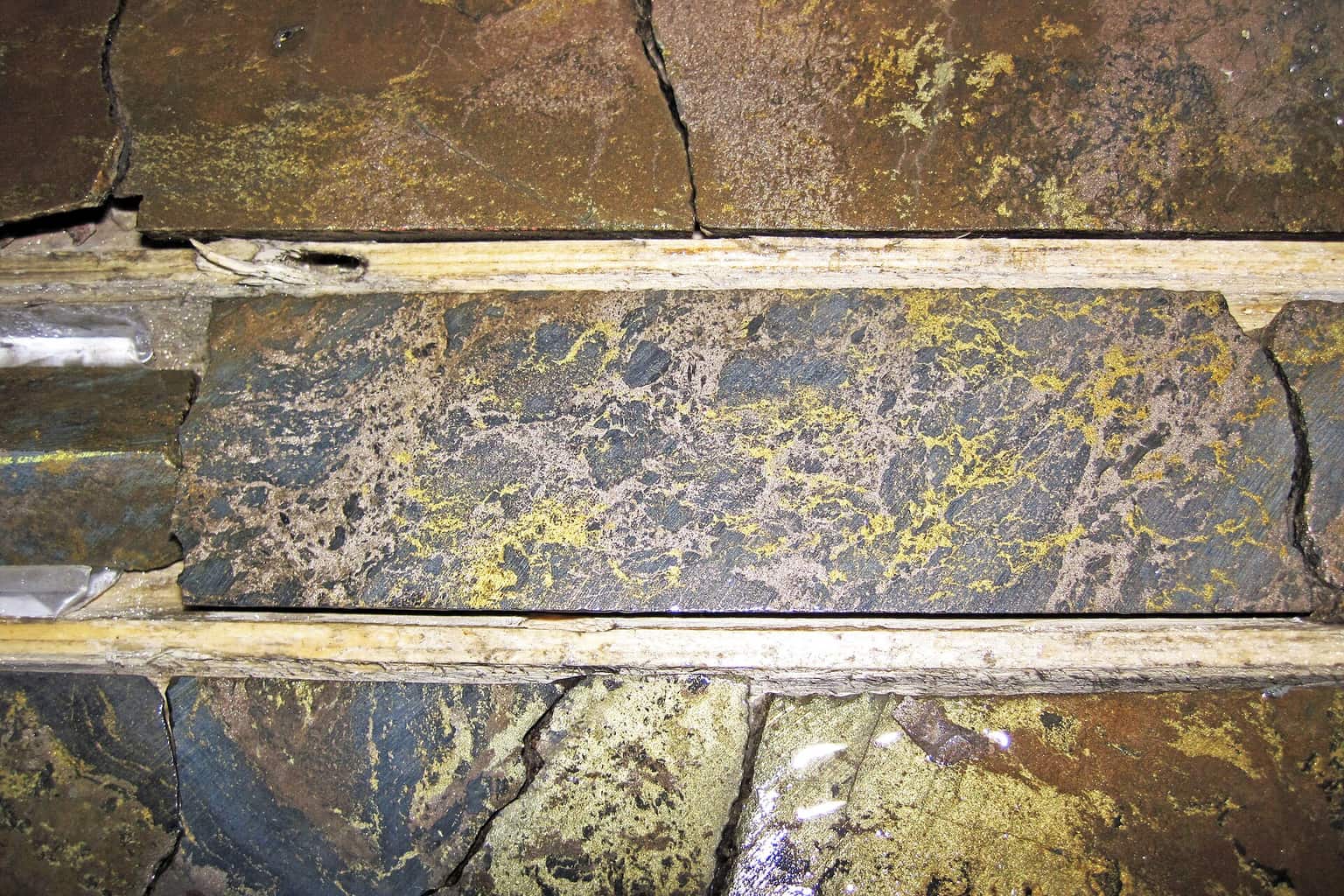
Mining starts with a hole in the ground. Drill cores, the long cylinders of rock pulled up from depth, are where exploration teams look for valuable metals, but measuring them takes time. Fieldstone Bio puts the test on the core itself. Its microbes are sprayed onto freshly extracted cores, and where a target metal is present they switch on an engineered sensing pathway and make molecules that change how they reflect light. A hyperspectral camera captures hundreds of wavelengths of light where an ordinary camera records only red, green and blue, and turns those changes into a heat map of the metal's distribution across the whole core.
The stakes are high. Drilling a single hole costs between $100,000 and $200,000, according to Brandon Fields, the company's chief science officer and co-founder, and exploration teams often work hours from the nearest laboratory. Today's tests can take weeks to months to return, so crews keep drilling while they wait. Fields argues that bringing the measurement to the drill site would let operators adjust where they drill as results come in.
The company reports biosensors for gold, copper, molybdenum and arsenic, with parts-per-billion detection sensitivity in controlled tests. A $2 million award from the US Department of Energy's ARPA-E ROCKS programme, made in June 2026, will expand the sensor library to rare earth elements and nickel, and will validate performance on freshly extracted cores. The work involves TerraCore and MIT. Rio Tinto, the mining group, has also invested in the company and selected it for its mining accelerator.
A related MIT study looks at the signal itself. Engineered bacteria in that study produced hyperspectral signals that could be detected as far as 90 meters away. The reporter technology behind it was developed by Christopher Voigt's team, from which Fieldstone spun out.
For a mining firm, the gain is time. Same-day data would let operators know where a deposit lies, at what depth or angle, and move the drill accordingly, Fields says. Safety is built into the design: the sensing takes place in sealed boxes, no microbes are released into the environment, and, the company says, the strains are chosen to be harmless to people, plants and ecosystems. The next step is validation on freshly extracted cores, followed by the extension to rare earths and nickel.
Sources — read the originals(Paris time)
Pages consulted while writing
Read next
Comments
Loading the thread…
Sign in to leave a comment. Sign in