Finger-steered beetle robot grips and carries objects
A jaw-like gripper closes on an object, and a beetle-shaped robot carries it across a lab bench. At KAIST, the Korea Advanced Institute of Science and Technology, a team has built BeetleBot, a machine whose most striking feature is how a person controls it. Its artificial muscles are 3D-printed from a liquid crystal elastomer that shortens by 45% when heated, then returns to its original shape as it cools.
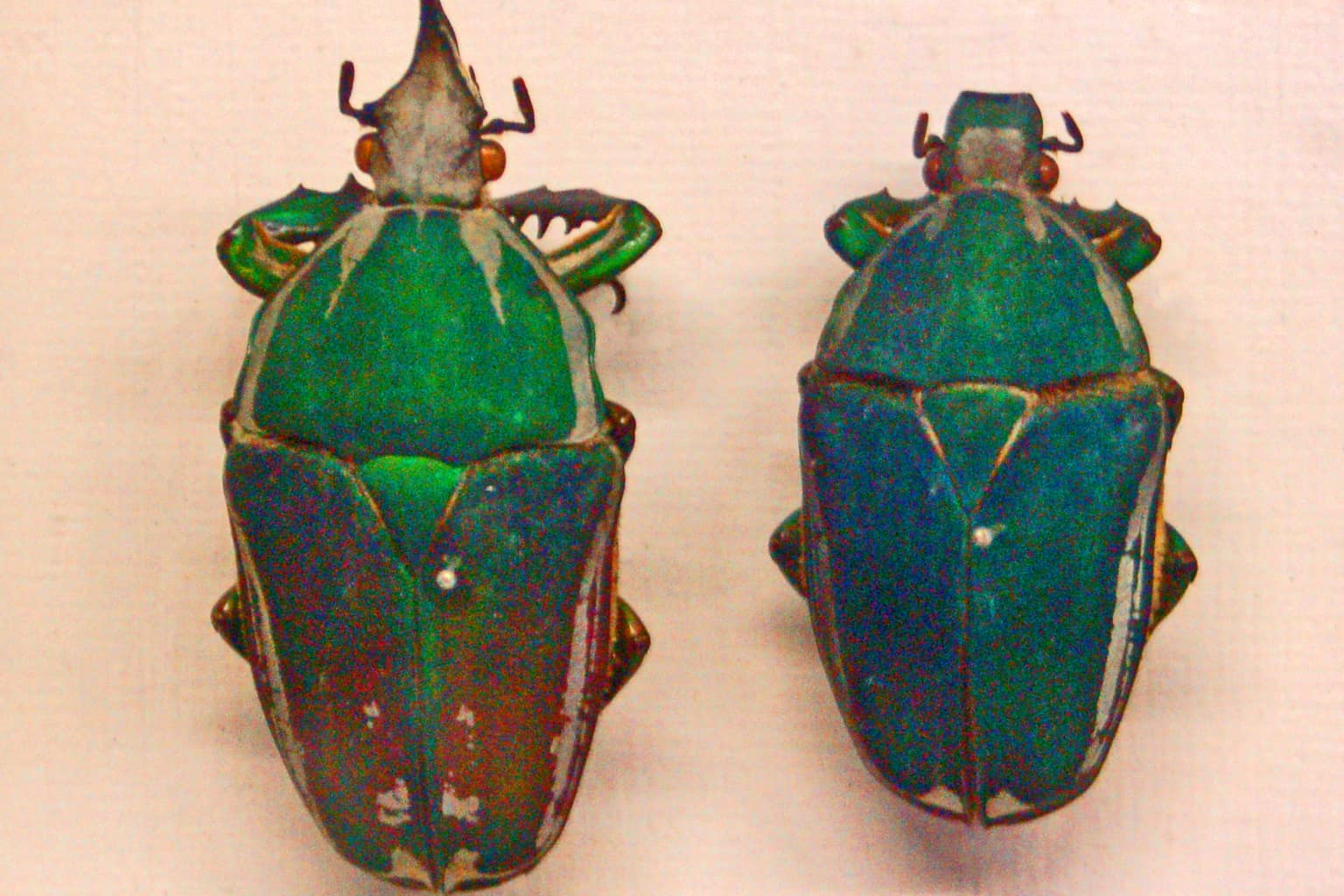
The design starts with a real insect. The researchers studied the positioning of the leg muscles and joints of Mecynorrhina torquata, one of the largest insects in the world, native to the Congo, Cameroon and Uganda, and applied those principles to the robot. The muscles must reach 110 °C to contract. An electric current passing through wires built into each muscle supplies that heat, so only the muscles warm up, not the whole body. Even so, the heating takes a great deal of energy, and the team names this as the project's biggest challenge.
The operator wears a flexible sensor patch on a finger. When the finger bends, the patch stretches and its electrical resistance changes. The control system is deliberately simple, with four commands: move forward, turn left, turn right and grip an object. The gripper, inspired by the mandibles that beetles use to hold their prey, uses the same artificial muscles, plus a pressure sensor that measures how firmly it closes.
The feature the researchers say they are proudest of is the camera. It sends live images to the operator, who answers with a gesture, and the robot executes the command and sends back its result. Prof. Inho Kim of Sungkyunkwan University, the study's first author, calls this loop "bidirectional feedback", and says it "links the information detected by the robot to the user's next action". In laboratory tests, BeetleBot navigated turns, reached an object, gripped it and transported it to another location.
What this changes is a matter of direction. Soft, insect-sized machines could eventually reach spaces that rigid robots cannot, and the team's stated goals point there: faster response, lower energy use, and eventually a fully soft body suited to varied environments. The announcement gives no date for any of these steps, and no tests outside the laboratory have been reported.
Sources — read the originals(Paris time)
Read next
Comments
Loading the thread…
Sign in to leave a comment. Sign in