Firefighting robot keeps working 30 minutes at 1,000°C
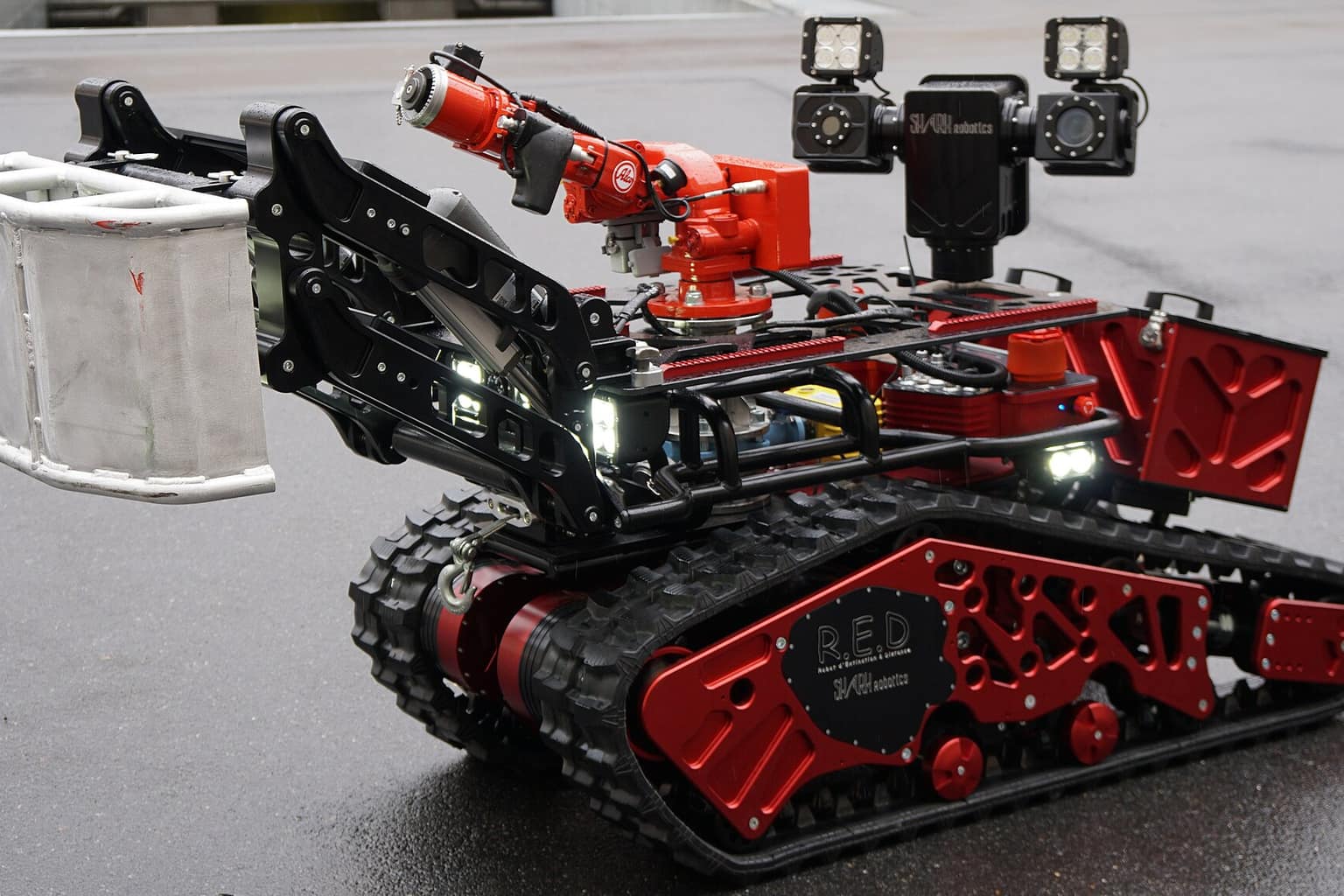
Inside a furnace heated to 1,000°C, or 1,832°F, a machine weighing 800 kilograms keeps its electronics, motors and sensors working for 30 minutes. That is the result reported by Beijing Lesentech, a Chinese robotics company, for its firefighting robot, the RXR-M80D-AX2. In the test, the robot was exposed to the extreme heat and remained operational.
The robot is built to go where people cannot. According to its makers, it can be sent into hazardous industrial sites and other places where direct human intervention is dangerous, so that conditions are known before crews follow. Experts quoted in the reports describe the same idea: a remotely operated machine could scout a chemical plant, a warehouse or an industrial fire, report back, and keep firefighters at a safer distance.
Keeping a moving machine alive at that temperature is harder than it sounds. Its control units, motors, sensors and communication equipment all need protection at the same time. A robotics researcher, Dongsheng Chen, describes one answer on his LinkedIn profile: the electronics sit inside a heat shield, while the tracks outside are made of high-temperature alloy. The company says the robot uses several patented thermal-protection technologies. A patent application for its water cannon states that no high-temperature-resistant water cannon is currently available on the market.
The machine measures 1,750 x 1,100 x 1,200 mm and carries an IP65-rated enclosure, a protection rating against dust and water jets. It moves at up to 1.5 meters per second, climbs slopes of 30 degrees, crosses trenches up to 400 mm wide and clears obstacles 170 mm high. Its operating endurance is four hours.
Its main tool is a water-and-foam cannon with a maximum flow of 80 liters per second and a range of 85 meters. It switches between a concentrated jet and a mist spray. Gas sensors look for carbon monoxide, methane, hydrogen sulfide and hydrogen, and an infrared thermal camera works alongside visible-light cameras. An operator steers the robot with a handheld joystick controller, over a wireless link that reaches up to 1,000 meters in line of sight.
The robot is not a one-off for the company. One report cites a Chinese outlet saying it has drawn strong industry interest since its launch in 2020. The company's website says it spent four years on research and development, and calls the model the world's first to work for more than 30 minutes at 1,000°C. That is the company's own claim. The company also says the robot took part in a petrochemical fire-rescue drill in Beijing, which it describes as a successful completion of the exercise.
One detail does not line up. One report says the robot runs for more than 30 minutes without external cooling. The company's Chinese-language page says the same endurance holds under a continuous water supply. The difference matters, because it determines how the figure applies in a real fire.
A furnace is not a fire. Smoke, falling debris, uneven heat and damaged structures can change faster than any controlled test. The reports contain no results from a real blaze, and such information would help establish the robot's practical value. Firefighting robots are not new. A 2015 paper in Procedia Social and Behavioral Sciences observed that robots had been deployed worldwide without yet making a large contribution. An encyclopedia entry describes three generations of these machines, from program-controlled to sensory to intelligent, and says that high-temperature protection lets some of them work only for short periods in intense heat.
Neither the company's pages nor the reports give a price, a delivery date or the number of robots in service. What the furnace test establishes is narrower and still concrete: the machine's systems can survive sustained exposure to 1,000°C for 30 minutes in a furnace. Experts note that as emergency services look for ways to reduce risks to their teams, machines able to enter extreme environments could become valuable for assessing and responding to fires too dangerous for humans to approach.
Sources — read the originals(Paris time)
Pages consulted while writing
Read next
Comments
Loading the thread…
Sign in to leave a comment. Sign in