For the first time, quantum physics confirms where someone is
A corporate treasurer orders a $50 million wire transfer. Before the company's financial network moves a cent, it has to answer one question: is the command coming from the secure terminal at headquarters, or from a hacker's laptop on the other side of the world? A team at the US National Institute of Standards and Technology (NIST), led by physicist Krister Shalm with international collaborators, now says quantum physics can answer that question definitively. The results were published online on November 18, 2026, in the journal Nature. Shalm calls the experiment 'the first complete demonstration of such a protocol.'
The stakes are concrete. Cybercrimes cost US citizens more than $16 billion in 2024, and far fewer than 1% of cybercriminals are caught, partly because many of them operate from outside the country. The team's idea is to tie access to a place rather than to a password. 'Our results show how digital security can instead be anchored to the physical world,' Shalm said. According to the researchers, the method could keep health records and other private data away from people outside a given site, prevent remote adversaries from issuing commands to nuclear plants, power grids and water treatment facilities, stop unauthorized trades in a firm's trading account, and thwart phishing attacks based on calls or video from unknown locations.
The method is called quantum position verification. Two trusted parties, the verifiers, want to confirm where a third person, the prover, really is. To start, one verifier creates a pair of entangled photons, particles of light linked so tightly that measuring one reveals the state of the other. The verifier keeps one photon and sends the other to the prover. Both verifiers then send random numbers, timed to arrive at the suspected location at the same moment. The prover uses those numbers to choose how to measure the direction in which its photon's electric field wiggles, and sends the result back. The time between sending and receiving lets the verifiers triangulate where the answer came from. The cycle runs millions of times in a few minutes, and the verifiers compare their own measurements with the prover's. A rule of quantum physics, the no-cloning theorem, means that anyone who tries to copy the photon and share the information with accomplices destroys the correlations the test relies on.
The difficulty lay in the loopholes. Scientists had been trying to demonstrate this kind of verification for decades, and earlier studies found that attackers sharing entanglement and using quantum teleportation could break earlier versions. The fix is a Bell test, a check that the entangled photons are more closely correlated than classical physics allows. If a fraudster can predict the random instructions, they can answer early and fake a location. But a prover who passes the Bell test must have measured exactly as instructed, so nobody could predict the answers in advance. Any experimental error or tampering makes the test fail. The speed of light adds a second safeguard: a prover standing outside the claimed zone would reply too late to pass.
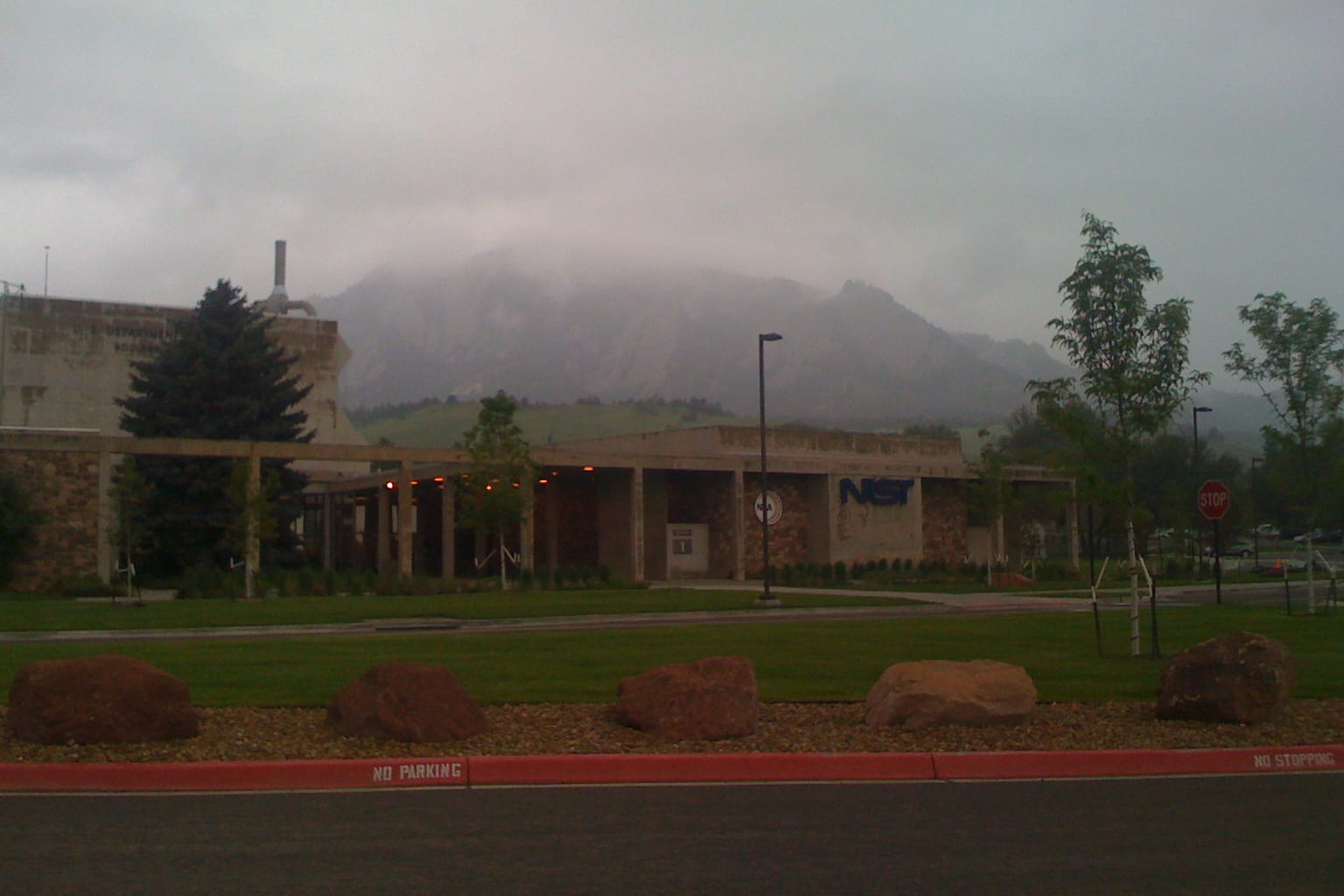
The demonstration took place on the NIST campus in Boulder, Colorado. The team set up two verifying stations 195 meters apart, linked by electrical cables and ultrathin optical fibers run through the corridors of a research building, with the prover placed between them. The method has a hard limit, however: if too many photons are lost, even an honest prover could not pass the Bell test.
For now, the test stays in the laboratory. Scott Glancy, a NIST physicist and collaborator on the study, puts a real-world application more than a decade away. Researchers are still developing the tools that let quantum computers and sensors share quantum information across large networks. Using the method to confirm that a customer is really talking to someone inside their bank would also require high-fidelity quantum communication networks, Glancy added. What the experiment shows, in the team's words, is that a physical place can serve as the key. Turning that key into everyday security depends on building those networks first.
Sources — read the originals(Paris time)
Pages consulted while writing
Read next
Comments
Loading the thread…
Sign in to leave a comment. Sign in