Lightning Network: post-quantum key protection, as a proof of concept
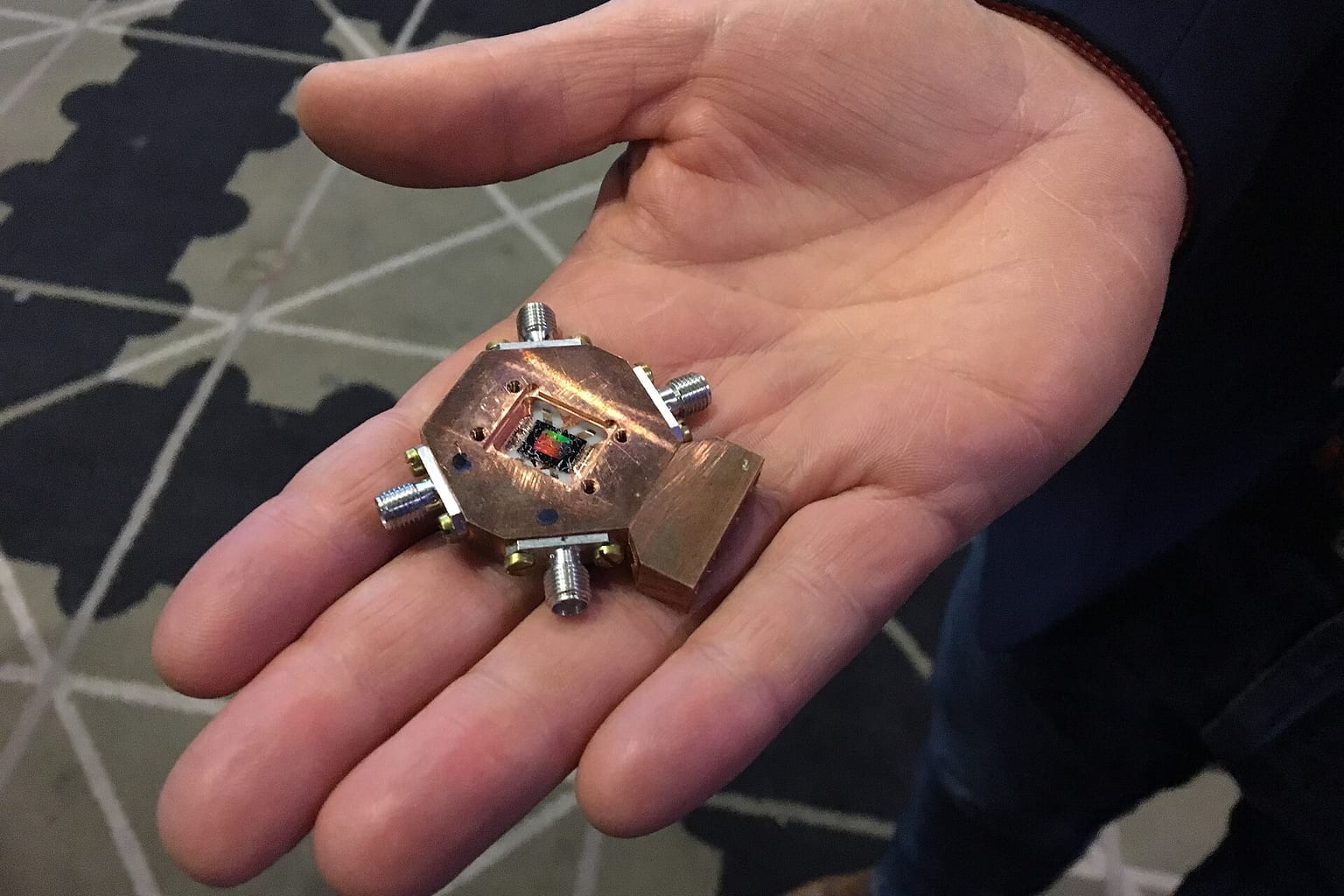
A Bitcoin payment on the Lightning Network can be confirmed in under a second. The key that proves who owns the wallet behind it, however, is only as strong as the difficulty of reversing it. A team led by Ahmet Kurt, assistant professor at East Texas A&M University, has published a preprint on arXiv describing how to protect those keys against quantum computers.
The simplified explanation of the risk goes like this: keys lock data by multiplying two very large prime numbers, an operation that is easy for any computer, but reversing it means recovering the original primes from the result. Brute-force guessing would take billions of years. Shor's algorithm, which has existed for more than 30 years, does not guess: run on a quantum computer large enough, it finds the pattern and can break a key in a matter of hours. No machine big enough to run it exists yet, but powerful quantum computers are in development.
The team's answer works at the level of the Lightning Network, the layer built on top of Bitcoin for small, fast payments. Changing Bitcoin itself would mean getting every computer on the blockchain to run new code, a far heavier task. Lightning's software can be modified on its own. Bitcoin, with a market capitalization of around $1.6 trillion, stays untouched. Aydeger describes the principle: the money stays locked on the blockchain, and the security of the transaction is preserved, even though the network no longer has to check every small payment.
The stakes are high because cryptocurrency transactions cannot be reversed. A standard bank account often offers insurance against fraud, while Bitcoin is decentralized and stolen funds are nearly impossible to recover. Once a quantum computer breaks a key, transactions can be made from any computer, and impersonating a wallet owner becomes far easier. "We cannot wait to have it, because once it's broken it's too late to fix something," Aydeger said.
For wallet owners and Lightning users, the result is a design that protects the keys before quantum machines can break them, not after. The work is still a proof of concept, published as a preprint, and the authors do not announce a date for adoption by the network's software or its users. What it shows is that the Lightning layer can be hardened on its own, without asking the whole Bitcoin network to change first.
Sources — read the originals(Paris time)
Read next
Comments
Loading the thread…
Sign in to leave a comment. Sign in