Four turbines instead of forty, aiming for nearly 80% more
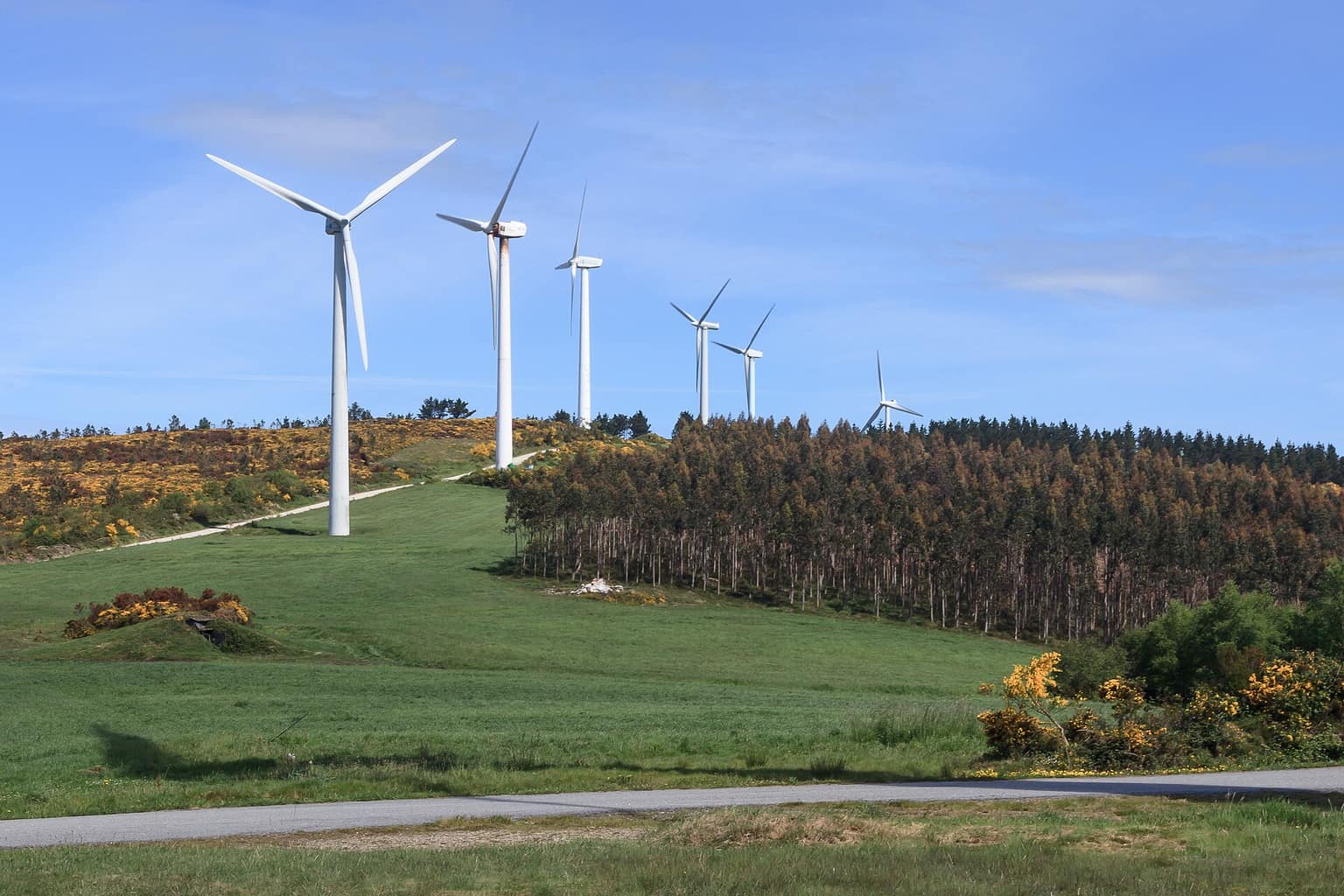
In northern Galicia, forty wind turbines have been spinning since 1998 at the Coriscada wind farm. Each has an average capacity of 600 kW, and together they produce about 47 GWh a year. Once the work is complete, only four will remain. The electricity group Endesa has launched the repowering of this site, meaning the replacement of the turbines at a site nearing the end of its life with more efficient ones.
The four new turbines have a combined capacity of 28 MW. According to the project, annual output would rise from 47 GWh to 83.9 GWh, or 78.5% more. The difference lies in how the machines capture the wind: modern models produce more when the wind blows weakly. The capacity factor, meaning the share of its maximum output that a wind turbine actually delivers over a year, would rise from about 22% to nearly 34%.
The issue is becoming pressing because the wind farms are aging. Spain, a pioneer in renewable energy, has many wind farms more than 25 years old. An American guide on the end of life of wind farms describes repowering as the replacement or modernization of turbines, either in part or in full. A 2020 study by Lacal-Arántegui, published in the journal Wind Energy, measures the same effect: on average, the old turbines reached a 22.4% capacity factor, compared with 29.5% for the new ones. In Malpica, also in Galicia, the number of machines dropped from 69 to 7, according to WindEurope.
The project represents an investment of €36.3 million. Maximum aid of €6.79 million is planned; one source attributes it to the European Union’s NextGenerationEU recovery plan, while another attributes it to Spanish public funding. A permit published in the Official Journal of Galicia cites annual output of 92,350 MWh, a figure higher than the 83.9 GWh announced. The four turbines are to be manufactured in the European Union; the model and the manufacturer are not yet known.
The timetable is tight. Work is due to be completed in 2027, testing to begin at the end of the year, and commissioning is expected in March 2028, according to Endesa.
For the landscape, the gain is visible: fewer masts for greater output. According to Révolution Énergétique, this replacement will open up the horizon. For the country, the stakes go beyond a single wind farm: twenty-two Spanish wind farms have already been modernized, and 10 GW of additional wind turbines could be affected over the next ten years. The next milestone is the testing phase, expected in one year.
Sources — read the originals(Paris time)
Pages consulted while writing
Read next
Comments
Loading the thread…
Sign in to leave a comment. Sign in