Fusion plasma: a theory now predicts the power that calms it
Push more heating power into a tokamak, the doughnut-shaped chamber that holds a fusion plasma inside magnetic fields, and at a certain point the plasma changes character. Its outer edge calms down, and the plasma keeps its heat far better. Physicists have known this since 1982. What they could not do was say in advance how much power it takes. A team at EPFL's Swiss Plasma Center now offers a single theory that does.
Fusion is the process that powers the sun: light atomic nuclei combine. On Earth, scientists have to heat a gas to extreme temperatures to turn it into plasma, then keep that plasma hot and stable long enough to produce energy. The calmer state, called H-mode, is essential for future reactors such as ITER, the large international experiment under construction in France. Knowing how much power it takes to reach it helps engineers assess what future machines will need to operate.
Plasma is turbulent. Swirling fluctuations carry heat out of the chamber, a bit like a draft through a badly sealed window. In H-mode, the turbulence near the edge drops sharply, and the heat stays in. The trigger is a power threshold, and that threshold is the problem: it moves with the density of the plasma and with the direction of the magnetic field. Existing theories have not fully explained both together.
The EPFL team, led by doctoral assistant Brenno De Lucca, ran computer simulations of a tokamak as its heating power rises. They identified the physical processes behind the switch and built a mathematical model, then compared its predictions with measurements from existing tokamaks. The model shows that turbulence generates flows moving at different speeds across the outer part of the plasma. These differences help suppress the turbulence itself, so less heat escapes. The direction of the magnetic field matters too: together with these flows and collisions between particles, it makes the transition easier in one configuration than in the other. The power needed also depends on density in a non-obvious way. It rises with density in one regime and falls in another, which means there is a density at which the heating requirement is lowest.
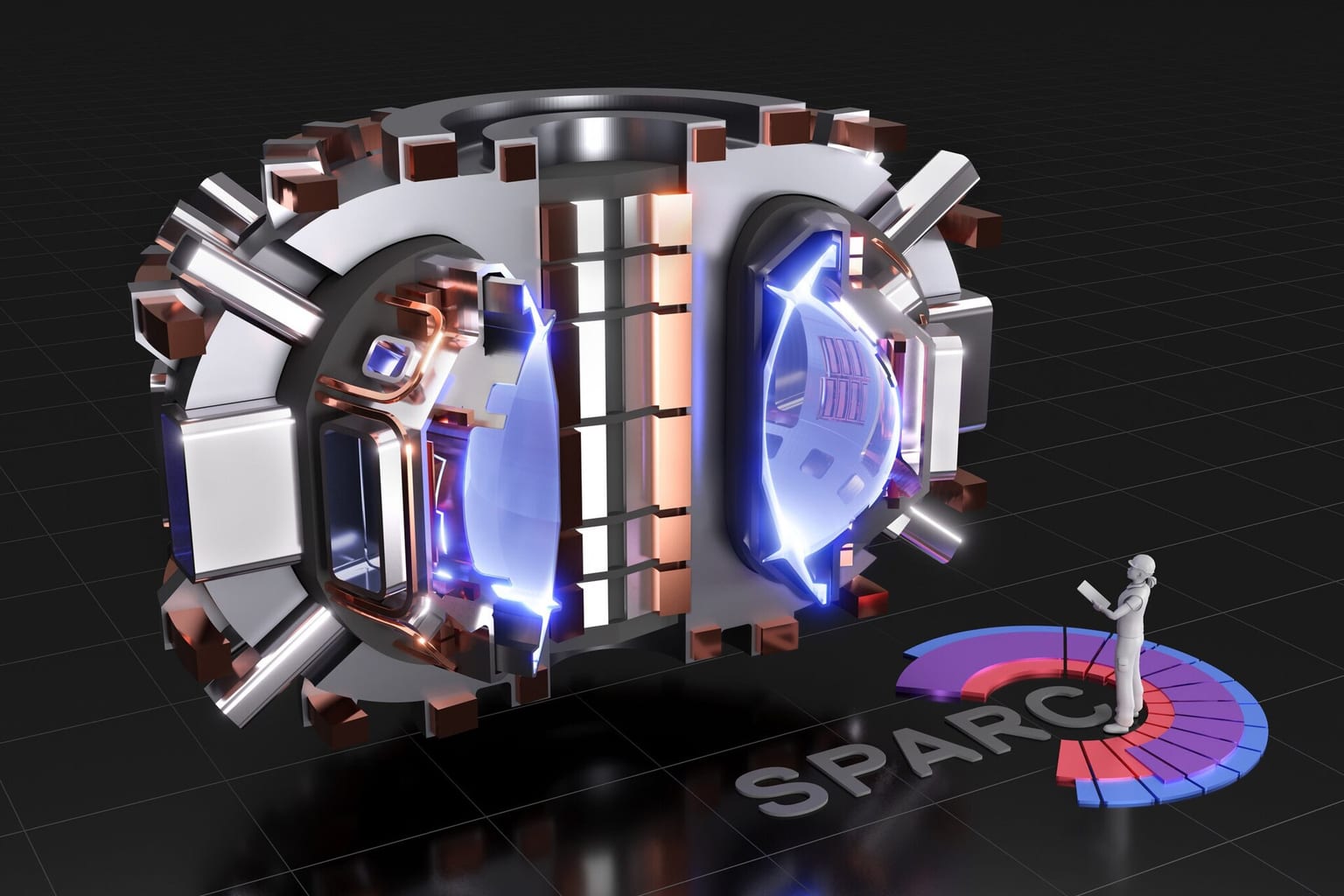
Applied to future machines, the model gives concrete numbers. For ITER, the researchers predict at least 43 megawatts to reach H-mode, below the machine's planned capacity. For SPARC, a compact, high-field tokamak being developed by the U.S. company Commonwealth Fusion Systems, the predicted minimum is 26 megawatts, just above its planned 25-megawatt capacity, a margin that leaves considerably less room for uncertainty. These are predictions. Neither machine has yet measured the threshold, and the threshold varies with reactor design rather than being one universal number.
The team presents its equations as a physics-based basis for extrapolating to future experiments, to help researchers assess the operating requirements of future fusion devices.
Sources — read the originals(Paris time)
Pages consulted while writing
Read next
Comments
Loading the thread…
Sign in to leave a comment. Sign in