ITER energizes 330-tonne fusion magnet to 34 kA in cold test
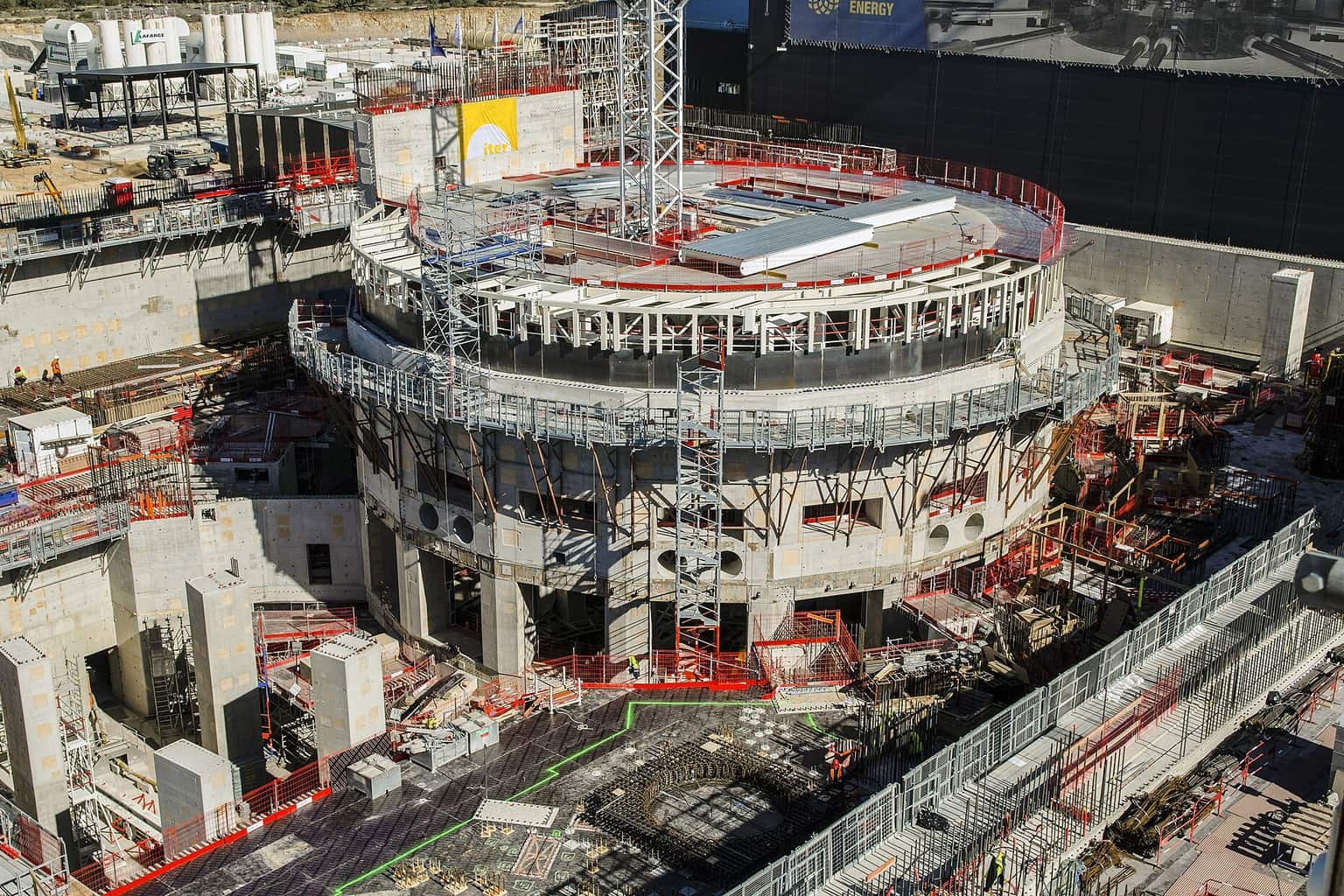
On the test bench, the magnet is cold: 4 kelvins, or minus 269 degrees Celsius. Coil #17, one of ITER's 330-tonne superconducting magnets, has just been energized to 34 kA before being removed from the magnet cold test facility. Its nominal operating current is 68 kA, so the test ran at half of it.
ITER, the international fusion reactor project, needs these coils to confine the superhot plasma inside its tokamak, the reactor's plasma chamber. The project will use 18 D-shaped toroidal field coils, six poloidal field coils and a central solenoid to generate and control the magnetic fields that fusion experiments require. Each magnet must be checked before it is installed. The test facility was built for that purpose and evaluates the cryogenics, vacuum systems, power supplies, electrical feeders and control systems that surround each coil. The first campaign, begun in May 2026 on toroidal field coil #7, reached 10 kA. Coil #17 started testing in August and reached 34 kA, a much higher current that exposed the coil to stronger electromagnetic forces.
The result is that engineers observed the coil's structural response at that level and compared it with the models. Adrien Deydier, ITER's lead mechanical engineer on the testing, said that reaching 34 kA was "an important step to confirm the coil is behaving as predicted by the models." The campaign also gave teams operational experience for integrated commissioning. The test concerns a single coil in a test facility, and the full magnet system has yet to be commissioned.
For ITER, this changes the next phase. Coil #17 is now on a transport frame and will be moved into temporary storage before going to the Assembly Hall, where it will be integrated into the plasma chamber's final sector module. Testing that identifies problems before installation reduces the risks that would otherwise surface during commissioning and later operation.
The cold-test facility now turns to coil #19, a spare, whose cooldown to 4 K is scheduled to begin in April 2027, followed by testing at 34 kA. The next campaign will introduce connections that replicate those planned for the tokamak, to assess the magnet's high-voltage ground insulation. The facility will then be fitted with a reinforcement structure to prevent coil deformation at the full 68 kA, and temperature-margin tests will deliberately heat parts of the coil to trigger a loss of superconductivity and verify its protection systems. After that, the facility will be reconfigured for poloidal field coil #1.
Sources — read the originals(Paris time)
Read next
Comments
Loading the thread…
Sign in to leave a comment. Sign in