UK fusion test rig doubles heating power to 8.8MW
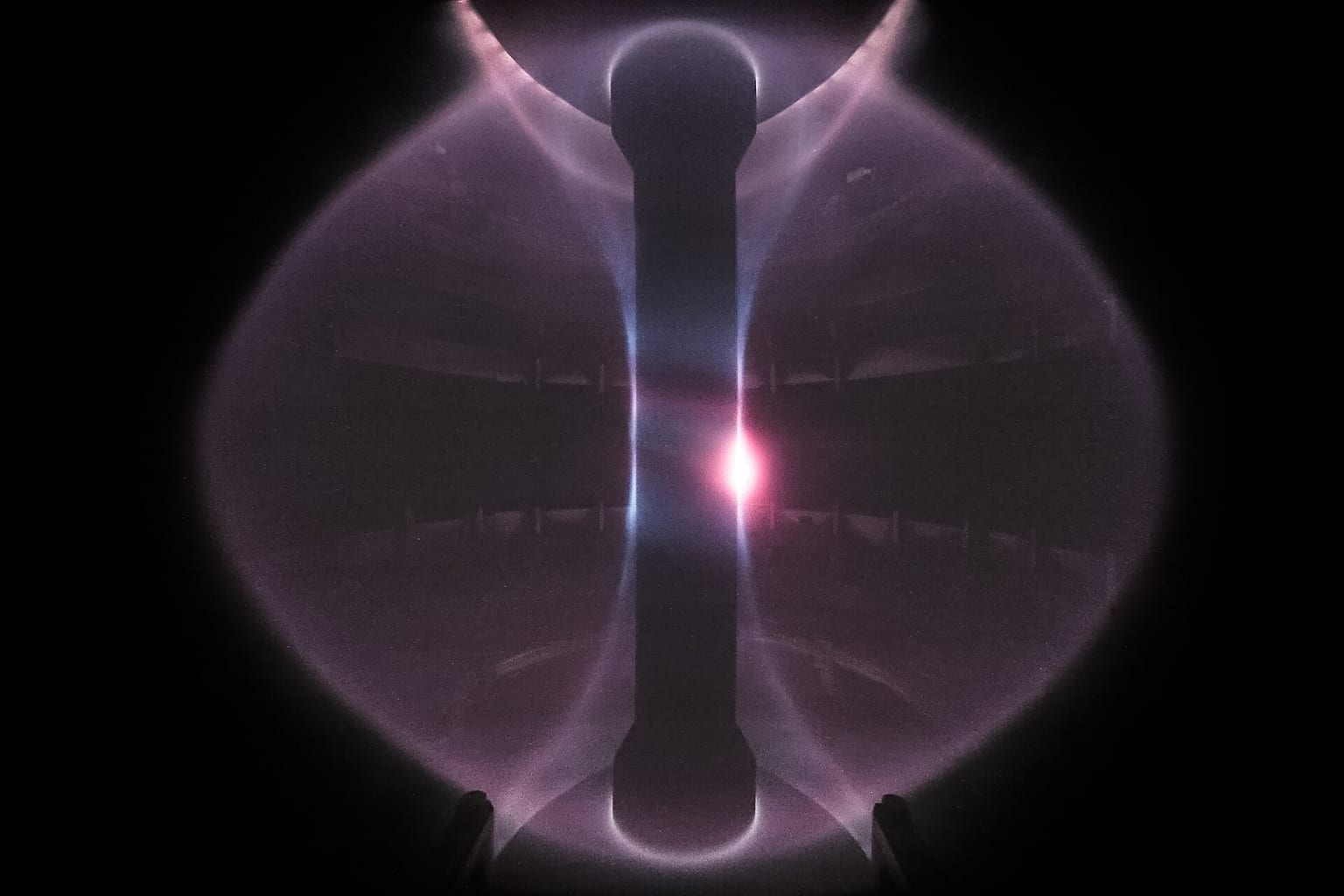
At Culham, the UK Atomic Energy Authority (UKAEA) has lowered a 12-tonne stainless-steel containment vessel into place. Known as the “double beam box”, it is a double-decker container with an internal volume of roughly 20m³, built from 316L stainless steel. Once its lid is fitted, the structure will weigh about 15 tonnes. Its job is to house two additional neutral beam injectors on the Mast Upgrade.
Neutral beam injectors fire high-energy neutral atoms into the confined plasma, raising its temperature and driving its current. UKAEA says the two extra units will lift the device's neutral beam heating capacity from 4.4MW to 8.8MW. That should let scientists reach hotter plasma, from about 30M°C to an anticipated 60M°C. Mast Upgrade is a medium-sized spherical tokamak, one of the UK's main experimental fusion facilities, and it is used to test confinement, heating and exhaust concepts that could inform larger machines. Andrew Thornton, UKAEA's head of Mast Upgrade operations, said the change would let the team “explore plasma conditions we simply couldn't reach before”.
The box lift came alongside other work on the upgrade: installation of an electron Bernstein wave (EBW) microwave heating system, the reuse of power-supply equipment from the Joint European Torus (Jet), the fabrication of the beam-line module that forms and guides the neutral beams, and the installation of the positive ion neutral injectors (Pini).
For researchers, the gain is a wider range of experiments. Thornton said the team will study the stability of higher-pressure plasmas while testing how the exhaust system copes with hotter, higher-performance plasmas. These results matter for Step, the UK's proposed prototype Spherical Tokamak for Energy Production, which the government has previously committed funding to and which is designed to demonstrate net electricity production from fusion on a small grid scale. Step is still a planned machine, and Mast Upgrade is a laboratory device whose data is meant to inform it.
The next milestones are concrete. UKAEA engineers plan to install the cryopump, which controls vacuum pressure, and the neutral injector hardware, and to finish manufacture and fitting by the end of next autumn. The vacuum-tight vessel is expected to be commissioned for experiments in 2028.
Sources — read the originals(Paris time)
Read next
Comments
Loading the thread…
Sign in to leave a comment. Sign in