Gold nanoparticles shift electrical doping in lab organic devices
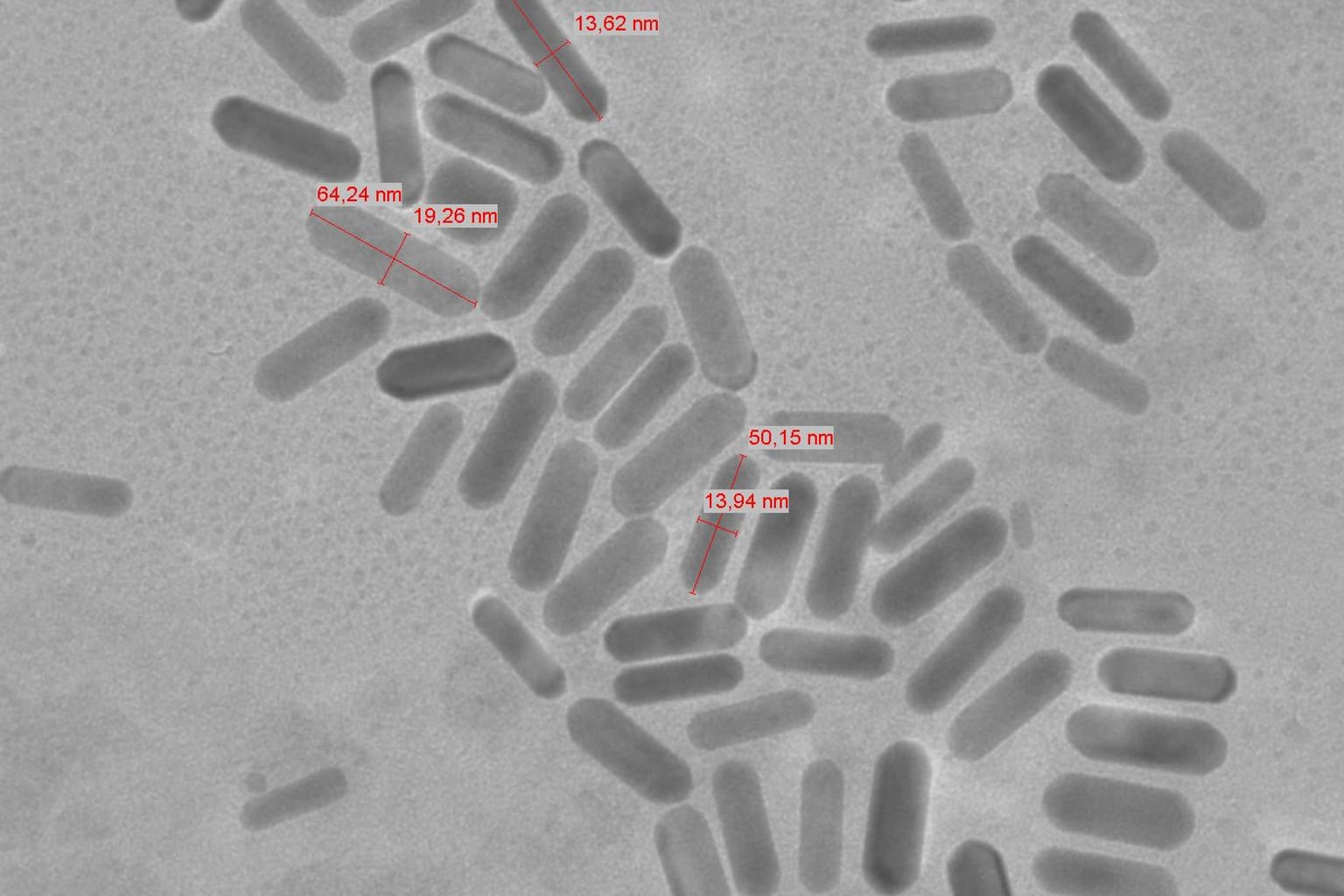
The team at Umeå University expected gold to make a light-emitting device brighter. The particles did something else. Inside the device, they changed the electrochemical doping that controls how well the material conducts electricity.
The project was built on a collaboration between two groups with complementary skills. Nicolò Maccaferri leads the Ultrafast Nanoscience group, which studies the dynamics of electrochemical reactions in organic electronic devices. Ludvig Edman heads research at the Organic Electronics and Photonics group, which was looking for ways to improve device performance. The collaboration started within the WISE-UmU framework, Umeå University's early contribution to the national WISE program, and a key part of it was the recruitment of postdoctoral researcher Ajay Kumar Poonia, who joined the Department of Physics in 2025 to work across both environments.
The original goal was to find out whether gold nanoparticles could raise the emission efficiency of light-emitting electrochemical cells. The particles can act like tiny antennas, scattering and directing light, so the researchers expected them to improve emission in that way. When the results were analyzed, a different effect emerged. "We found that they also affect the electrochemical doping within the device," says Poonia. "This became the central result of the paper." Electrochemical doping changes a material's ability to conduct electrical current, and it is central to how many organic electronic devices operate.
For the field, the consequence is that gold nanoparticles could become a tool for controlling conduction across organic electronics, not only in light-emitting devices. The researchers name electrochemical transistors, bioelectronics and neuromorphic technologies as possible applications. These are directions the study points to, not results it tests. The work is still at the stage of laboratory research, and the researchers have not announced a timetable for devices based on the effect.
The next steps are already planned. The team intends to explore these electrochemical processes in greater detail and to use what it learns to develop new electronic devices, and additional joint publications are in preparation. "We see this as the beginning of a longer-term collaboration," says Maccaferri.
Sources — read the originals(Paris time)
Read next
Comments
Loading the thread…
Sign in to leave a comment. Sign in