New MOF electrodes switch transistors on and off
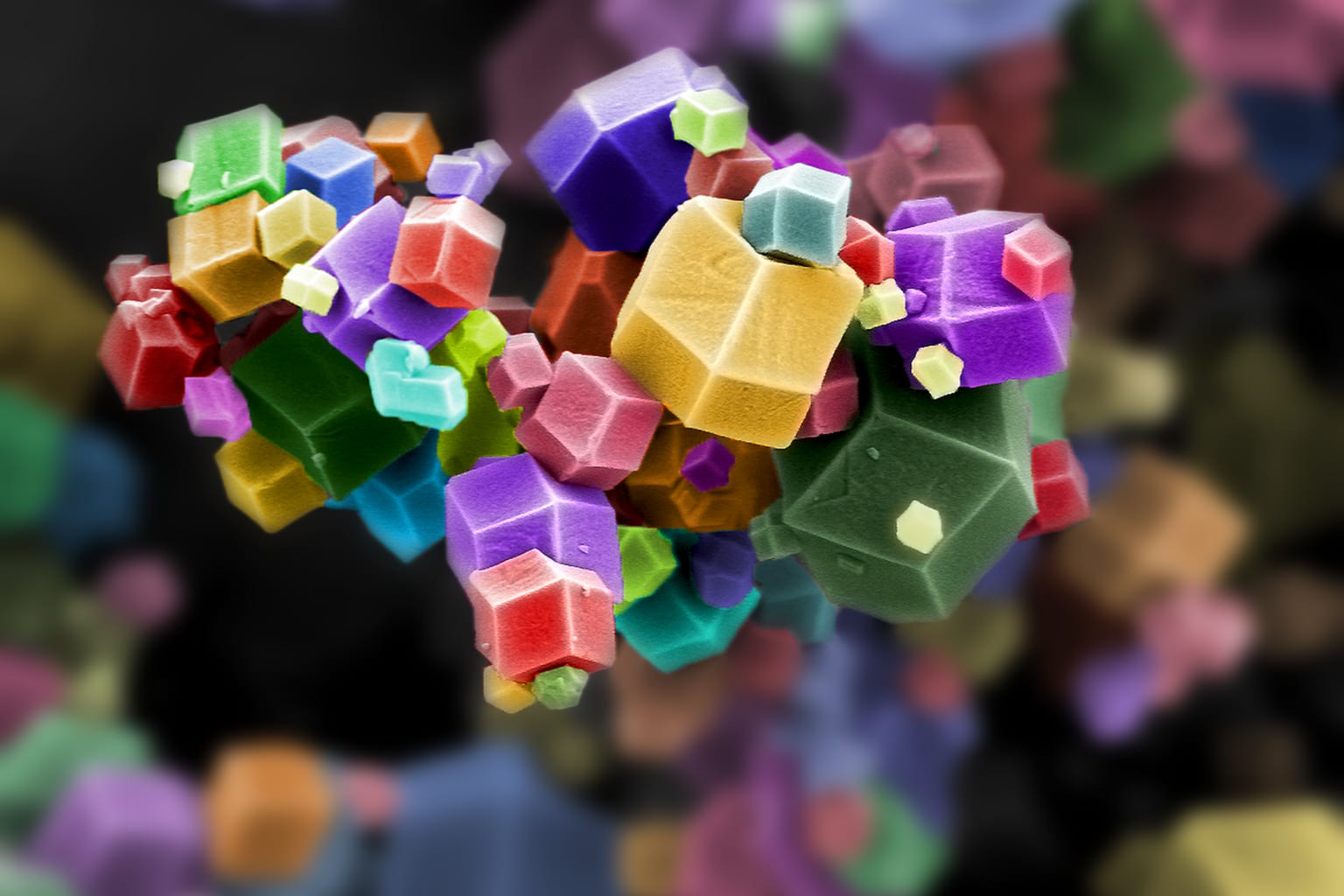
A transistor is a switch that opens and closes in a fraction of a second, billions of times over inside a processor. What opens and closes it is the gate electrode, which receives the control signal. For decades, that electrode has been made of metal, and a metal's electronic properties are fixed: engineers pick a metal and then adapt the rest of the device to it.
A KAIST-led team, with colleagues from Pukyong National University, POSTECH and Yonsei University, and led by professor Sarah S. Park of the Department of Chemistry, has built working gate electrodes from a different kind of material. Conductive metal-organic frameworks, or MOFs, are regular structures in which metal ions and organic molecules are linked together. Changing the mix of metals and molecules changes the material's electronic properties. One of them, the work function, is the energy an electron needs to escape the surface. It affects the voltage at which a semiconductor turns on. The film used in the study, made from Cu₃(C₆O₆)₂, has a work function of 4.51 eV, a value that lies between those of typical n-type and p-type semiconductors. In other words, the same film can control both types of channel.
The hard part was shaping the material without ruining it. The team grew a thin, uniform film by reacting precursors in the gas phase, a method called chemical vapor deposition. Light then defined a fine pattern through photolithography, and etching removed the unwanted areas. Because damage to the film reduces its conductivity, the team etched in two steps: ammonium persulfate, a slow-reacting etchant, formed the pattern, and a fast chromium etchant was applied briefly to clear the residue. Afterwards, the structure, chemical state and conductivity were largely preserved.
The electrodes were tested on MoS₂, MoTe₂ and IGZO. On a MoS₂ device, the team built a MOF gate and a conventional platinum gate on the same channel, and the two showed similar threshold voltages and similar field-effect mobility. On a single substrate, the team placed 23 IGZO transistors and formed all their gate electrodes in one patterning step; all 23 worked. One IGZO transistor kept stable performance over 400 consecutive gate-voltage cycles, and a MoS₂ transistor kept its MOF gate's characteristics after about one year of storage in ambient air.
For now, the gain is a method, not a product. If the composition can be tuned so that chips run at lower voltages, the approach could cut power use, but the team has yet to measure that in practice. It also plans to check whether the electrodes can shrink, be made uniformly over large areas, and stay reliable over time. The study gives no date for any of this. What it does show is that a single family of materials can serve as the electrode for several different semiconductors, and that the choice of electrode could become a design decision rather than a constraint.
Sources — read the originals(Paris time)
Read next
Comments
Loading the thread…
Sign in to leave a comment. Sign in