In the lab, a semiconductor breaks the 7 eV bandgap record
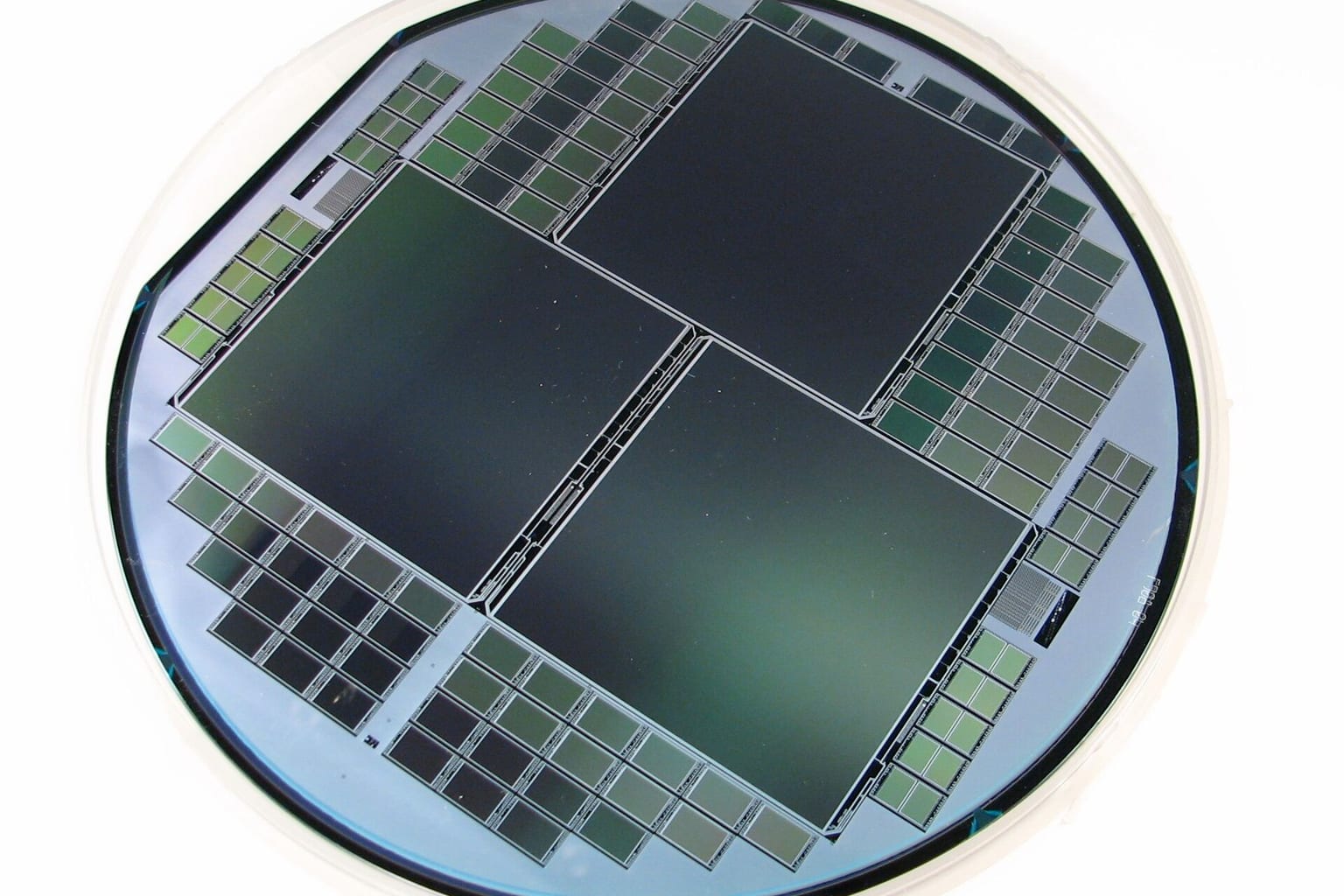
The first reaction Darrell Schlom heard from his scientific friends was “that’s impossible.” The Cornell University materials science professor, senior author of the study, admits that the result “did seem too good to be true” at first. The semiconductor his team built has a bandgap of more than seven electron volts (eV), beating the previous record of six eV.
The bandgap is the energy electrons need to move through a material. Wider gaps let a material withstand stronger electric fields, which makes them useful for high-voltage applications where energy efficiency is crucial. The catch is that materials with very wide gaps tend to behave like insulators, and making the gap wider without losing conductivity has been difficult.
To get around that, the team grew thin films of aluminum gallium oxide using suboxide molecular-beam epitaxy, a technique that builds up crystals one layer at a time under carefully controlled conditions. They then introduced silicon atoms, which supply mobile electrons that carry the current. At room temperature, the material conducts electricity at least 100 million times better than previously reported materials with bandgaps above six eV.
To show the material works in a device, the team built a diode and a field-effect transistor called AlphaFET. In the transistor, the metal gate changes the electrical current by more than four orders of magnitude, which shows that conductivity can be controlled both by silicon doping and by an applied electric field. Huili Grace Xing, a materials science professor who also worked on the project, says that building a transistor demonstrates “an essential building block of electronic systems” along with several of the semiconductor’s unique properties.
For engineers, the practical advantage lies in how the material is made. The films sit on sapphire, a widely available substrate already produced at larger scale, which could make the material easier to manufacture than other ultrawide-bandgap materials. Debdeep Jena, also a Cornell materials science professor, calls it a “game-changing platform” for the near future. He says it could improve electric vehicles, aircraft and data centers, and could also serve commercial and defense applications.
Jena is clear that the device is not ready yet: more work is needed to make it practical. He also points to telecom-relevant quantum cascade lasers and vacuum UV photonic devices, which he says the new class of materials will enable and which were not possible before. The study has been published in the journal Nature.
Sources — read the originals(Paris time)
Read next
Comments
Loading the thread…
Sign in to leave a comment. Sign in