Google's AI model gives hurricane forecasters an extra day of accuracy
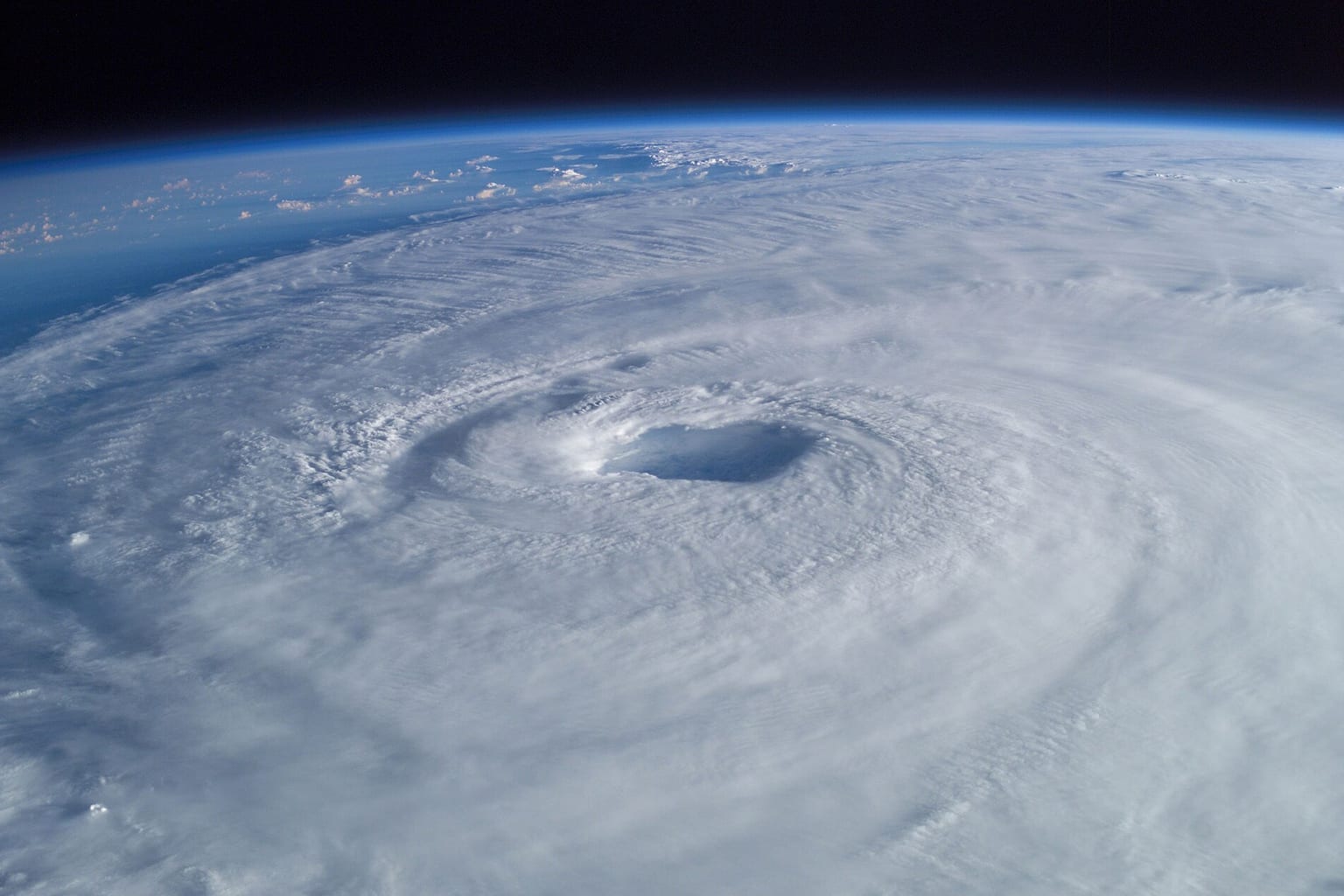
On Oct. 10, 2026, storm damage lay across a gas station in Gulf Breeze, Florida, in the aftermath of Hurricane Isaias. A full week before the storm formed into a tropical cyclone, the model built by Google DeepMind, Google's AI research lab, had recognized it could.
The US National Hurricane Center (NHC) has used AI models in operations since late June 2025, and in 2026 the DeepMind model was added to some of its track and intensity consensus aids, the blended forecasts that combine several models. Before AI, the agency relied on dynamical models, which run on supercomputers to solve the equations of fluid motion and thermodynamics that govern the atmosphere, on statistical models built on past storm behavior, and on hybrids of the two. AI models learn from large data sets, as statistical models do, but on a far larger scale and with the ability to pick up much more complicated patterns. The DeepMind model is not a hurricane-specific tool: it is the same model used for everyday weather, pushed to its limits, says Ferran Alet, the scientist who leads the company's cyclone work. For each storm, it can generate 1,000 possible scenarios and forecast rainfall alongside the track and intensity.
The gain is measured in lead time. In a paper published in Nature in August, the team reports that the model gives forecasters an extra day of predictive accuracy on average, and that its three-day forecasts are as good as what earlier models could offer for only the next two days. The study tested it on historical cyclones from 2023 and 2024. DeepMind also credits the model with helping the NHC make a historic forecast for Hurricane Melissa during the 2025 season, by predicting the storm's rapid intensification.
Other observers largely confirm the picture, with caveats. Brian McNoldy says that by the end of the 2025 Atlantic season, the model was already one of the best at predicting a storm's path and strength. Figures cited by the Horizon Search Institute put it ahead of the center's official track forecasts by as much as 30% at five days, through the first week of September. CNN reports that the NHC shaped its predictions to match the DeepMind model closely, rather than the classic physics-based one, and that by some measures the model even outperformed human forecasters over the 2025 Atlantic season. Brennan, whose team gives regular feedback to Google DeepMind, says the model still needs work.
The limits are also stated by forecasters themselves. Dan Brown, operations division chief at the NHC, says individual models can “wildly flip their tracks or intensity projections from cycle to cycle”, so specialists still choose which model captures a given storm and how to blend them. The physics-based models built the baseline on which the AI was trained, and the algorithm “doesn't look at live aircraft and satellite data” to read a storm's current structure.
For people in a storm's path, the change is lead time. Hurricanes are becoming more powerful, carrying more rainfall and moving more slowly as the climate warms, so a forecast that holds up a day earlier gives more time to prepare. DeepMind says its code and model weights are open source and freely available to anyone to build on. The next step is already under way: the NHC is working with the company to develop the successor to this model.
Sources — read the originals(Paris time)
Pages consulted while writing
Read next
Comments
Loading the thread…
Sign in to leave a comment. Sign in