Hanwha Power's 1,700-TEU battery ship gets ABS approval in principle
At the Bergen conference, Hanwha Power's Vice President of Technology Solutions, Jong-kyu Hwang, received the paperwork that matters for the design: an approval in principle from the American Bureau of Shipping (ABS) for a 1,700-TEU container ship powered entirely by batteries. The certificate was presented on October 22, and Hanwha Power announced it the next day. It is a document for a design, not for a hull in the water.
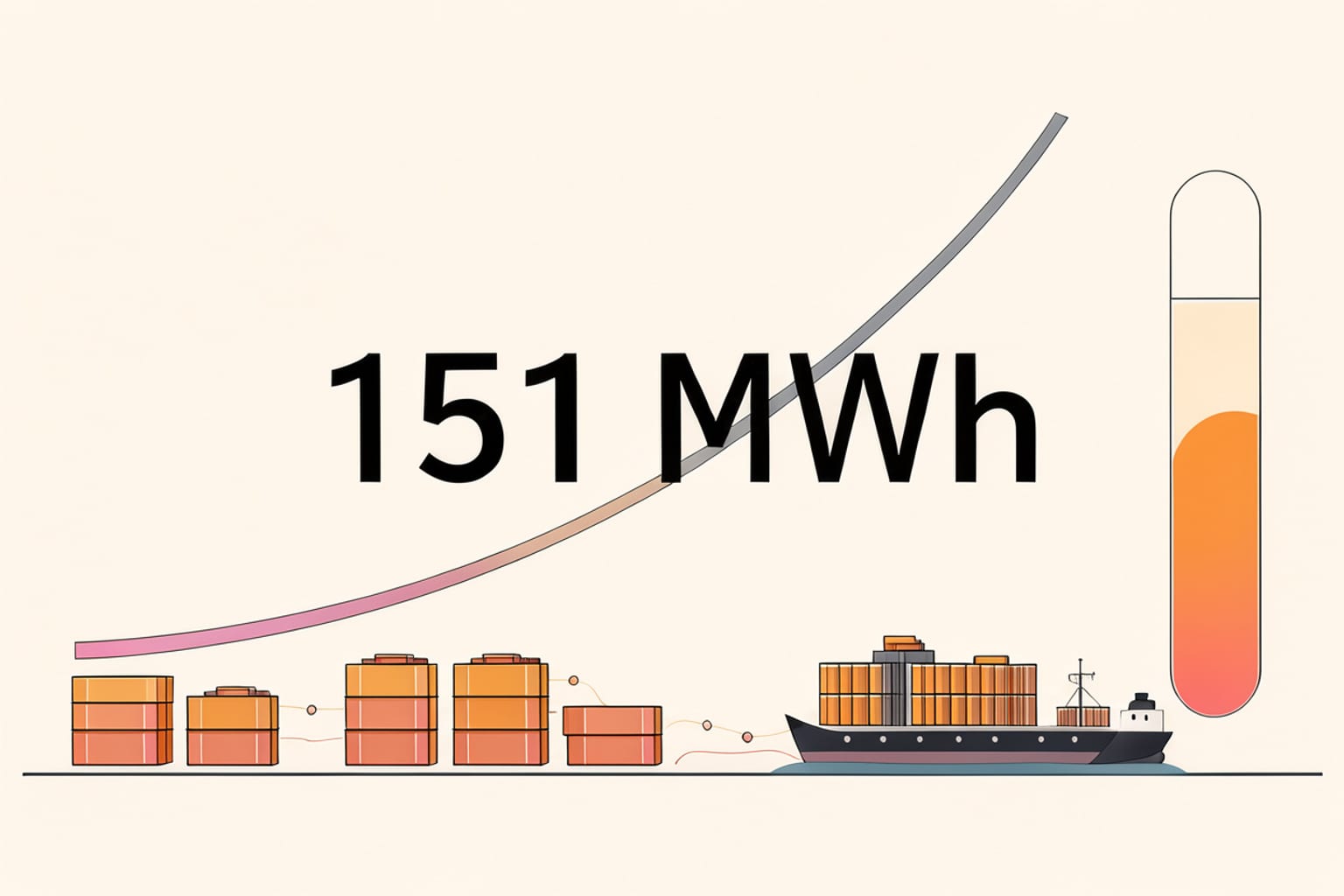
The ship would carry its energy in a 151 MWh battery system, which is the central element of the concept. The batteries come in containers, and they can be lifted and stowed the way ordinary freight containers are. Electricity would be stored onboard and recharged at port, which is why the company describes the vessel as avoiding direct carbon emissions while it sails.
The approval changes little on its own. Hanwha Power has not said how far the ship could travel on a charge, how long recharging would take, how fast it would go or when a shipyard might start building it. The approval is a step in a design process, and the release leaves those figures open.
For Hanwha Power, the approval extends its marine technology capabilities to fully electric vessels, and the company plans to pursue the next-generation zero-carbon maritime transport market with it. Its 1,000-TEU design, whose basic design is complete, shows the same approach applied to a smaller vessel. The company's aim is a range of electric ships suited to different routes and customers, and the concept itself targets short-sea and regional container transport.
The next question for the concept is whether it can meet those routes in practice. The release does not say, and Hanwha Power has not announced a delivery or entry into service for either design.
Sources — read the originals(Paris time)
Read next
Comments
Loading the thread…
Sign in to leave a comment. Sign in