Hot-air welding joins thermoplastic composites
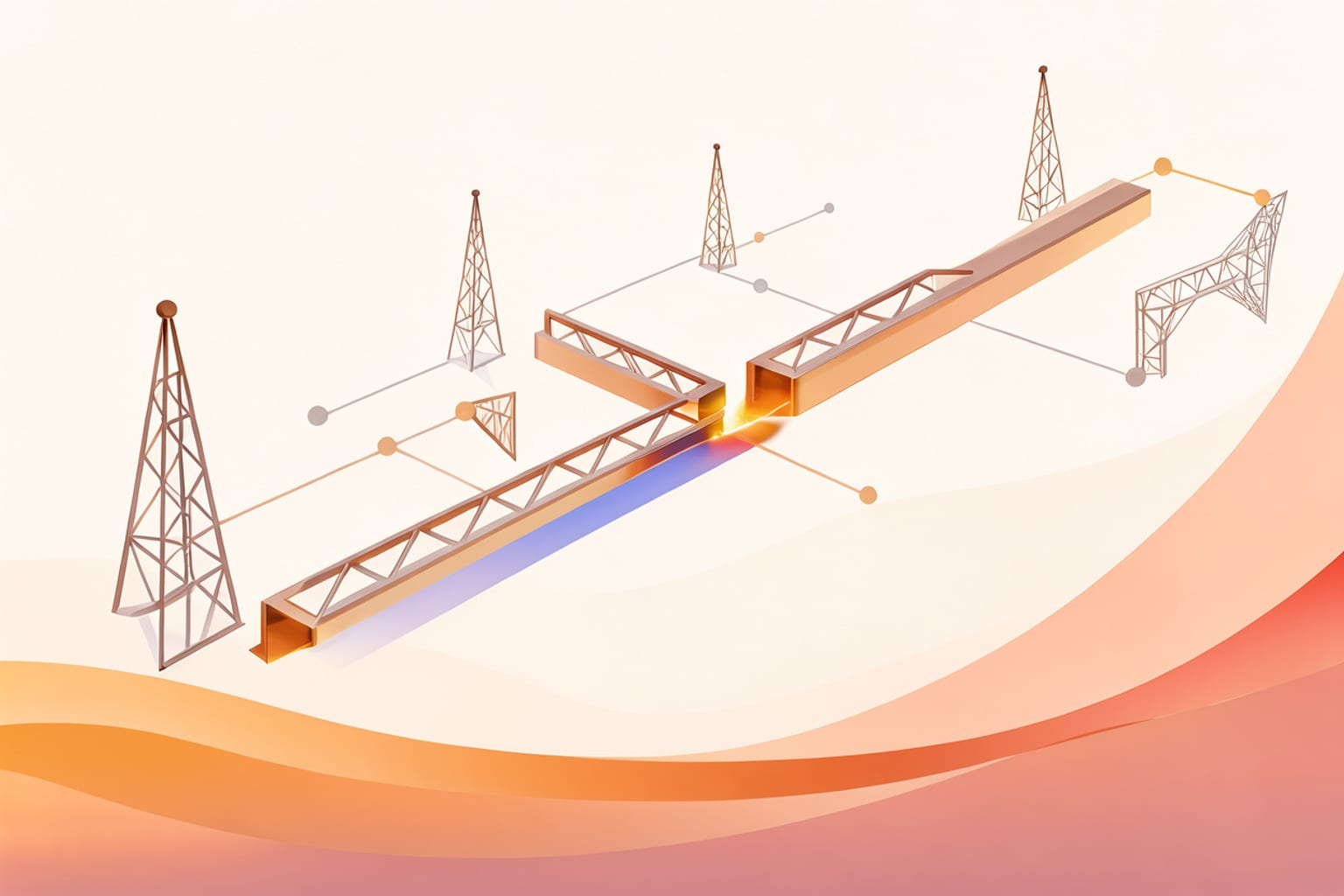
A hot-air blower heats the end of two glass-fiber plastic profiles. The parts are then placed in a mold and pressed together until they fuse. That is the whole sequence the Skoltech team ran in its laboratory, with a heat gun, a press and a formwork, and it is what the researchers now want to take outdoors.
The problem they target is an old one in construction. Wind turbine towers, transmission towers and pedestrian overpasses are built from concrete and metal, which rusts, or from thermoset polymers, which cannot be recycled and can only be joined during assembly or repair with bolts, rivets or adhesives. "Such joints add weight, create stress concentrations and increase vulnerability to moisture and temperature fluctuations," Safonov's team writes in its account of the study.
The way out lies in the difference between the two families of plastic. Thermosets set permanently as they cool, and remelting them breaks their chemical bonds at the microscale. Thermoplastics, by contrast, can be melted locally, pressed together and rejoined. The team had already shown that thermoplastics could reach the required strength. Its new work is about how to join them. "There are just four parameters," Safonov said: the air temperature and exposure time on the heated area, then the pressing force and duration. More heat and pressure fuse the parts better, but past a limit the profile loses its shape. The researchers say they found the balance between the four settings that defines the optimal weld.
In the tests, the welded joint was comparable in strength to those made by ultrasonic and resistance welding, and "not critically inferior" to induction welding. Those established techniques need equipment that is more complex, more expensive, bulkier and more energy-hungry. The study's conditions still have limits: the press was a laboratory unit, and the field version is a proposal, with hydraulic devices of the kind used to change car tires. The paper does not report a cost for the kit, nor any test on a real structure.
What would change is access. A simpler weld makes thermoplastic composites usable in remote areas, where a long service life and easy maintenance bring the largest economic gains, according to the researchers. The field setup described is a small blower and hydraulic devices rather than a workshop line, but no date for that step has been announced, and the work remains at laboratory scale.
Sources — read the originals(Paris time)
Read next
Comments
Loading the thread…
Sign in to leave a comment. Sign in