Jet engine blades could be restored after 5,000 flights
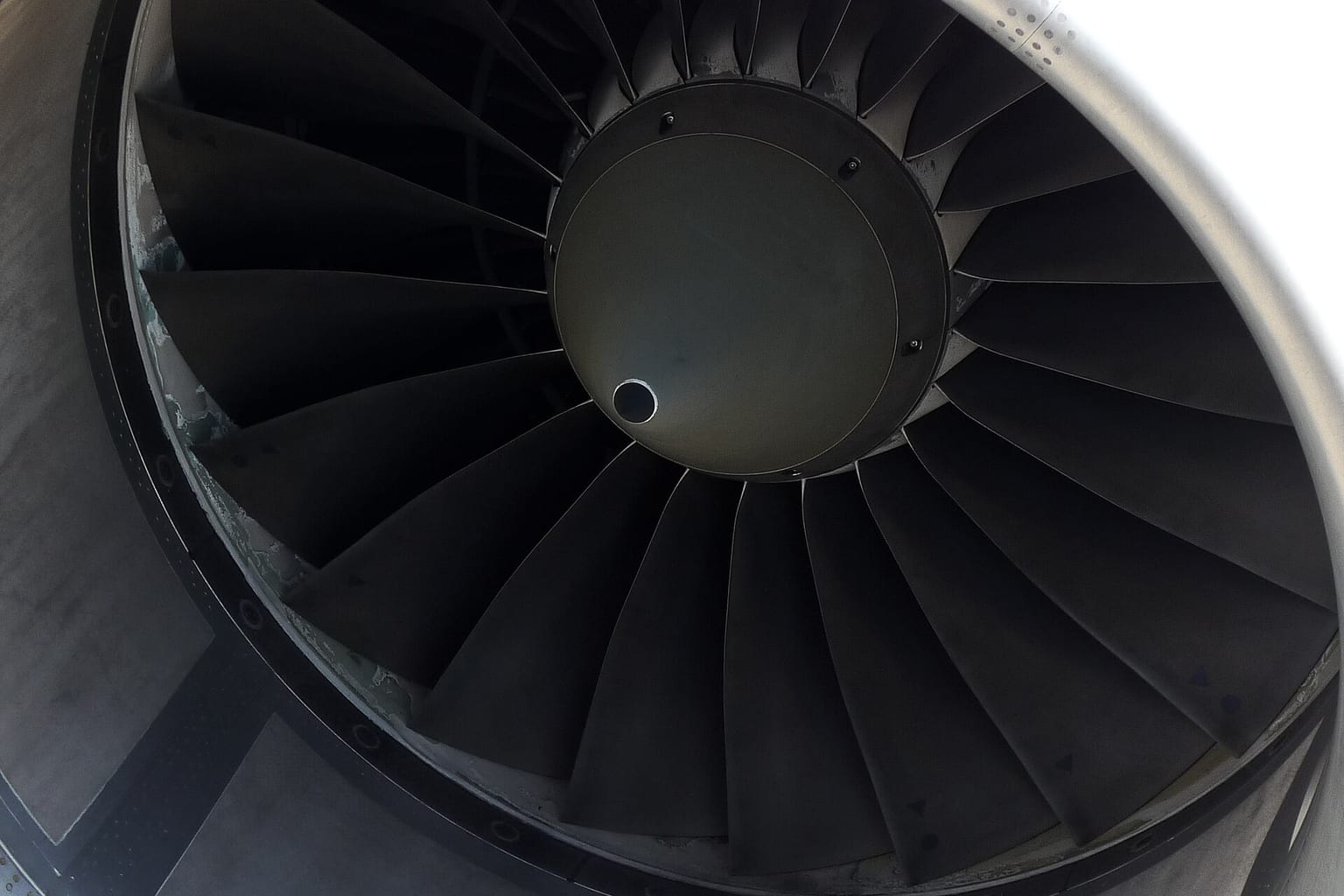
Jet engine blades spin at up to 16,000 RPM and face temperatures that can exceed 1,500 degrees Celsius, sometimes above the melting point of the alloys they are made from. Under those conditions, the metal slowly fails. Tiny pores form inside the blades, and first-stage blades are often scrapped after about 5,000 flight missions, equivalent to about three to six years of service.
At Ruhr University Bochum, a team is testing whether that scrap pile can shrink. The researchers use hot isostatic pressing, or HIP: the damaged part is heated while it sits under uniform gas pressure, then cooled rapidly. The aim is to close the pores and restore the original microstructure without destroying the single-crystal structure that makes the blades resistant to heat. Sebastian Weber, a researcher at the university, describes the damage as creep fatigue, caused by tensile stress from rotation at high temperature. Louis Becker, another scientist on the study, says restoring the microstructure and mechanical properties is the goal of the HIP treatment.
The work is part of the three-year Second_Life project, which began in August 2026. Partners include the German Aerospace Center (DLR), the repair specialist Lufthansa Technik, the heat and surface treatment company Aalberts Surface Technologies, and the metal processor Otto Fuchs. The method is at lab stage. The DLR will expose samples to high temperature and mechanical stress to recreate controlled damage, Ruhr University Bochum will treat them with HIP, and mechanical tests will then measure whether performance comes back.
For airlines and engine makers, the gain would be fewer new parts. Weber puts it in terms of resources: extending blade life would cut demand for newly manufactured components and the energy and raw materials used to make them. The team's stated target is to prove that treated blades can return safely to service after treatment and recoating. The sources give no figure for how many blades could be reused, what the treatment would cost, or when a repaired blade could fly, so those questions remain open for the coming years of testing.
Sources — read the originals(Paris time)
Read next
Comments
Loading the thread…
Sign in to leave a comment. Sign in