Humanoid robot climbs ladders, 92.5% success
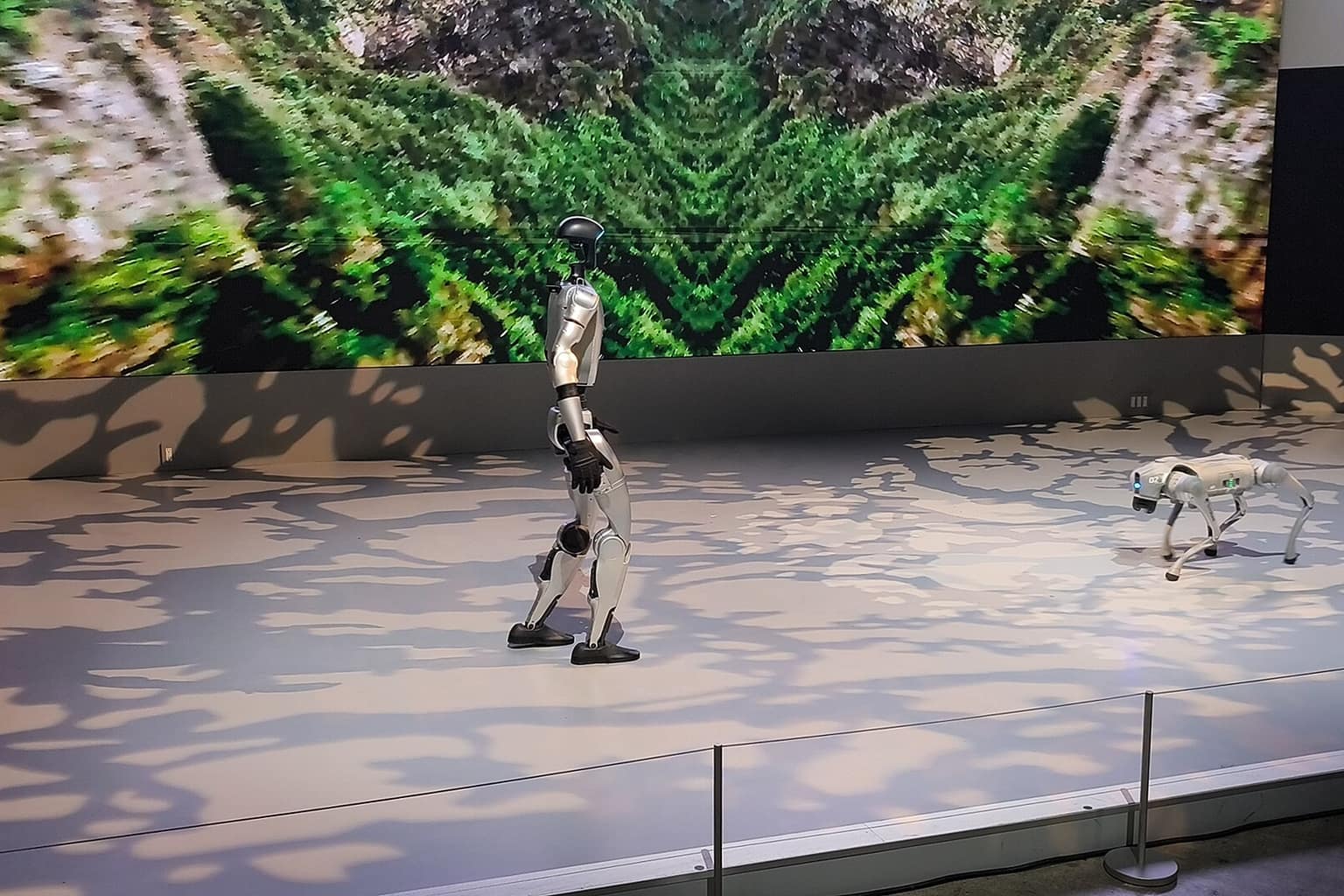
A humanoid robot grips a ladder rung with its hands, sets its feet on the next one, and keeps climbing. Nobody has scripted that sequence. A single learned policy decides where each contact should go, and the robot's controller works out how to reach it. Researchers at ETH Zurich demonstrated the method on Unitree's G1 humanoid, and the same approach also handled obstacles, crawling spaces and falls.
For years, robot control has leaned on one of two methods. Reinforcement learning lets a robot improve through repeated attempts and feedback, but it can struggle with complex coordination. Motion imitation teaches a robot to follow recorded movements, but it can struggle to adapt when the terrain is unfamiliar. The team's Attention-based Contact Planning (ACP) takes a different route: it predicts suitable contact points on the terrain, and a separate controller coordinates the joints to reach them.
The contact planner is an attention-based neural network. It takes in terrain information, the robot's internal state, joint positions and velocities, body orientation, and a goal set by the user. It plans contacts for nine body parts: two hands, two elbows, two knees, two feet and the pelvis. That lets the robot lean on its upper body for support when walking alone is not enough. A LiDAR-based mapping system turns sensor readings into a local height map, which helps the robot pick out narrow surfaces such as ladder rungs. Running on a Jetson Orin NX computer, it processes a 20,000-point scan in 30 milliseconds, refreshing at 10 Hz. Training ran in three stages, starting from 13.2 minutes of human motion data adapted to the robot's body and physical limits.
In simulation, ACP reached an average success rate of 92.5% across eight composite obstacle courses, against 58.8% for the MGMT baseline. Those figures are simulated; the real-world demonstrations were shown but not reported as success rates. For a robot maker, the practical gain is a single control approach that copes with stairs, ladders, stepping stones and falls, rather than a separate method for each. The sources give no date for commercial use, and the method is still limited to terrain-based contact and movement toward a goal.
The next frontier is harder. The researchers say that overhead contact, hanging and manipulation would need more advanced three-dimensional perception than the current system offers. Those are the capabilities that would let a humanoid use its environment for more than walking and climbing.
Sources — read the originals(Paris time)
Read next
Comments
Loading the thread…
Sign in to leave a comment. Sign in