In the lab, one AI model makes a humanoid walk, then grab
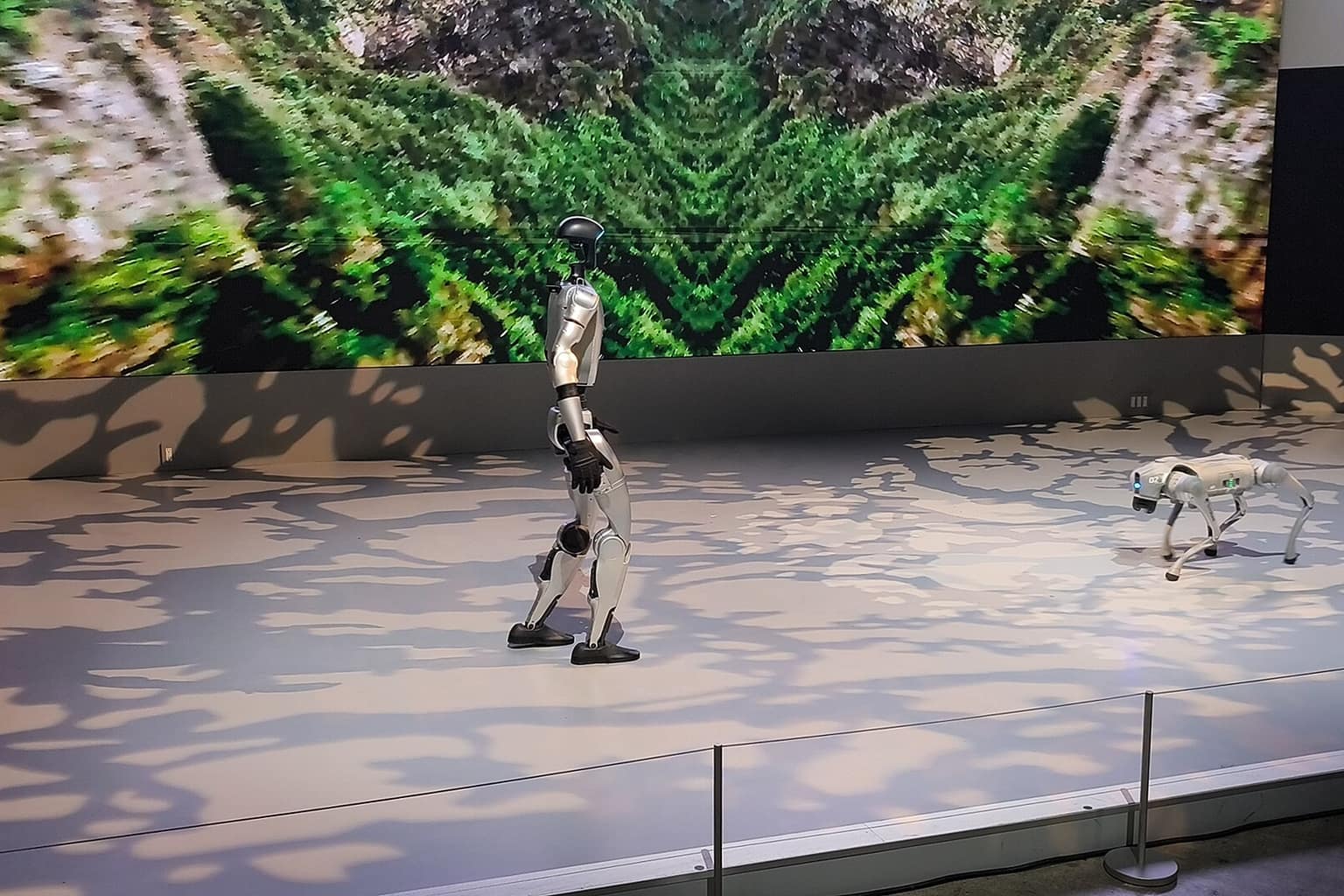
A Unitree G1 humanoid robot moves across a floor, picks up an apple, carries it to another spot and sets it down. Then it goes back for a second object. The whole sequence runs as one continuous task, and the robot was never trained on a complete recording of it.
That gap has been the hard part. Humanoid robots must alternate between walking and handling objects, but the two use very different joints and movements, and one AI model has struggled to learn both reliably. Recording full multistep demonstrations is costly, because a single failure at an intermediate stage spoils the entire recording. Short recordings of single behaviors, such as walking or picking and placing, are easier to collect, but they say nothing about when one behavior should end and the next should begin.
RISE, developed by a team led by professor Songhwai Oh at Seoul National University, takes a different route. It combines a shared visual-language perception model with several action experts and a meta-controller. During training, each expert's 'responsibility' rises when it predicts the current action well, and it then has more influence on learning from that kind of data. Without predefined roles, one expert comes to handle locomotion and another object manipulation. During execution, the shifts in the meta-controller's expert weights mark the end of a behavior, and the system moves to the next predefined task.
The tests ran in simulation and on a real Unitree G1, equipped with two Dex3-1 hands and 43 controllable degrees of freedom (DoF), the independent joint movements a robot can make. In simulation, RISE averaged 87.3% success, against 73.6% for a GR00T-based baseline with a single expert; GR00T is a general-purpose foundation model for humanoid robots released by NVIDIA. On the real robot, RISE averaged 50.0% success across tasks of two, four and up to five stages, against 30.0% for the baseline. The advantage grew with the number of stages, which is the case that matters most for real-world work.
For teams building humanoid robots, the change lies in data collection: a robot can learn to chain behaviors from recordings of each behavior on its own, instead of from costly complete demonstrations. The results remain lab results. Half of the real-robot tasks still failed, and the tests cover a small set of object-moving tasks. The work has been accepted for IROS 2026, and the reports give no date for use outside the lab.
Sources — read the originals(Paris time)
Read next
Comments
Loading the thread…
Sign in to leave a comment. Sign in