In a 40-person study, brain signals track VR sickness as it happens
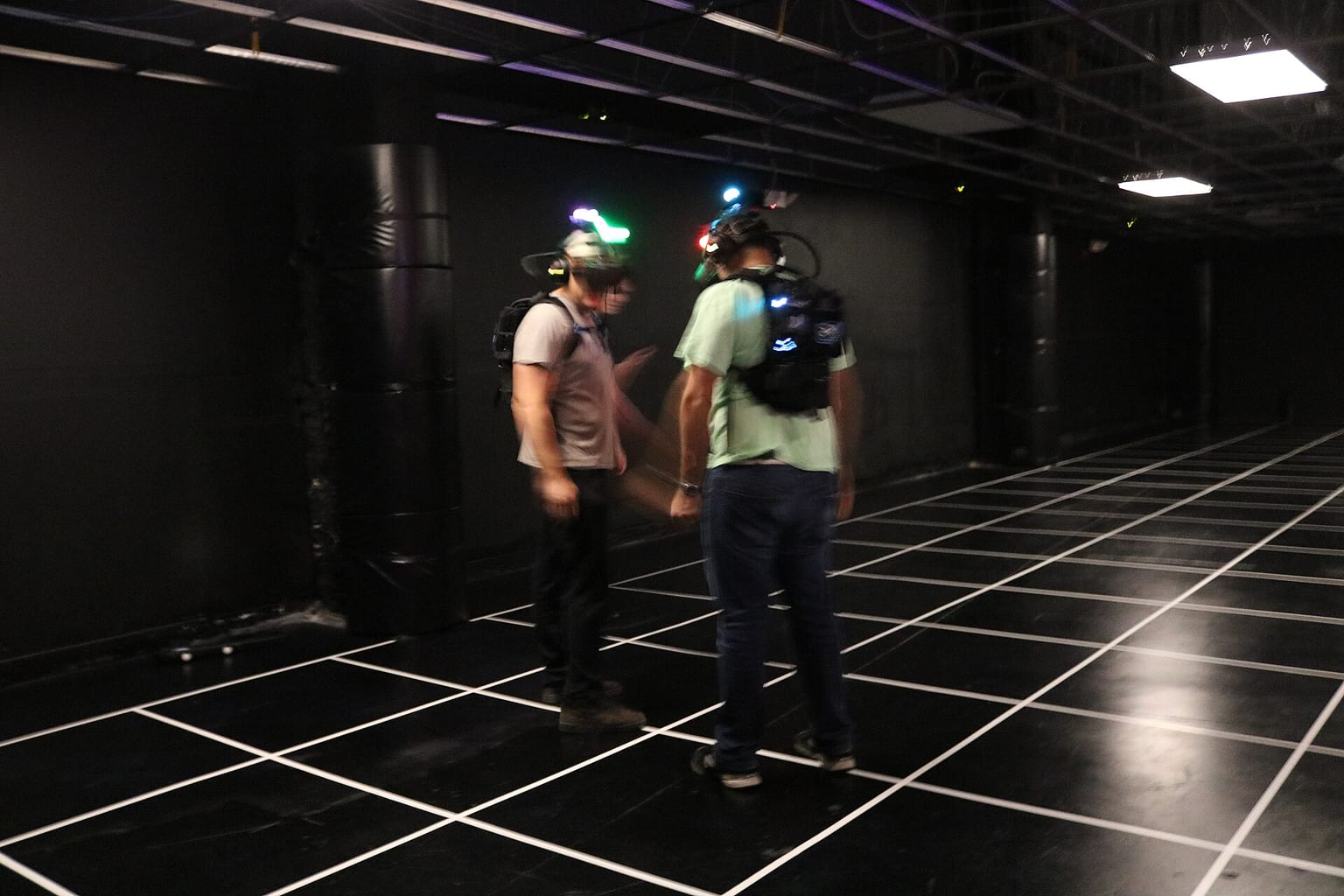
Nausea, dizziness, sweating, blurred vision. For a large share of VR users, these symptoms arrive in the middle of an experience. In previous studies, 65.2% of users reported cybersickness, including 23.9% who reported severe symptoms. Until now, measuring it meant asking people how they felt once the headset came off.
The root of the problem is a mismatch the eyes cannot resolve. In the real world, the distance where the eyes converge on an object and the distance where they focus generally match. In many VR and AR displays, the eyes converge on a virtual object that appears near or far, while focusing on a screen set at a fixed focal plane. This vergence-accommodation conflict is an inherent challenge for many immersive displays, and it is believed to contribute to visual discomfort and cybersickness.
The University of Maryland team, led by Amitabh Varshney, recruited 40 participants and recorded their brain activity with a 64-electrode EEG system while they wore a Meta Quest 2 and experienced an environment designed to induce this conflict. Participants filled in the Simulator Sickness Questionnaire afterward, so the researchers could compare what they reported with what the EEG recorded. The EEG showed a statistically significant decrease in high brain-wave frequencies in the frontal lobe during cybersickness, and a statistically significant decrease in low frequencies in the occipital lobe. Mattie Johnson, the study's first author and a computer science Ph.D. student, said these changes in EEG clusters "could be useful predictors of a cybersickness experience."
What this changes is the timing. Developers could detect symptoms as they occur rather than reconstructing them from a questionnaire, which Bista, the paper's co-author and director of the Immersive Visualization Center, describes as subjective and unable to provide continuous data. Johnson points to the uses she has in mind: health care, teaching, job training, building design and planning surgeries, all areas where discomfort reduces effectiveness. One possible approach would connect an EEG device to a headset. If the system detected a pattern linked to emerging cybersickness, the headset could bring the displayed content closer to its focal plane and reduce the conflict. The study does not yet demonstrate that loop, and no calendar for it has been announced.
The next steps are already planned. The team intends to analyze eye-tracking data, which could provide another objective measure and help separate brain activity from eye-related artifacts in EEG recordings. Bista also wants a cybersickness index that combines several physiological measures. "The SSQ still has its uses," he said, but the combination of signals is what the group is now working toward.
Sources — read the originals(Paris time)
Read next
Comments
Loading the thread…
Sign in to leave a comment. Sign in