Varifocal AR display speeds up 3D pointing in prototype tests
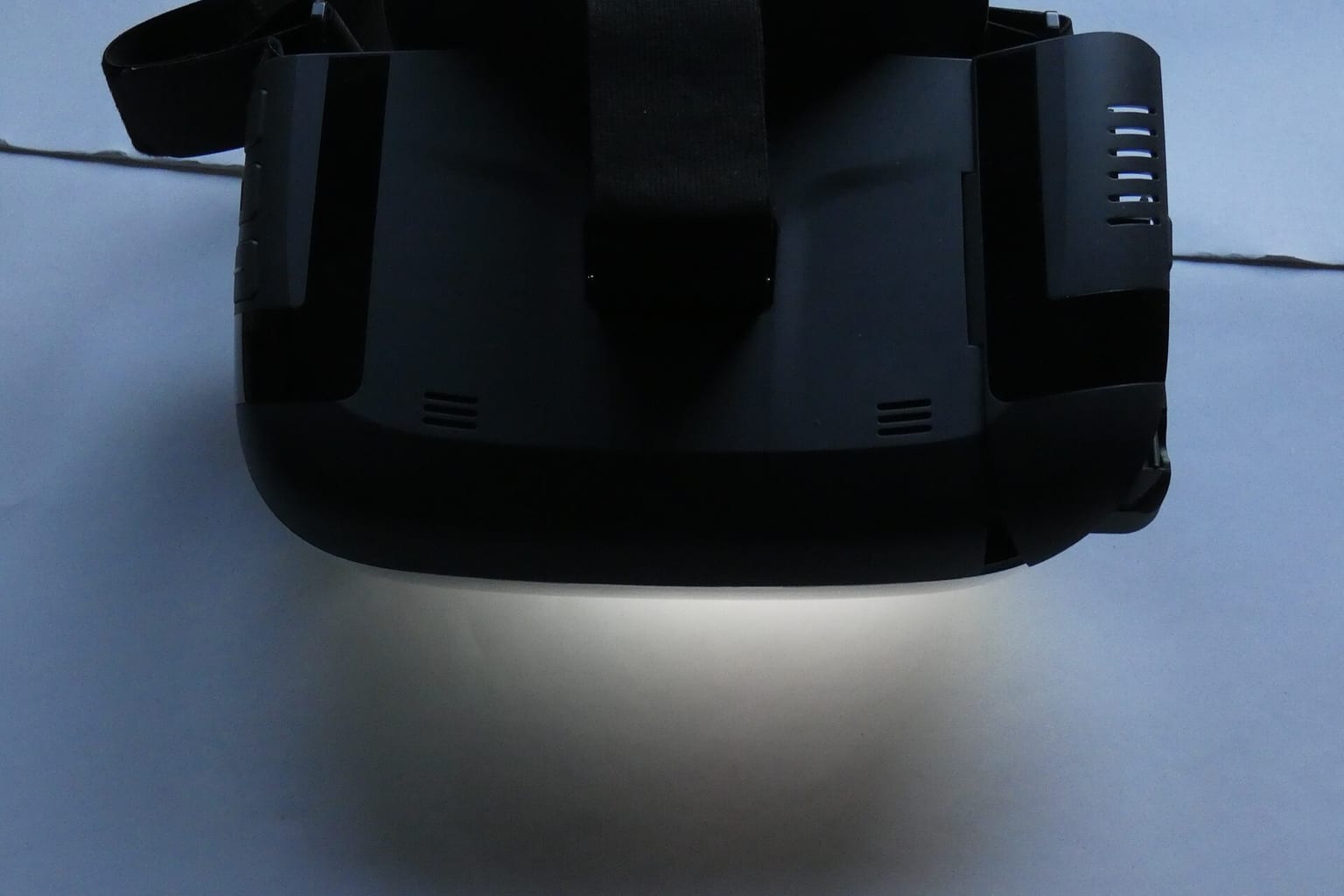
Put on an AR headset and reach for a virtual object floating in front of you, and your eyes do two things at once: they converge on it and they focus on it. Most headsets break that link. They draw every virtual object at one fixed focal distance, however far away it appears to be. A team led by assistant professor Xiaodan Hu of the Shibaura Institute of Technology, in Japan, has tested a display that corrects this, and in a 3D pointing task, movement time fell and throughput rose.
The mismatch has a name: the vergence-accommodation conflict, or VAC. The team's prototype combines light from the real scene with virtual images reflected by a spherical mirror and a beamsplitter. It adjusts its focal plane so that a virtual object comes into focus at its own depth. The work brought together hardware development and user studies from the Japanese and Chinese members of the team with interaction experiment design from the Canadian members, and it was published online on Aug. 28, 2026, in the journal Virtual Reality.
In the first study, with 24 participants, varifocal viewing significantly reduced movement time and increased throughput, a measure of task efficiency, while error rates did not significantly change. Faster performance therefore did not come at the cost of accuracy. The benefits were greater for movements in depth, although the difference between directions was only borderline significant for throughput. A second study, with 12 additional participants, was run to verify the hardware's performance.
For people who use AR or VR to select objects at different depths, the result suggests that a display adjusting focus can make interaction faster without making it less accurate. But the gains were not the same for everyone, and participants showed no clear preference between the two display modes. The study did not test long-term eye health or show that the technology prevents eyestrain, and discomfort was mild. Differences in binocular vision or depth perception may explain the variation, but those factors were not measured. The prototype also had a limited field of view and did not use eye tracking to adjust focus, so it resembles everyday AR use only in part. No date is given for headsets built on this approach.
The next step is already named: future studies will examine which user characteristics predict greater benefits, and how displays might adapt to individual needs. The authors present the work as a basis for evaluating personalized AR systems.
Sources — read the originals(Paris time)
Read next
Comments
Loading the thread…
Sign in to leave a comment. Sign in