In tests, holograms can reproduce natural focus and reflections
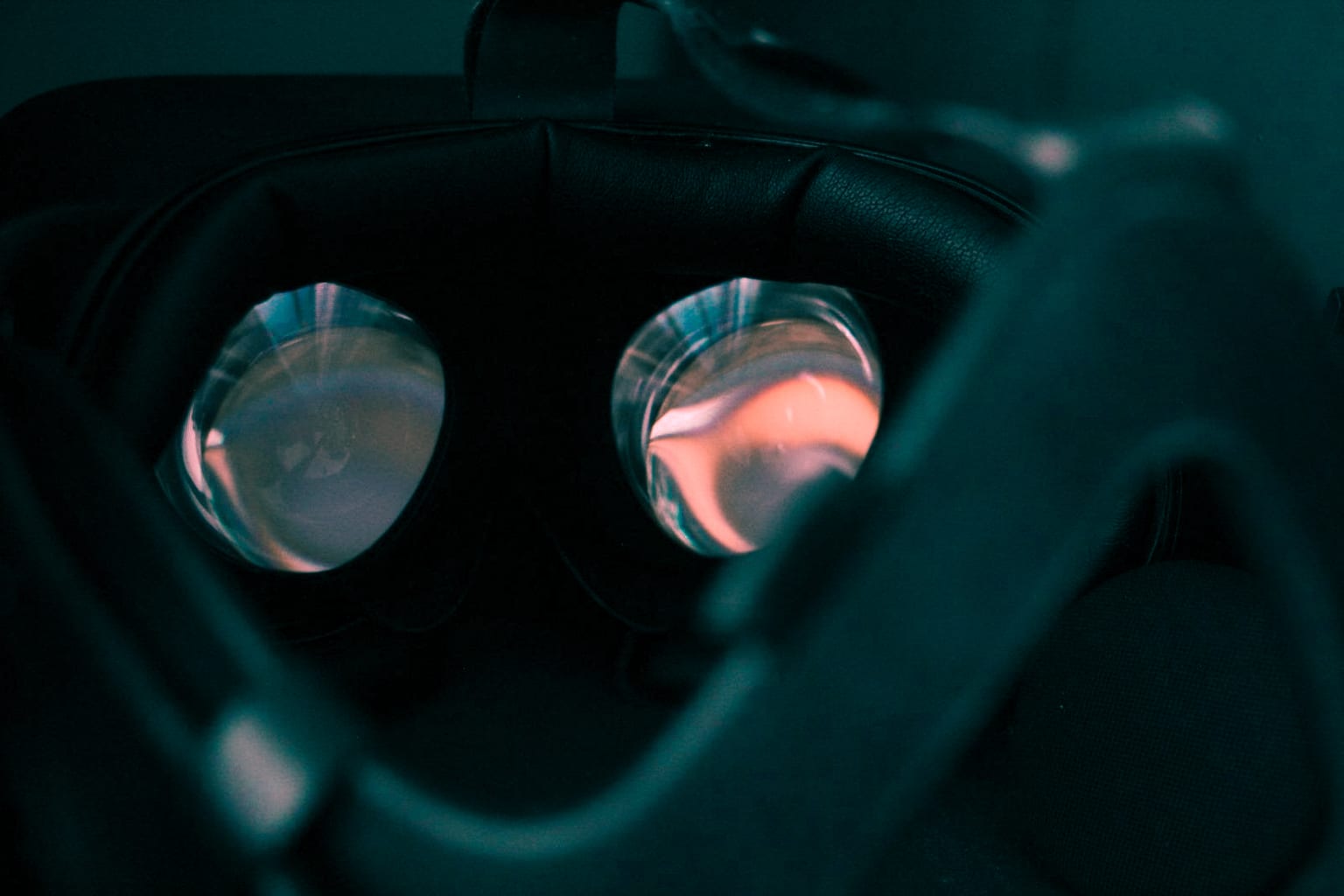
Look around a room and the world does much of the work for you. Nearby and distant objects come into focus at different distances, a corner hidden from one side appears from another, and the highlight on a glossy surface slides as you move. Holographic displays aim to reproduce those cues by reconstructing light waves rather than showing a flat picture. A team at the University of Hong Kong (HKU), led by professor Yifan Evan Peng, now reports two techniques that bring holograms closer to that behaviour, tested on computer simulations and laboratory display prototypes.
The problem starts before the display itself. Most existing methods describe a scene as images captured at selected depths or viewpoints, then convert those images into a hologram. Information is lost in that conversion, producing unnatural blur, wrong visibility, or effects that work only from certain positions. In the first study, published in Nature Communications, Xiangyu Meng and his colleagues start instead from polygon meshes, the connected surface patches used to build 3D models in animation and engineering. The hologram calculation then receives the surfaces and depth of the scene, not a stack of flat images. The optimisation keeps both the amplitude of the light wave, which sets its strength, and its phase, which sets its position in an oscillation cycle. A learned model, using camera measurements, corrects for imperfections in the optical system. In laboratory tests, the approach gave smoother changes in focus and clearer image detail, and let objects hidden from one viewing position become visible from another.
The second study, in ACM Transactions on Graphics, tackles how light interacts with materials. A mirror reflects its surroundings, glass bends the light passing through it, and a glossy surface sends light in different directions. HoloPathTracer combines path tracing, a graphics technique that follows light through a virtual scene, with wave optics, and keeps the phase information a hologram needs. The resulting holograms reproduce reflections, refractions, shifting highlights and indirect illumination, along with natural changes in focus and viewpoint. The authors also reuse light paths when generating several holograms shown in quick succession, and cache parts of the scene's lighting to cut repeated computation. They report an order of magnitude faster convergence from their ambient radiance cache. Image-based methods, they note, tend to overfit the hologram to predefined depths and views.
Coverage from IEEE Spectrum credits the work to researchers at Stanford, HKU and the chipmaker Nvidia. HKU's own announcement names only its Department of Electrical and Computer Engineering team, and makes no mention of those partners.
For makers of VR and AR headsets, the practical promise is a display whose depth, focus and reflections respond to where the viewer looks, rather than a flat image with depth painted on. Neither study gives a date, a price or a product. The team says real-time consumer applications will require faster computation and further advances in spatial light modulators, the devices that shape light in a holographic display, as well as in the surrounding optics. Peng describes the direction as a way to enable “more natural and visually realistic holographic experiences for future VR and AR systems.” The next steps are faster calculation and better light-shaping hardware.
Sources — read the originals(Paris time)
Pages consulted while writing
Read next
Comments
Loading the thread…
Sign in to leave a comment. Sign in