Lab method rebuilds 3D driving scenes from LiDAR and cameras
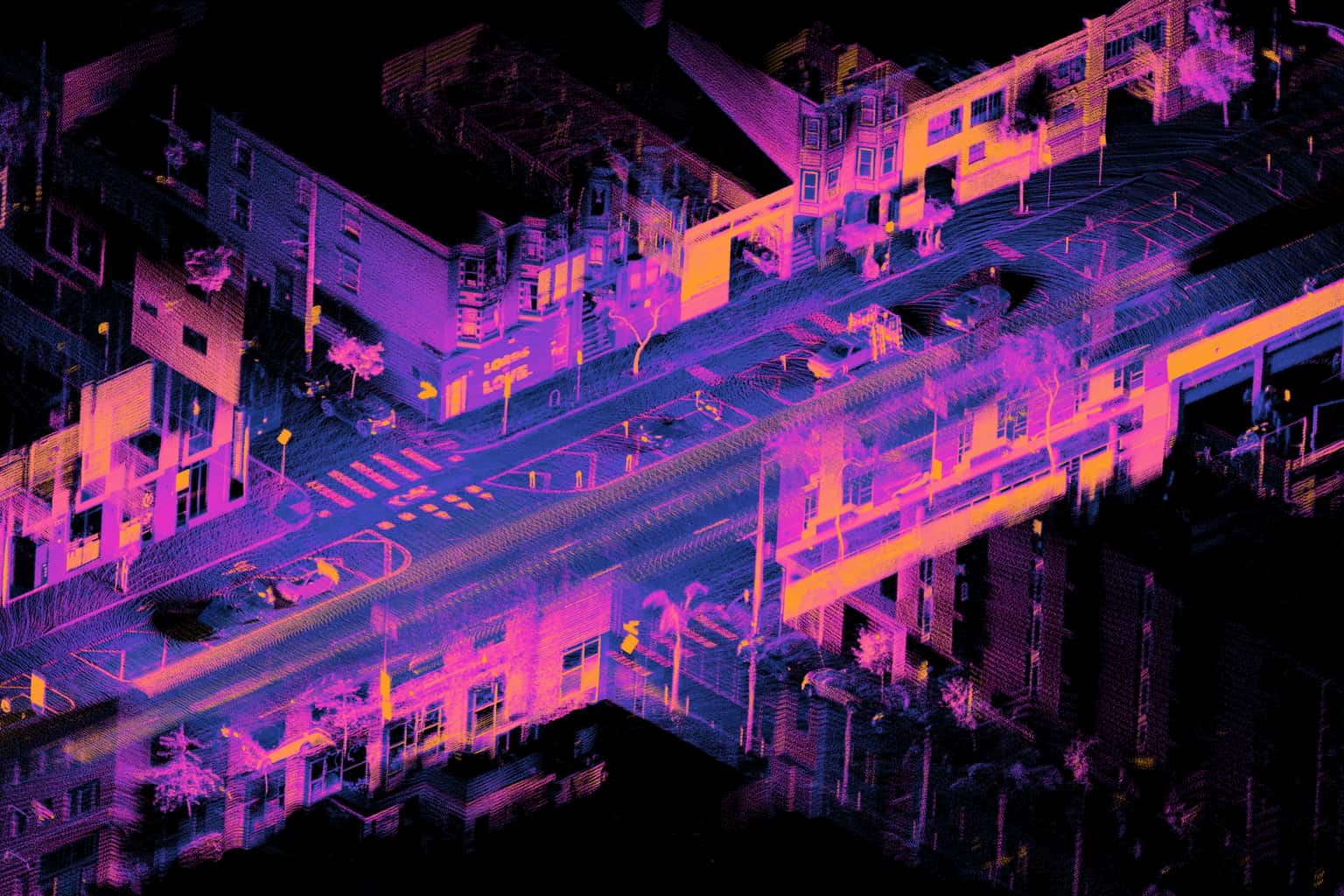
A team led by professor Zhu Hui at the Institute of Intelligent Machines, part of the Hefei Institutes of Physical Science of the Chinese Academy of Sciences, has developed two methods that help robots build more faithful pictures of their surroundings. Both papers are accepted for presentation at ICRA 2026, the IEEE International Conference on Robotics and Automation. The scene reconstruction paper is also one of three finalists for the Best Paper Award in robot perception, out of more than 5,000 submissions.
The first method, LR-SGS, targets driving scenes. Most existing approaches either rely only on cameras, or use LiDAR, a laser sensor that measures distance, only to initialize the model or supervise depth. The team instead converts LiDAR intensity into a reflectance value and attaches it to each Gaussian, the small 3D elements that make up the scene, as a material channel that does not change with the light. In the arXiv version of the paper, tested on the Waymo Open Dataset, scenes with complex lighting come out 1.18 dB ahead of the rival method OmniRe on PSNR, a standard image-quality score. The method also reaches this with fewer Gaussians, which keeps the 3D representation compact.
The second method, MMD-SLAM, works on the robot's own positioning. SLAM, for simultaneous localization and mapping, means working out where a machine is while drawing a map of what surrounds it. MMD-SLAM leans on geometric features common in buildings and other man-made spaces: points, lines and planes. Combining them produces more consistent 3D point cloud maps and better positioning accuracy, while keeping real-time processing. The announcements report better mapping and tracking, but give no figure for this method.
For self-driving developers, the practical gain is in simulation. According to the researchers, the reconstructed scenes can be edited and turned into virtual driving environments for autonomous driving tests. Robotics and intelligent systems are named as the likely fields of use for both methods. Neither the institute nor the papers announces a product, an industrial partner or a date for commercial use.
The figures come from the team's own experiments. The institute's account, relayed by Tech Xplore, gives no numerical result for either method; the 1.18 dB comparison appears only in the arXiv paper for LR-SGS, and Waymo is the one dataset the press account names. The next step is ICRA 2026, where both papers are accepted for presentation.
Sources — read the originals(Paris time)
Pages consulted while writing
Read next
Comments
Loading the thread…
Sign in to leave a comment. Sign in