In lab, printed AA6061 aluminium reaches 97.9% density without solvents
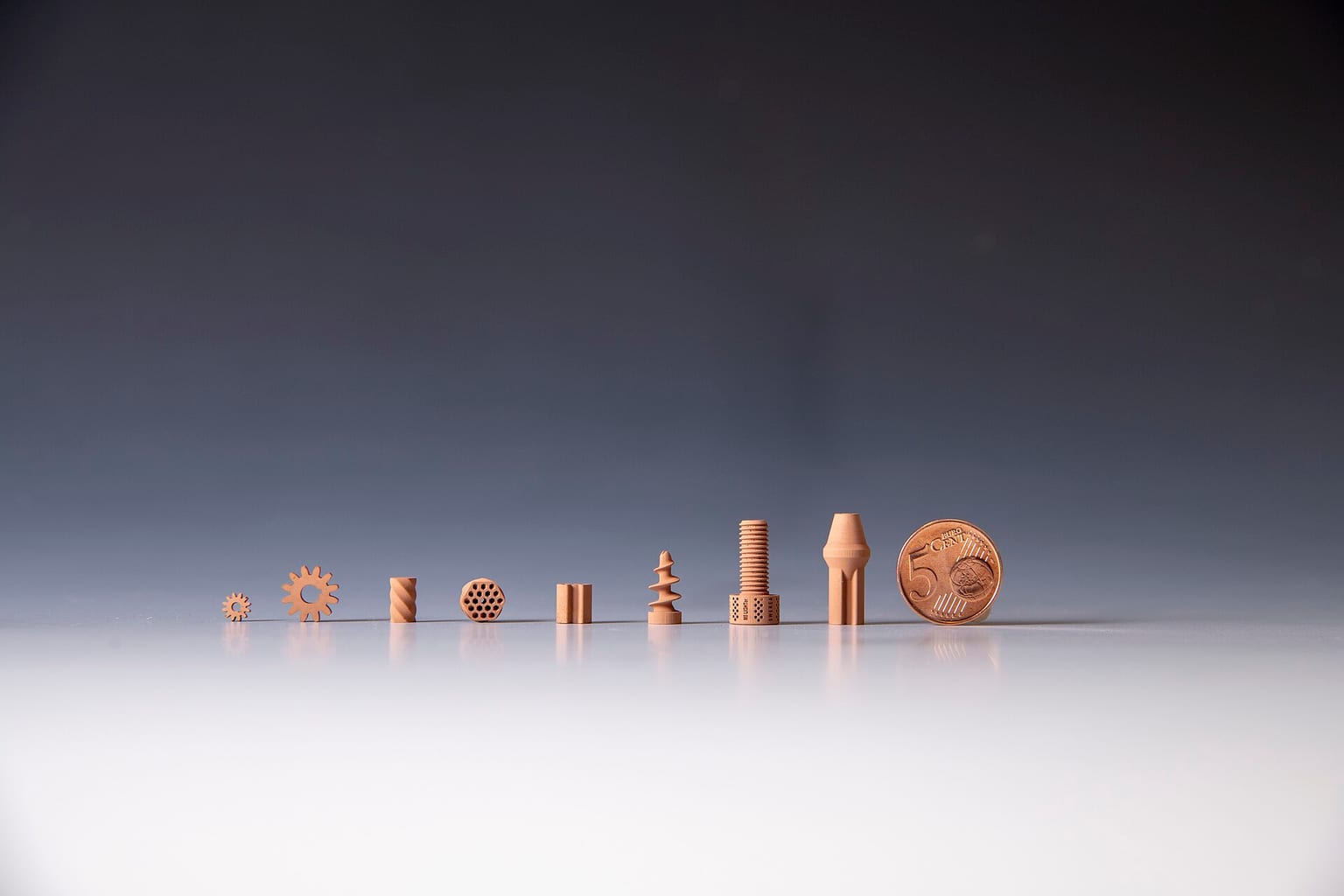
In a lab at Empa, printed aluminium parts now reach 97.9% relative density after sintering, a figure the team reached without the solvent bath that had long limited extrusion printing of this metal. The study was published on 15 October 2026 in Progress in Additive Manufacturing, after a preprint in May.
In material extrusion, a printer lays down a "green" part: metal powder held in a thermoplastic binder. Before sintering, that binder has to go. The usual route is a solvent bath followed by burn-off in air. Aluminium resists this route because it oxidises readily, and the oxide layer blocks sintering. Thermal analysis showed that the 6061 powder begins to oxidise around 400 °C, below the roughly 500 °C program recommended by the binder suppliers.
The solvent route produced disappointing densities. Parts soaked in water with one binder reached only about 75%, because the water turned the powder surface into an oxide shell that left a porous outer layer. Parts treated in high-purity acetone with the other binder reached about 94%, but their edges still did not fully densify. The team then dropped the solvent step altogether. Printed parts sat in a porous alumina bed that draws the liquid binder out by capillary action during one 24-hour heat treatment in air at 350 °C, removing over 97% of the binder. Going to 400 °C backfired: after 24 hours at that temperature, the powder had gained about 0.25% in mass from oxidation, and the parts sintered to a lower density.
For a workshop with a standard extrusion printer, what changes is the process after printing, not the machine. The team printed on a Tumaker Voladora NX+ pellet-screw printer and used binders anyone can buy, so the route needs no new powders and runs in air. The authors say the same feedstocks could also be warm-pressed, extruded or injection moulded. The price of that simplicity is time: the best result needs 24 hours of debinding and 10 hours of sintering in nitrogen. Earlier progress on sintered aluminium came mostly from binder jetting and engineered powders, and the Empa team is working on the more common extrusion hardware.
The density figures are the first half of the story. The team has measured only density and microstructure, and it says mechanical properties must be evaluated before the method can move toward industrial use. That testing is the next step, and no date for it has been announced.
Sources — read the originals(Paris time)
Read next
Comments
Loading the thread…
Sign in to leave a comment. Sign in