In the lab, a beetle's shell inspires tougher aircraft parts
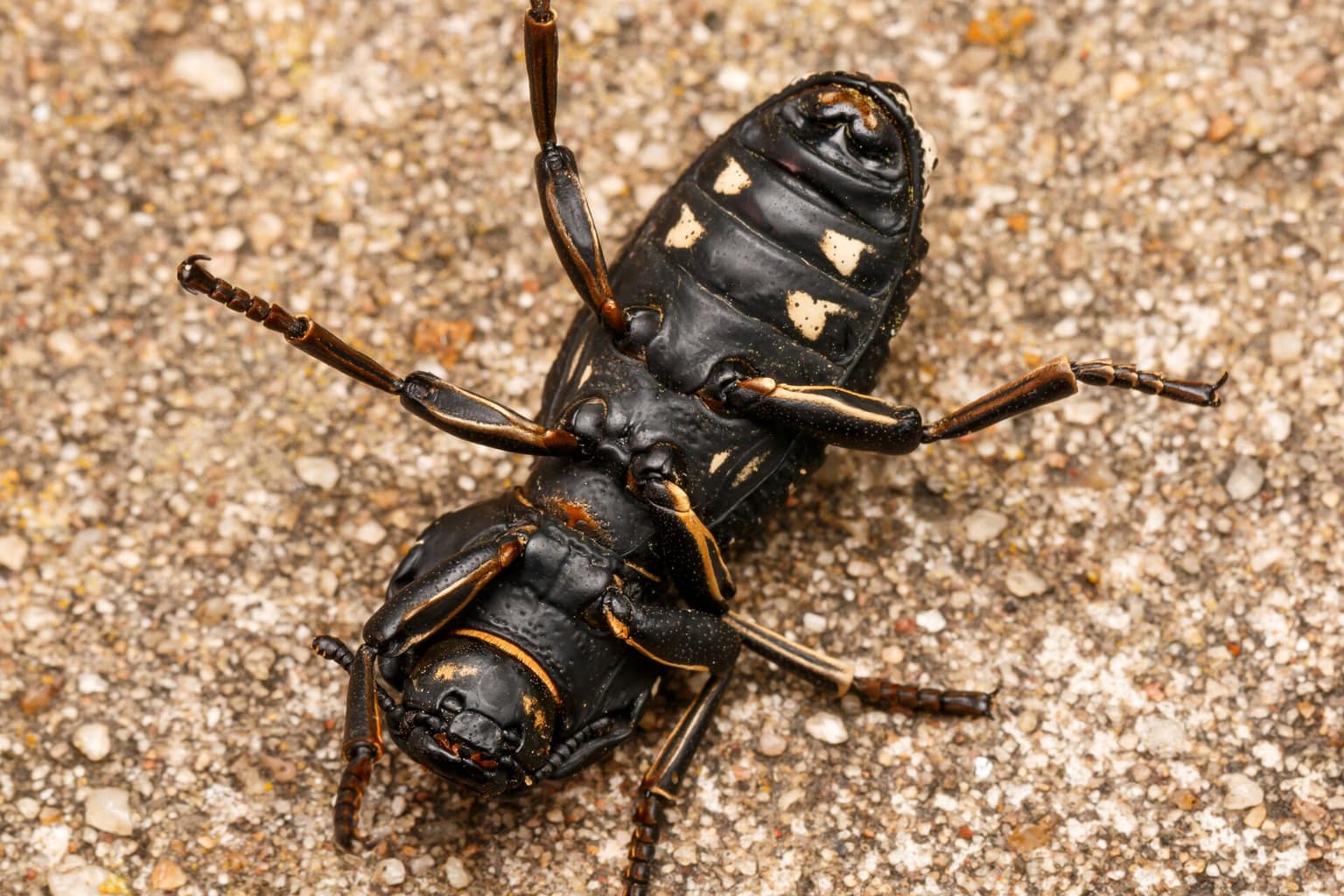
A car tire rolling over a beetle on dirt is estimated to exert 100 newtons. The diabolical ironclad beetle, a flightless two-centimeter insect found in the western United States, withstands 150 newtons before its shell fractures. That is equivalent to about 39,000 times its body weight, according to a study by researchers at Purdue University and the University of California, Irvine, published in Nature. Other terrestrial beetles they tested endured less than half that force.
The secret lies in the beetle's hardened forewings, the elytra, which became a shell after the insect lost the ability to fly. The two halves meet along a seam called the medial suture, lined with interlocking structures that resemble jigsaw pieces. Two mechanisms do the work. The interlocking pieces distribute applied forces and resist being pulled apart. Under pressure, the internal layers gradually separate, a process called delamination. That separation absorbs energy, so the shell gives way in a controlled manner instead of shattering, which helps protect vulnerable areas such as the neck. Strength measures how much load a material resists; toughness measures how much energy it can absorb before fracturing. The beetle is tough rather than simply strong. Its elytra are rich in protein and contain no inorganic minerals, a point that impressed David Kisailus, a materials science and engineering expert at UC Irvine.
Aircraft are a natural place to apply this. Modern planes combine metals and composite materials, and they are often joined with mechanical fasteners. Those fasteners add weight and create stress concentrations, the spots where cracks and corrosion can develop. Researchers built a carbon-fiber fastener inspired by the beetle's armor. In mechanical tests, it matched aerospace fasteners in strength while offering significantly greater toughness.
The approach goes beyond fasteners. In a 2023 study, researchers combined the beetle's architecture with structures found in white-tailed deer skulls to develop tougher ceramic assemblies. These designs absorbed up to 590% more energy in tensile tests, 340% more in bending and 700% more in fracture tests, and delayed failure by up to 50%. In 2026, researchers developed an interlocking repair interface inspired by the elytra for damaged materials, including those used in aircraft. Its puzzle-like geometry distributes loads and makes crack propagation more difficult. Compared with circular-step repairs, it reached 30.47% higher peak force in tensile tests and an 8.65% improvement in bending tests.
For engineers building joints and repairs in composites, ceramics and other advanced materials, these designs point toward parts that absorb energy, resist crack growth and fail gradually rather than all at once. Further testing is still needed, and the researchers give no timeline for putting these designs into aircraft. The next step is the testing they say remains to be done.
Sources — read the originals(Paris time)
Read next
Comments
Loading the thread…
Sign in to leave a comment. Sign in