In the lab, a magnetic nanocomposite more than doubles chip inductance
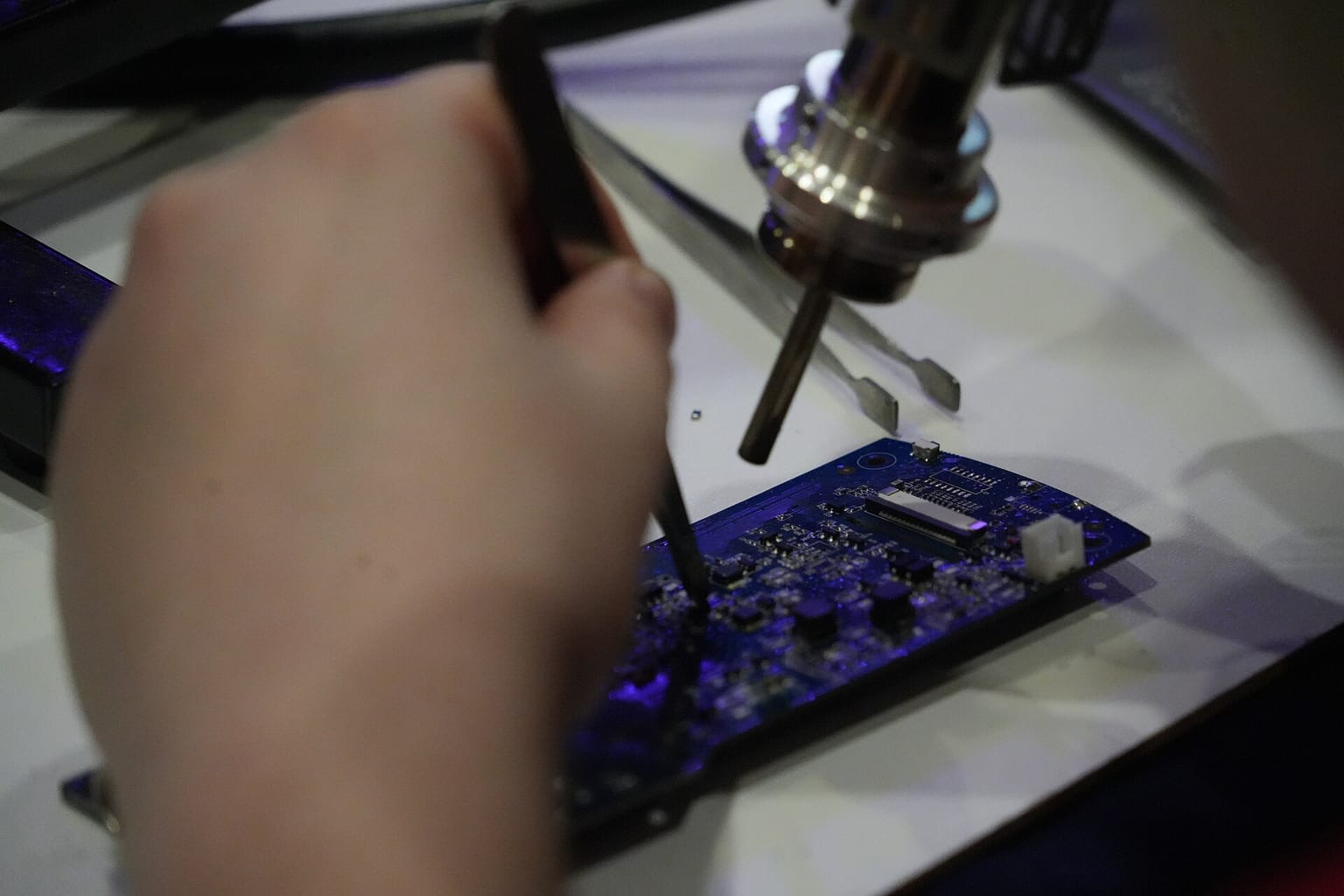
A modern chip needs more than electricity. It needs that electricity at the right voltage, with fluctuations kept under control. A less visible set of parts handles that job, and a team at the University of Florida has built a tiny magnetic one: a stripline microinductor, made from a composite of nickel and iron oxide nanoparticles. Its inductance is more than twice that of comparable devices without a magnetic core. The study is published in the Journal of Micromechanics and Microengineering.
In a switching voltage regulator, an inductor temporarily stores energy in a magnetic field and helps control changes in current. Inductors are hard to shrink: reducing their dimensions generally reduces the inductance a design can provide. Adding magnetic material around the conductor compensates, because it lets a compact structure carry more inductance. Running the regulator at a higher switching frequency also lowers the inductance required, but then the magnetic material must respond to faster changes without dissipating too much energy. A material that works well at low frequencies can become lossy at high ones.
The team's method, called electroinfiltration, starts with iron oxide nanoparticles and grows nickel electrochemically into the spaces between them, so the magnetic composite forms where the device needs it. The composite sits between bottom and top magnetic layers that surround an insulated copper strip and provide a return path for the magnetic flux. A practical obstacle was the steep sidewall of the insulation, which made the upper layer hard to form continuously. A heat-softened photoresist gave a rounded profile, which let the copper grow from about 2 to 6 micrometers thick while keeping magnetic coverage. A thicker conductor lowers winding resistance.
The devices reach about 1.6 nanohenries of inductance. Peak quality factor, or Q, which describes the balance between inductive behaviour and electrical loss at a given frequency, rose 58%, from 3.35 to 5.3 at 150 megahertz. A separate one-port inductor built alongside kept its inductance approximately stable up to 330 milliamperes under DC bias, measured at 1 megahertz. These are device measurements. They say nothing yet about the efficiency of a complete voltage regulator, where resistance, magnetic losses, current handling and temperature all determine whether an inductor is useful.
For chipmakers and power-supply designers, the prize is moving conversion components closer to the circuits they feed, possibly inside a semiconductor package or as part of an integrated power supply. Smaller inductors would free up space there, and the team describes its materials and fabrication route as a step toward that goal. The team gives no timeline and no price, and the results reported so far come from its own devices, not from working converters.
Sources — read the originals(Paris time)
Read next
Comments
Loading the thread…
Sign in to leave a comment. Sign in