Ionity Goes From Four to Six Chargers in Wertheim Using Batteries
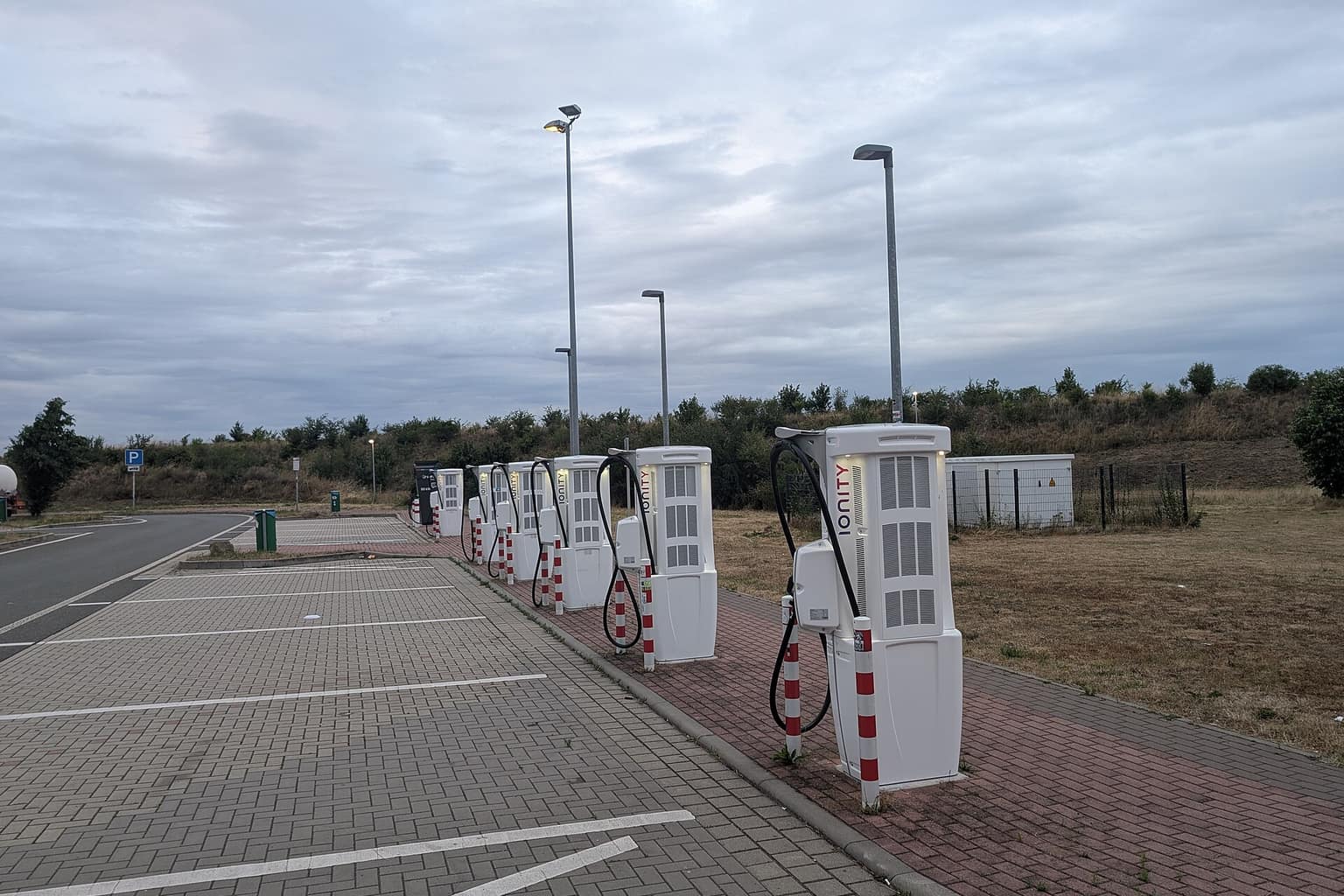
In Wertheim, Germany, a charging station located near the A3 motorway has just gone from four to six charging points. The change is down to a battery: operator Ionity has installed a storage system from Chinese manufacturer Sungrow, with a capacity of 1,028 kWh, which supplements the electricity drawn from the grid.
The problem is well known to operators. A station cannot supply several cars at once if its grid connection does not provide enough power, and reinforcing that connection can take several years, up to three according to the source. The principle gets around this delay: batteries store electricity when demand is low, then release it when several vehicles charge simultaneously. Peak power drawn from the grid is therefore limited, and the station can host more chargers.
What comes next is already planned. Ionity expects to install about 50 storage systems across Europe in 2027, for a cumulative capacity of more than 20 MWh. In Hemsbach, also in Germany, a future station will have twelve charging points, a photovoltaic installation of more than 223 kWc (kilowatt-peak, the maximum output of the panels) and a battery exceeding 2 MWh. Solar electricity produced on site could be stored to power the chargers later.
For drivers, the benefit is tangible: more chargers available on routes where they are lacking, without waiting for grid works to finish. For the operator, the battery also becomes an energy tool. In the longer term, Ionity is considering providing services to the grid, or even taking part in electricity markets.
This development intersects with another market, that of second-life electric vehicle batteries. The first generations of Renault Zoe and Nissan Leaf are reaching the end of their lives, and Felix Wagner, head of German company Circunomics, which specializes in refurbishing them, believes the sector could grow strongly within five years. Stationary storage, however, requires large quantities of identical modules with comparable states of health, something used batteries from different vehicles rarely offer. According to Felix Wagner, 50% to 60% of batteries that can still be reused could end up in stationary storage, and about 30% would be directed to recycling. Ionity has not announced plans to use these batteries in its stations.
Sources — read the originals(Paris time)
Read next
Comments
Loading the thread…
Sign in to leave a comment. Sign in