Iron powder could store winter power in old coal plants, studies say
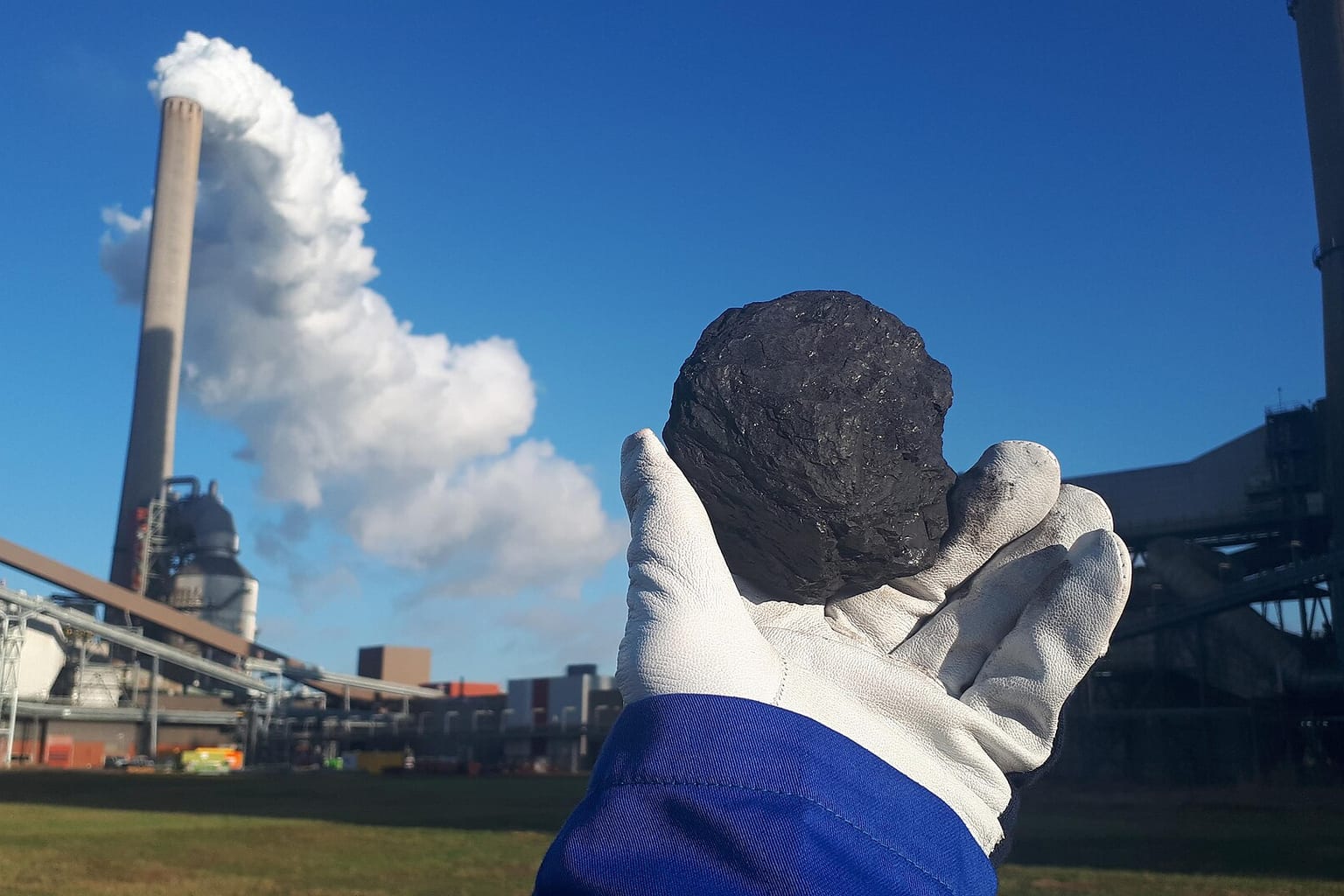
Each winter, wind and solar output drops just as Europe needs the most electricity. Researchers at the Karlsruhe Institute of Technology (KIT) and the University of Cologne propose a way to fill that gap with a material that is old, dense and cheap: iron, ground into a fine powder.
Iron powder burns at high temperatures without releasing carbon dioxide. What remains is rust, or iron oxide. To recharge the metal, engineers use green hydrogen to remove the oxygen from the rust, turning it back into clean iron powder. The power that made the hydrogen, from solar and wind farms, stays stored in the metal in chemical form. Because iron is dense and stable, it can travel by ship and rail and be kept in storage for long periods. Hydrogen, by comparison, requires costly pressurized pipelines, specialized import stations and underground caverns.
“When burned, iron powder behaves much like coal,” said Julia Schuler of KIT’s Institute for Industrial Production. “We wanted to find out whether it was really viable to convert existing power plants into facilities that burn iron.” Schuler says the heat generator would need structural modifications to burn metal, but the steam cycle, turbines, generators and connections to the power grid could be kept. Germany has around 37 gigawatts of lignite and hard coal capacity that could be converted, and Europe as a whole has 83 gigawatts. In theory, the iron storage could hold about 58 terawatt-hours of energy from summer for use in winter, a scale the sources compare to Germany’s natural gas storage network.
The University of Cologne’s Institute for Energy Economics estimates the economic effect. Its analysis finds that iron as an energy carrier could reduce total system costs by about €15 billion a year between 2035 and 2045, with structural savings of roughly €18 billion for the later date. These are modelled estimates. The studies have not been tested in a converted plant, and the storage figure remains theoretical.
For countries that cannot store hydrogen underground on a large scale, and that have no large hydropower to rely on, iron could help keep the grid stable when renewable output is low. The studies present it as a complement to hydrogen, not a replacement. For a coal plant operator, the appeal is that the existing turbines and grid connections could keep working as the fuel changes.
Sources — read the originals(Paris time)
Read next
Comments
Loading the thread…
Sign in to leave a comment. Sign in