JinkoSolar claims 28% peak efficiency for experimental solar cell
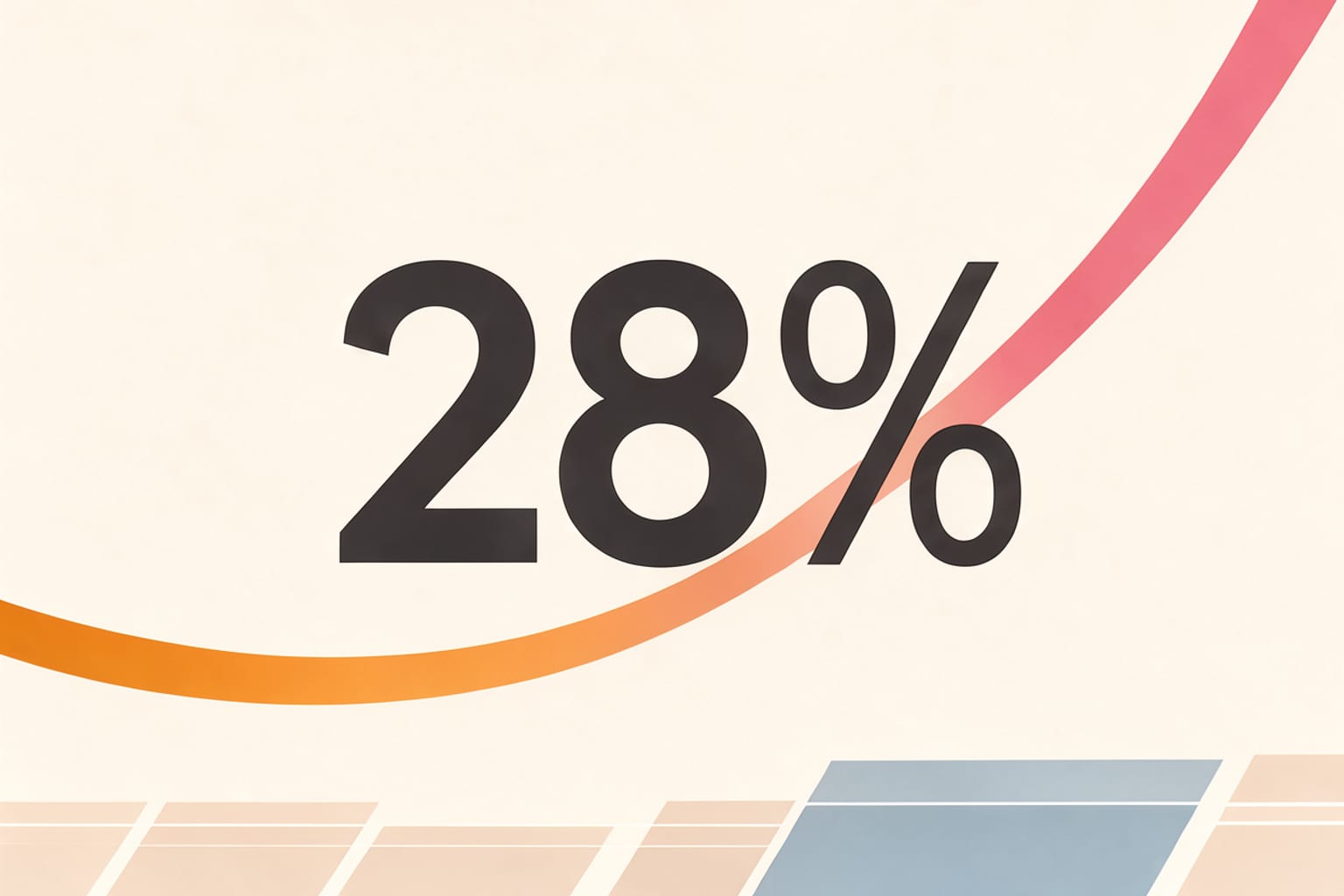
On October 17, at its Global Tech Day in Shanghai, JinkoSolar put a new solar cell on stage and gave it one headline number: 28% peak efficiency. That is the share of sunlight the cell turns into electricity at its best point. The Chinese module maker presents the figure in a technical white paper, and the paper does not name a third-party certification, a test area or the average efficiency of a production line. The number is a company claim, and it stays one until someone else measures it.
Most solar cells put their metal contacts on the sunny face, where they hide part of the light. The TAC design moves both electrodes to the rear, so nothing sits in front of the silicon. The rear is then split into two alternating zones. One collects electrons through a TOPCon structure, a silicon oxide layer only 1 to 2 nm thick topped by doped polycrystalline silicon. The other collects holes through hydrogenated amorphous silicon, borrowed from heterojunction (HJT) cells. JinkoSolar calls the combination a '2+1' design, and says the amorphous silicon layer is processed at below 200 °C.
Building that on one wafer is the hard part. Two contact types must sit side by side and be kept apart, so JinkoSolar relies on high-precision laser patterning and dielectric isolation. It also describes a full-area passivation process, called GPP, that reduces recombination losses across the contacts, and a second process, MCP 2.0, that targets the edges left by cutting cells. The white paper gives a bulk minority-carrier lifetime above 2 ms and a bulk recombination current density below 5 fA/cm² for the silicon substrate. These are measurements of the material's quality, not of the finished cell's output.
The 28% figure needs care. JinkoSolar's first-half 2026 report separately lists a third-party-certified 27.2% for an n-type back-contact research cell, but the company does not tie that result to TAC. Read together, the two claims show a strong result in the lab-cell category, not a verified production number. Without an independent test or a stated line average, the 28% cannot yet be compared with the efficiency of panels sold today.
If the figure holds under independent testing, module makers and the buyers of their panels would gain: more electricity from the same roof or field area. The source gives no timeline, price or factory for TAC, so the practical gain remains distant. JinkoSolar's next steps point to the parts that would have to work before any product exists: metallization at low temperature, copper-containing contact materials, and use of TAC as the bottom cell of a perovskite-silicon tandem.
Comments
Loading the thread…
Sign in to leave a comment. Sign in