Lab method maps look-alike sugar molecules directly on surfaces
Three sugar molecules can have exactly the same chemical formula and the same mass, and still be built differently. That difference in arrangement decides how a molecule is recognised by the body and how it behaves in a material. Picking out such look-alikes on a surface, and locating each one where it sits, was a hard analytical problem.
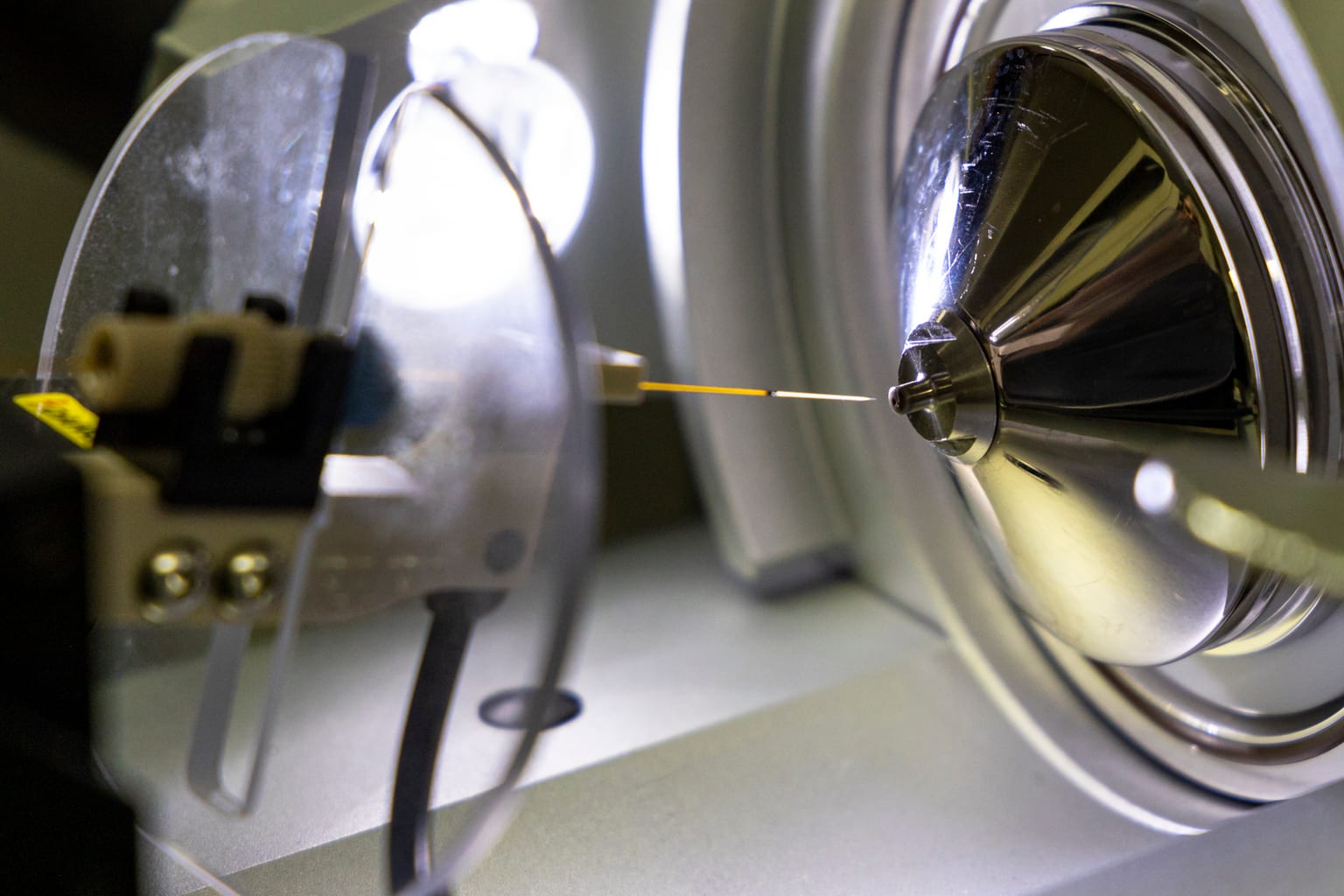
A team led by researchers at NPL, the UK laboratory, with the University of Surrey, the University of Oxford, the Francis Crick Institute and IONTOF GmbH, has built a method that does exactly that. It relies on Orbitrap secondary ion mass spectrometry, or OrbiSIMS, a technique first developed at NPL. The surface is struck with ions, and the molecules break apart in patterns that depend on their structure. The instrument also reacts to those structural differences as the fragments travel through it. Together, these effects add a new dimension to the measurement, giving structure-sensitive images taken directly from the surface, without any additional sample preparation.
The researchers tested the approach on raffinose, maltotriose and melezitose, three isomeric trisaccharides, which are sugars made of three units with the same formula and mass. The method distinguished all three. Because it combines identification with spatial localisation, it can show how biomolecules with different functions are arranged within a complex sample. The paper appears in Nature Communications.
For the authors, the payoff lies in fields where small structural differences matter: glycomics, lipid and metabolite imaging, and biomaterials. They say the work could speed up the discovery and validation of biomarkers, drugs and therapies, and provide consistent measurements across instruments, sites and workflows. They also expect it to support diagnostics and treatments as they move toward adoption in NHS care. Researchers working in those fields would gain a way to see molecular structure where it sits. Patients would benefit later, if the method proves itself in clinical settings, and the team gives no date for that.
The result is still a laboratory demonstration on three sugar molecules. Its authors frame earlier diagnosis and more personalised treatment as the long-term aim, not a present capability.
Comments
Loading the thread…
Sign in to leave a comment. Sign in