Lab microscope now tracks single quantum particles in motion
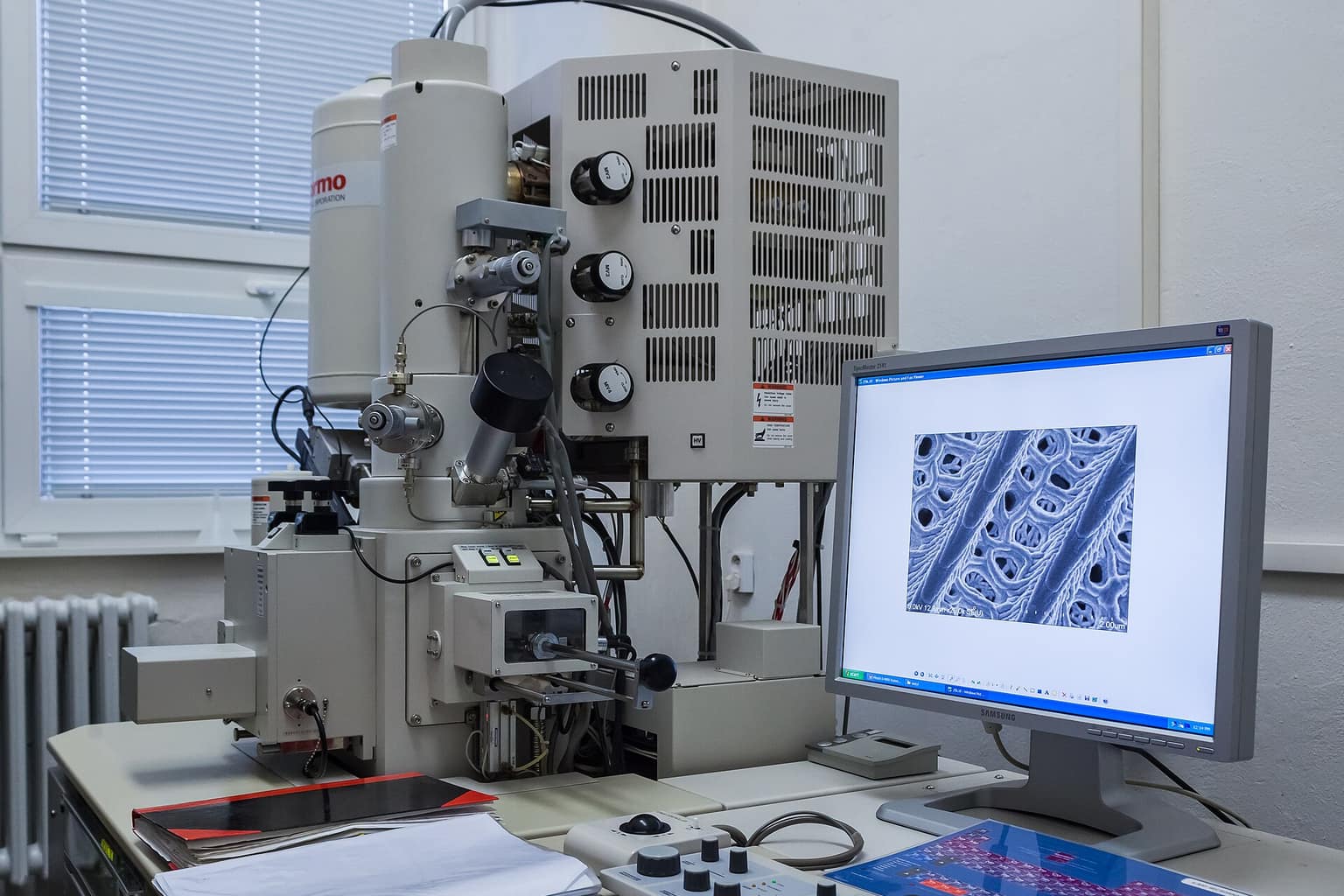
Watching one electron move through a material has long been a problem of noise. The more particles a microscope can see, the harder it is to follow any one of them. At Columbia University, chemist Milan Delor's lab now reports that its stroboSCAT microscope can resolve individual quantum energy carriers as they move through materials, a capability the team describes as new. The results appear in Nature Materials, in a paper led by Delor's graduate student Jack Tulyag, and the instrument isolates single electrons moving through a two-dimensional semiconductor.
Electrons are the easier part. Transport measurements record electrical resistance and can follow them, but they cannot directly capture quasiparticles such as charge-neutral excitons or spin excitations, which are the results of different particles interacting at the quantum level. stroboSCAT, which Delor first developed as a postdoc with Naomi Ginsberg at the University of California, Berkeley, in 2019, images these flows with strobe-like light pulses. Its limit was density. Delor compares it to ink dropped into water: the spread of the droplet reveals the medium, but only up to a point, because the particles eventually become too sparse to see. To measure one particle, the signal has to start from few carriers, and as they move, they disappear into the measurement noise.
The fix borrows from a spectroscopy method published a few years ago by teams at the University of Würzburg and the University of Ottawa, which tells single quantum particles apart by measuring at varying laser intensities. That method captures no spatial information. Delor's group added the idea to imaging, cycling different light intensities to create the excitations so that single particles can be separated from the crowd as they move. According to the team's figures, the new version discerns individual particles with much less noise than the previous one. The paper also reports observing interactions between individual excitons, mapping how crystal defects shape a 2D semiconductor's electronic environment, and light forcing a phase transition in a superatomic solid. A second Nature Materials article by Pavel Malý, titled 'Imaging multi-particle dynamics in space and time', accompanies the work.
Delor says he is making stroboSCAT blueprints and software available and helping interested groups set up the instrument in their own labs, which would spread the method well beyond Columbia. No date is given for when that will happen, and no industrial application or cost is announced. At Columbia, the next target is Cooper pairs and condensates: Delor's group wants to use the instrument on Cooper pairs, the bound electrons that give rise to superconductivity, and on condensates, in which many quasiparticles sync into a shared, macroscopic quantum state.
Sources — read the originals(Paris time)
Pages consulted while writing
Read next
Comments
Loading the thread…
Sign in to leave a comment. Sign in