Lab neutron method reveals ions moving together in solids
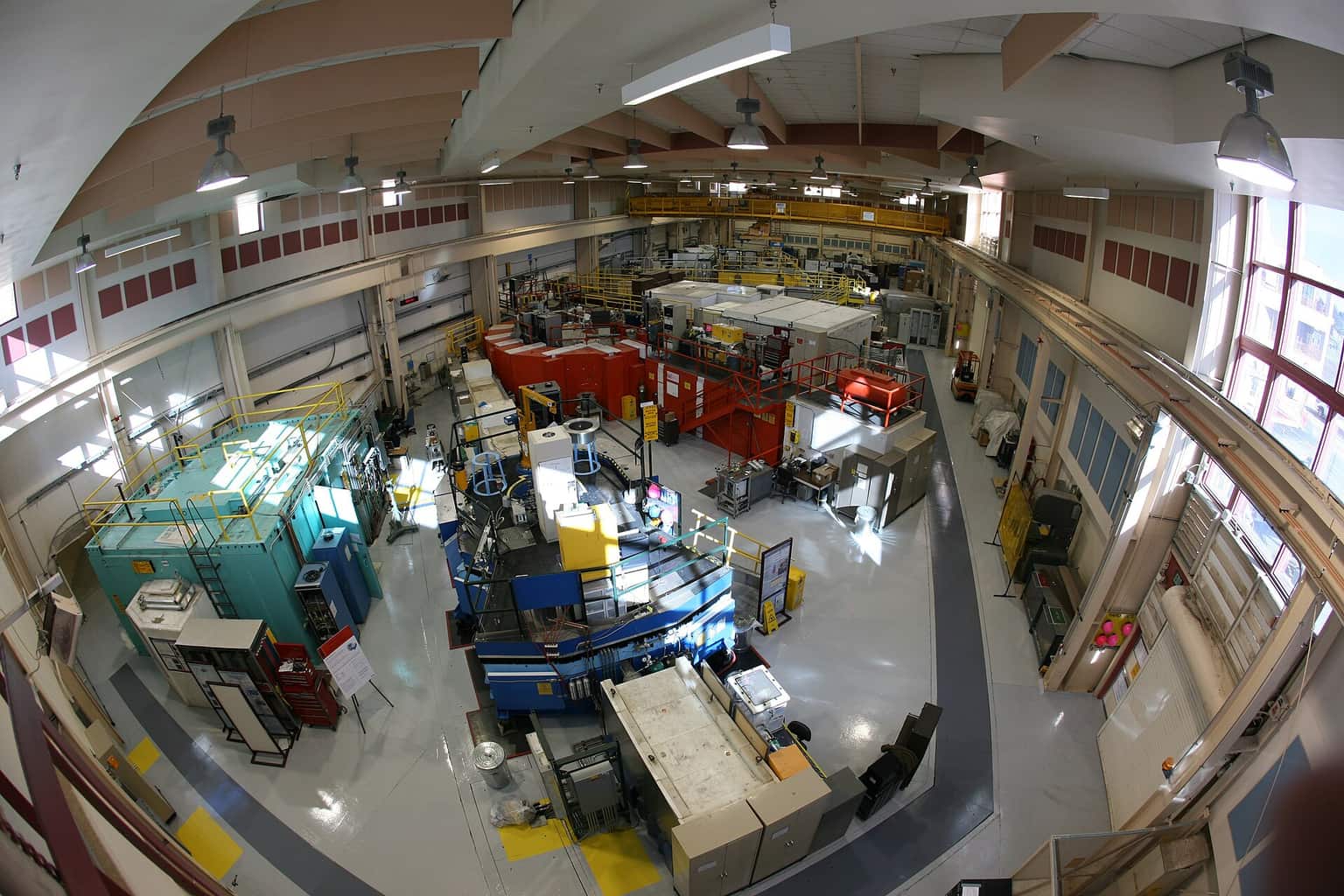
At the Spallation Neutron Source at Oak Ridge National Laboratory, a single crystal sits in a beam of neutrons while it is rotated. A team led by Argonne National Laboratory, a U.S. Department of Energy (DOE) laboratory, is reading the neutrons as they leave the sample: their changes in direction and energy show where atoms are moving. Raymond Osborn, senior physicist at Argonne and lead author, calls the method 4D quasielastic neutron scattering, or 4D-QENS. The results were published in PRX Energy.
Some solids let charged atoms or molecules, called ions, move quickly, which makes them candidates for electrolytes in solid-state batteries. Most conventional batteries use liquid electrolytes to move ions during charging and discharging. Researchers generally believed that ion motion in solids was an independent, diffusion-based process. Many now think that correlated motion, driven by interactions between ions, is key to ultrafast conductivity, but direct observation remained elusive.
The older technique, quasielastic neutron scattering (QENS), already gave insight into independent ion hopping. 4D-QENS adds one step: the single crystal is rotated while exposed to neutrons. The resulting data, with three dimensions of space plus energy, give a complete picture of how ions move and of the interactions that drive correlated motion. Neutrons carry no electric charge and have a mass close to that of atoms and ions, so small changes in their speed and large changes in their direction let researchers chart ion movement in detail.
The team tested the method on strontium chloride, a salt that becomes a fast-ion conductor above 1,200°F. The salt is not a candidate for future applications, but its well-studied properties make it a reliable test crystal. The study matched earlier findings on hopping between lattice sites, and it also showed direct evidence of correlated motion: ions that either ease movement through the material or create traffic jams that would be harmful in a battery.
For battery researchers, the immediate gain is better data for the theoretical models used to design next-generation solid-state batteries. The volume of that data rose with the recent power upgrade of the Spallation Neutron Source, and the analysis needs computing resources that match its quality, according to Stephan Rosenkranz, Argonne Distinguished Fellow. The team says the approach would be appropriate for future work on more complex materials directly relevant to solid-state electrolytes and other energy technologies.
Sources — read the originals(Paris time)
Read next
Comments
Loading the thread…
Sign in to leave a comment. Sign in