Lab tests pin stainless-steel pitting on titanium-linked sulfides
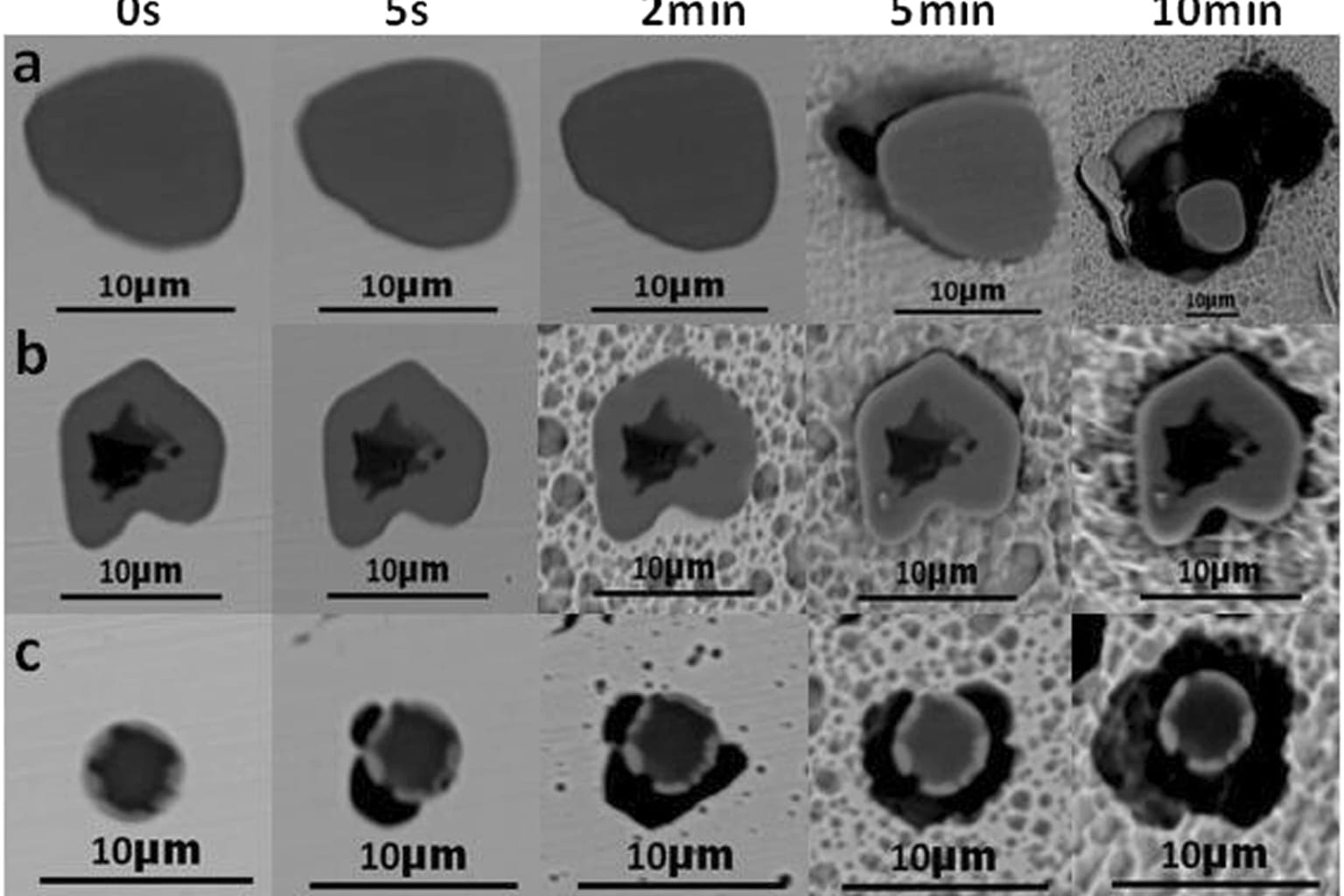
Stainless steel earns its reputation from its resistance to rust, but that resistance has a weak point. Researchers at Tohoku University have now pinned down which particles inside titanium-treated stainless steel start the pits that form in seawater and other chloride-rich environments.
Pitting begins at inclusions, tiny particles embedded in the metal that are often only a few micrometers across, too small to test one by one in commercial steel. To get around this, the team built model specimens in which the composition of the inclusions was set precisely. Using microscale electrochemical measurements, they compared four types: manganese sulfide (MnS), (Mn,Ti)S, titanium sulfide (TiS₂) and titanium nitride (TiN). MnS dissolved most easily, and (Mn,Ti)S came next among the titanium-containing types. TiN did not dissolve under the conditions examined.
The key test was whether the pattern held in real steel. It did. The electrical potential at which pits formed in titanium-containing Type 430 stainless steel, a ferritic grade with 16% chromium, matched the range in which (Mn,Ti)S dissolved in the model specimens. Detailed analysis of the pit starting points showed manganese and sulfur concentrated around them. "We were very pleased to find that when we looked at the behavior of actual Ti-containing stainless steel, the results matched what we saw in the model specimens," says Masashi Nishimoto of Tohoku University.
For makers of home appliances, surgical tools and car parts, the finding points to a specific lever: controlling the composition of sulfide inclusions, so that the particles that trigger pits are fewer or more stable. The study does not yet translate into a new alloy or a production process, and it does not give figures for how much corrosion resistance such a change would gain.
The team's next step is to examine calcium, which is often added together with titanium during stainless steel production, with the aim of further improving pitting resistance.
Sources — read the originals(Paris time)
Read next
Comments
Loading the thread…
Sign in to leave a comment. Sign in