New alloy keeps its strength at −196 °C
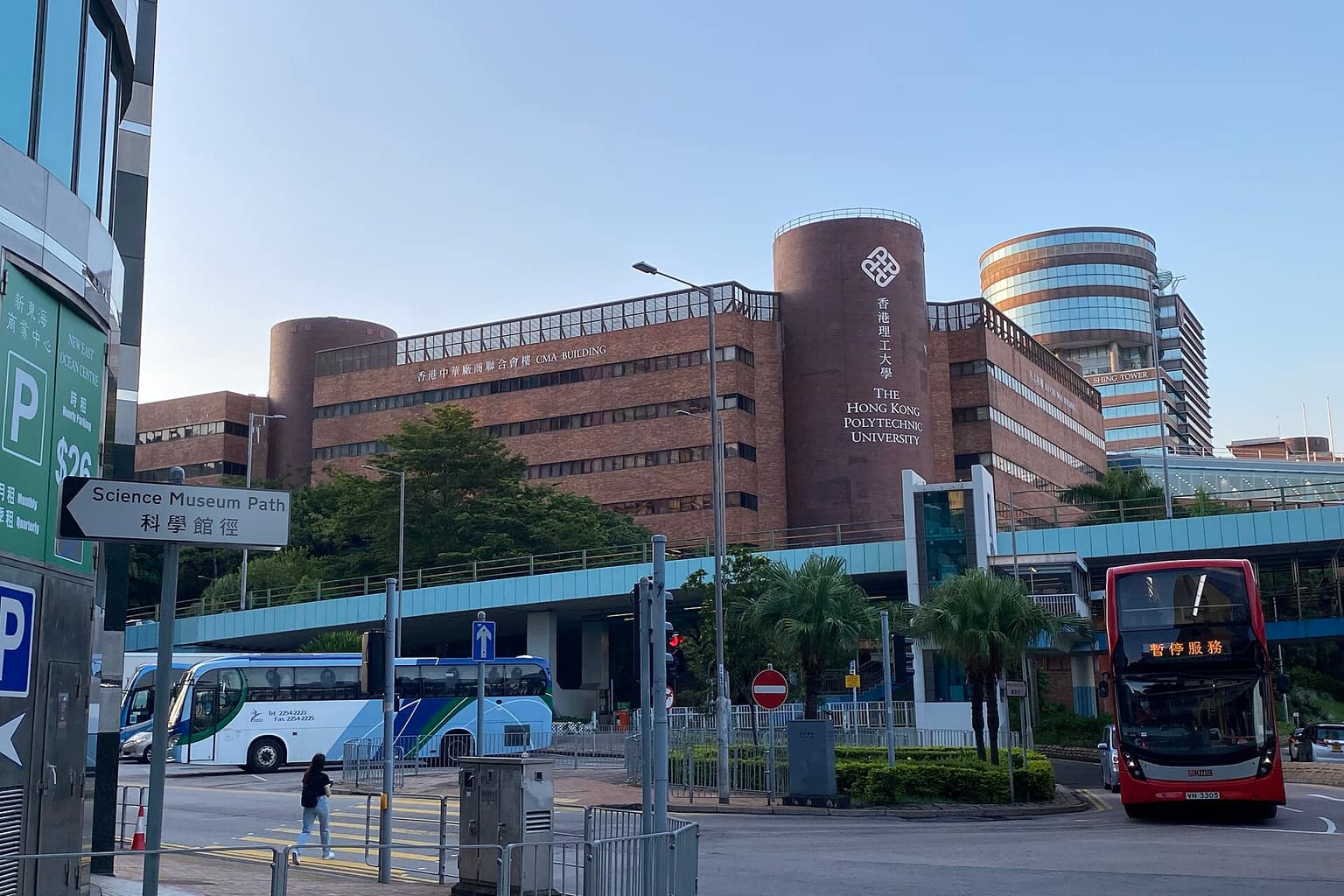
The sinking of the Titanic is the best-known case of cold brittleness, the failure that turns a metal from one that bends into one that breaks. Alloys that get stronger in the cold also tend to become more brittle, a trade-off the team set out to break. A research team led by Zibin Chen, assistant professor at Hong Kong Polytechnic University (PolyU), has now produced a metal that keeps 1.80 GPa of tensile strength and 50% tensile ductility at 77 K, about −196 °C.
The trick is what the team calls a 'negative-curvature interface' (NCI). Alloys contain tiny particles, called precipitates, dispersed in the metal. Chen's team changed the surface shape of these particles, so they no longer only block the metal's movement but also regulate how it deforms under load. As the metal is stressed, partial dislocations, small defects in its crystal structure, form and create layered stacking faults. These layers make the material harden as it deforms, and the team reports a fracture toughness of about 213 MPa·m¹/² with a yield strength of about 1.30 GPa.
A second study, also published in Nature Communications, takes a different route. The team combined additive manufacturing, commonly known as 3D printing, with specific post-processing to build a 'hierarchical nano-orderings' structure in a NiCoCr-based alloy. Its strategy activates dislocation sources one after another, so the material becomes stronger as it deforms.
What makes the first alloy more than a laboratory result, according to the team, is how it is made. The NiCoCr-AlTa alloy can be produced with conventional smelting, rolling and short-term aging, without complex new manufacturing methods. Chen said the approach applies to all precipitation-hardened alloys, including superalloys, age-hardening steels and aluminum alloys.
For aerospace, clean energy, superconducting systems and deep-space and deep-sea equipment, the gain is a stronger metal in extreme cold. The team says it will next validate industrial-scale samples, with the aim of commercial applications within the next 10 years. Until those samples are tested outside the lab, the results remain the team's own measurements at 77 K.
Sources — read the originals(Paris time)
Read next
Comments
Loading the thread…
Sign in to leave a comment. Sign in