Nuclear alloy V555 reaches an estimated 500–600 MPa
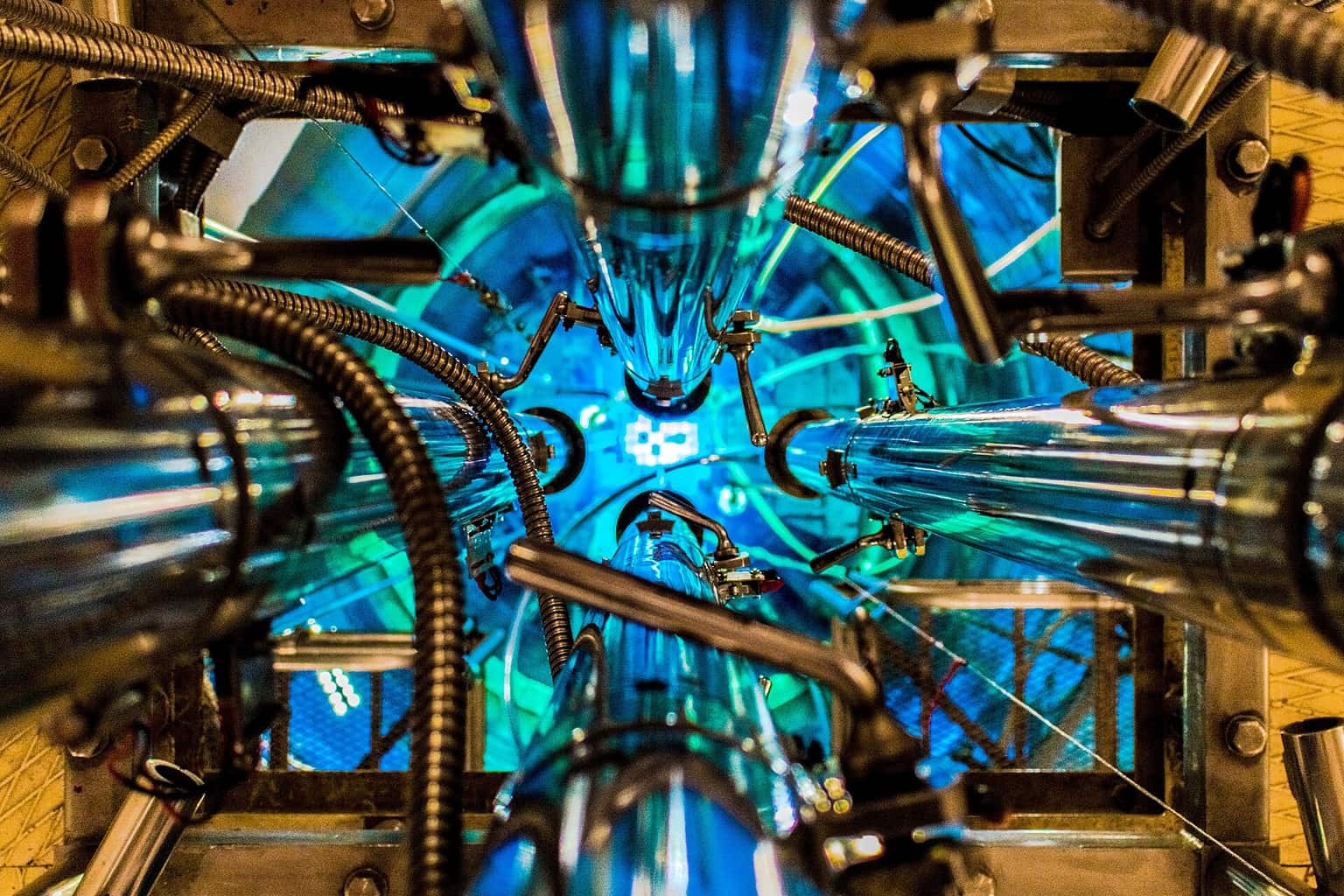
At the Pacific Northwest National Laboratory (PNNL), materials scientist Mohan Nartu uses an arc melter to make samples of a new alloy called V555. In initial room-temperature tests, its estimated yield strength, the stress a material withstands before it starts to deform permanently, reached 500 to 600 MPa. The megapascal (MPa) is the unit used to express that stress.
Reactor parts, including the cladding that encases nuclear fuel, have traditionally been made of steels or zirconium-based alloys such as Zircaloy. Changing a material usually means swapping one element for another, and Nartu describes the limit this creates: “you didn’t change the broth, so the soup is still old.” To go beyond it, the team built an eight-step process called robust alloy design (RAD). It checks candidate metals against requirements such as radiation resistance and manufacturability. It first identified around 724 promising compositions, then used a scoring system to rank them for suitability in reactors.
V555 was chosen for initial lab tests to see whether the computational approach works in practice. The team found that unused V555 can be recycled into additional samples without affecting their quality, which reduces material waste during experimental testing. These results have limits: they come from room-temperature tests, and the researchers say more are needed to confirm whether V555 can be used in nuclear reactors. The study has been published in the journal Materials & Design.
For reactor designers and the nuclear materials community, the change lies as much in the method as in the alloy. The team says it shows that elements can be chosen from scratch and a material systematically designed for nuclear applications, which opens a broader range of candidates to evaluate. The work was backed by the Department of Energy’s Office of Nuclear Energy through its Innovative Nuclear Materials program. No timeline for reactor use has been announced.
Next, the researchers will examine how V555 withstands heat, radiation and other reactor conditions. They will also test additional compositions identified through the RAD process.
Sources — read the originals(Paris time)
Read next
Comments
Loading the thread…
Sign in to leave a comment. Sign in