Leukemia's first mutation can appear over 50 years before diagnosis
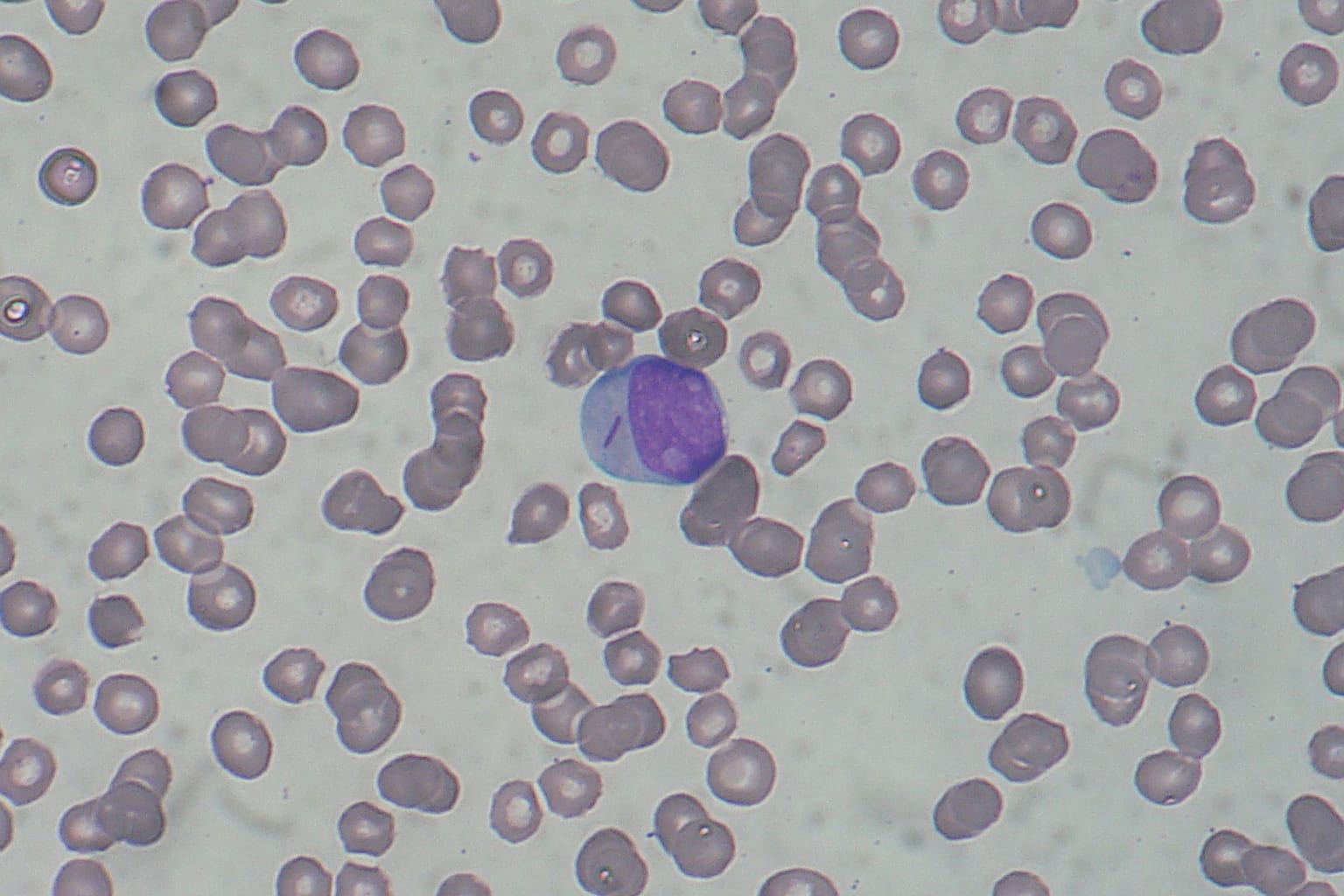
Blood samples stored for years, drawn once a year from women who would later develop leukemia, have let researchers at the University of Cambridge and University College London (UCL) rebuild how acute myeloid leukemia (AML), an aggressive blood cancer, grows over decades. In two-thirds of the cases studied, the first cancer-driving mutation had appeared before the age of 20, more than 50 years before diagnosis. The work, published in Nature, treats those archived samples as a 'fossil record' and reads it step by step.
The samples come from the UK Collaborative Trial of Ovarian Cancer Screening (UKCTOCS), a trial designed to test screening for ovarian cancer, in which around 50,000 women gave a blood sample every year. The team followed 47 women who later developed AML, at an average age of 72, and compared them with 46 matched women who stayed free of blood cancer. Using ultrasensitive DNA sequencing and mathematical modeling, they estimated when each mutation arose and how fast the affected cells multiplied and competed with other blood cells. The method matters because many healthy older people carry blood cells with mutations also found in leukemia, a condition called clonal hematopoiesis. Only a small share of them develop AML, and the process had never been tracked year by year in the run-up to diagnosis.
Growth was the surprise. The first mutation was followed by decades of slow expansion: cells carrying it took years to double in number. Each additional driving mutation sped growth up two- to threefold, and cells carrying four doubled in a matter of weeks. Once a clone was established, it expanded at a steady rate, slowing only when it ran out of room or was overtaken by a faster clone. That predictability means a clone's growth rate, measured from a few blood samples today, can estimate how large it may become years or decades later. In at least a third of the AML cases, one clone had come to dominate the blood years before diagnosis, a phenomenon the researchers call a 'somatic sweep'. No such sweep appeared in the women who stayed cancer-free. An analysis using UK Biobank data confirmed the link: people with these sweeps were at greatly increased risk of developing the disease. Standard genetic analysis often overlooks them, because it mistakes these mutations for inherited variants.
For the people who carry these clones, the study points to a window in which intervention could matter. Jamie Blundell, the Cambridge professor who led the work, said that because growth is exponential, slowing a high-risk clone even modestly over the decade or more before diagnosis could substantially reduce the chance it becomes leukemia. Caroline Watson, the first author and a hematologist, sees patients at the Cambridge Clonal Hematopoiesis Clinic at Addenbrooke's Hospital, the first clinic in Europe focused on leukemia prevention. She said the clinic already assesses and monitors people carrying these mutations, and that the findings could improve how it identifies those at greatest risk.
The limits are real. The 47 women were diagnosed between the ages of 53 and 83, and the study did not include samples taken at diagnosis. In around one in five cases, expanding populations of mutated cells were not detectable until one to two years before AML was diagnosed, which may mean a shorter warning period for those patients. An earlier bioRxiv preprint of the same work described 50 future AML cases and 50 age-matched controls; the published paper reports 47 and 46. A separate bioRxiv preprint, which analysed 212 women sampled a median of 9.8 years before diagnosis, carries a similar title claim that mutations predict AML years ahead.
Testing whether this can be achieved safely and effectively in people identified as high risk is the team's next step.
Sources — read the originals(Paris time)
Pages consulted while writing
Read next
Comments
Loading the thread…
Sign in to leave a comment. Sign in