Mercedes test EQS drives 1,205 km without recharging
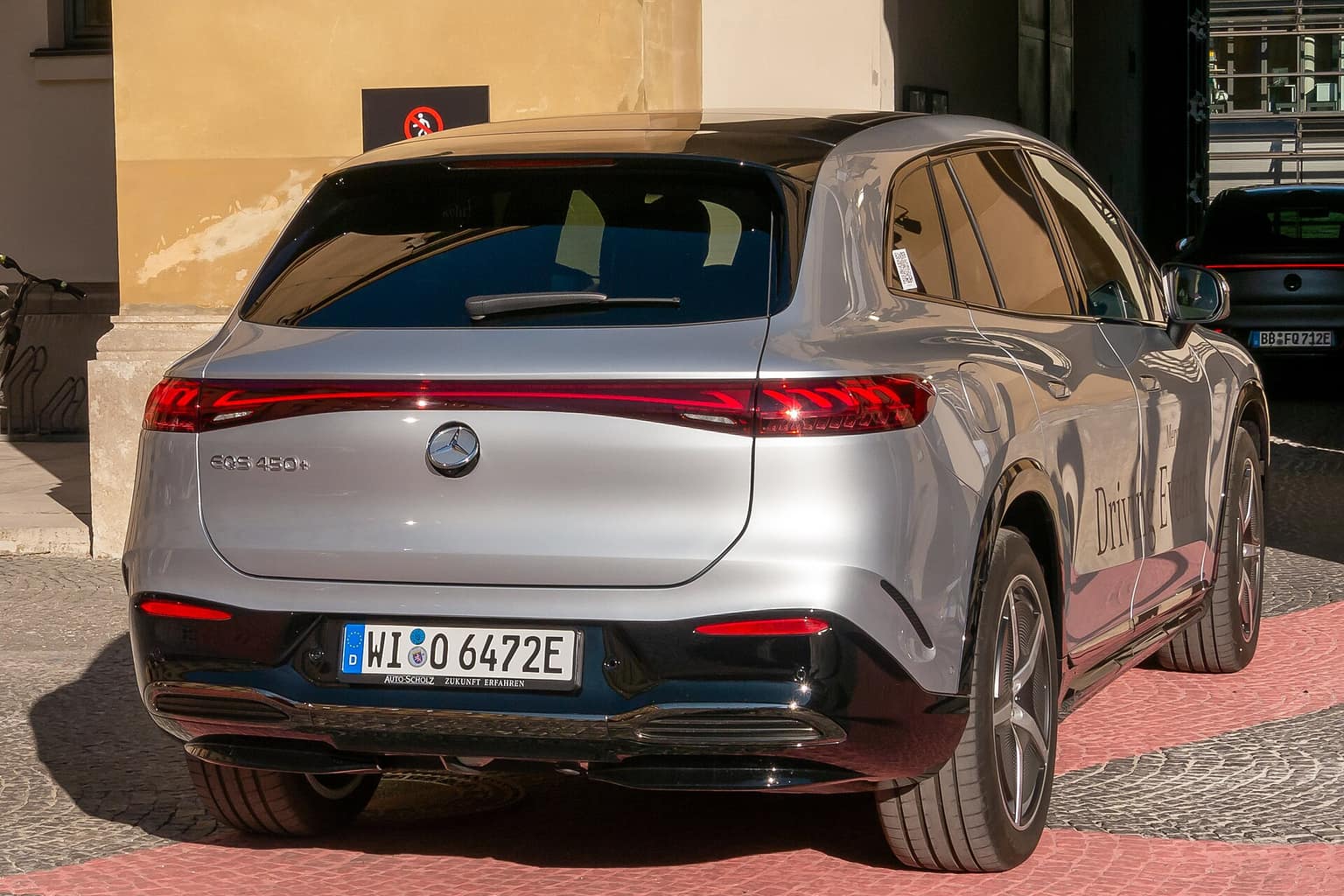
On a test drive from Stuttgart to Malmö, a development EQS covered 1,205 kilometres without recharging. Its battery was a lithium-metal solid-state cell developed with Factorial Energy, one of Mercedes-Benz's strategic partners. The car was a test vehicle, and the run is the clearest proof so far of what the company's solid-state work can do on real roads.
The company is also working on two manganese-based chemistries. The first combines lithium manganese oxide (LMO) with nickel manganese cobalt oxide (NMC), the cathode family used in many electric cars today. It uses a higher share of manganese and less cobalt and nickel, which, according to Mercedes-Benz, gives an attractive balance between energy density and cost. The second, lithium nickel manganese oxide (LNMO), would eliminate the need for cobalt and require significantly less nickel than today's NMC cells.
The key to LNMO is its high-voltage capability: these cells could operate at voltages of up to five volts. Compared with lithium iron phosphate (LFP) cells, range advantages of up to 30 percent may be possible at comparable weight and packaging space. These figures come from a press release, and they describe potential, not measured results on a production car.
Solid-state is where the programme is furthest along. Factorial's cell has been tested under real driving conditions in the EQS, and the 1,205 km run is that test. Mercedes-Benz is now investigating a next generation of solid-state cells with several partners, including ProLogium's next-generation cells. The focus is on extensive testing of Gen4 technology for performance, safety and thermal behaviour, to assess its potential for future series production. Cells from other partners and from in-house development are being tested too, with motorsport know-how from Formula 1 powertrain experts in the UK.
For drivers and designers, the gain is room. Mercedes-Benz aims for more compact and lighter battery systems that keep the same or higher performance, opening new options for vehicle design and interior layout. The manganese chemistries would also reduce reliance on critical raw materials, and in-house cell platforms let the company adapt faster to technological, market and regulatory change. The company has not announced a date for series production of any of these cells; the next step is the Gen4 testing now under way.
Sources — read the originals(Paris time)
Read next
Comments
Loading the thread…
Sign in to leave a comment. Sign in