Micro-LED hits 2.75 GHz in lab, a record for data center links
A light-emitting diode only 5 micrometers across now switches on and off at 2.75 GHz, a speed the team compares to that of computer processors, while drawing 25 milliwatts of power. The device is a gallium nitride micro-LED built by researchers at the University of Illinois Urbana-Champaign and the University of Notre Dame. In a paper published in IEEE Electron Device Letters, they describe it as a record for quantum well LEDs, the industry-standard design.
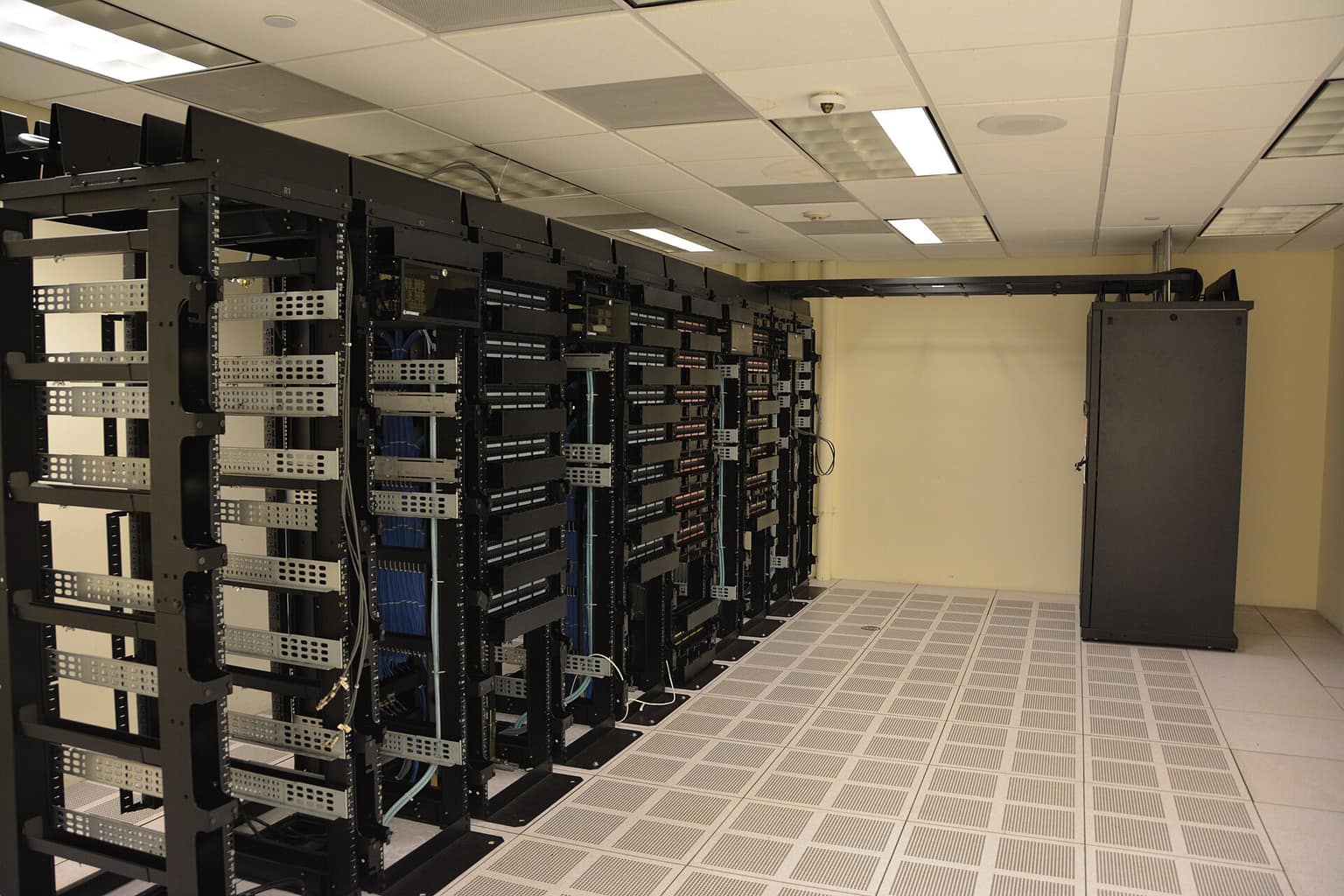
Inside a data center, most messages travel short distances: the team reports that 90 percent of communications there cover less than 10 meters, or 33 feet. For those links, the usual choice has been lasers, which can carry data at high frequencies but, as lead author Abdelghany Abouelnagga puts it, are power hogs. Unlike copper wires, optical links carry data as pulses of light without significant loss at high rates, so the question has been how to get a tightly controlled light source that is both fast and frugal.
The researchers measured how the bandwidth, which is how fast the LED can switch before its light loses brightness, and the power consumption change as the device shrinks. They went from 100 micrometers down to 2 micrometers in diameter. Smaller did not mean better: the best device was the 5-micrometer one. To build it, the team first modeled in detail the material imperfections that cause parasitic effects, which degrade performance. Certain nonstandard LED designs run faster, but they produce unstable, low-intensity light. The quantum well design, the team argues, combines bright light, high bandwidth and very low energy consumption.
The comparison with processors is one the researchers qualify themselves: processors and optical transmitters do different jobs. What it shows is how quickly a small light source responds on a small power budget. The 5-micrometer size also makes it possible to arrange many emitters into compact two-dimensional arrays, each carrying its own stream of data.
For data center operators, the gain would be measured in energy. The team hopes its design will outperform copper wires and even laser-based links for short-range communication, but it has not announced a commercial timeline, nor reported a field test in a data center. What the study establishes is a benchmark, a 5-micrometer gallium nitride micro-LED running at 2.75 GHz on 25 milliwatts, and a method for weighing size, bandwidth and power against one another. For a facility that moves most of its traffic over short distances, that trade-off is the one that matters.
Sources — read the originals(Paris time)
Read next
Comments
Loading the thread…
Sign in to leave a comment. Sign in