Midea's six-arm robot has fastened screws on 100,000 washing machines
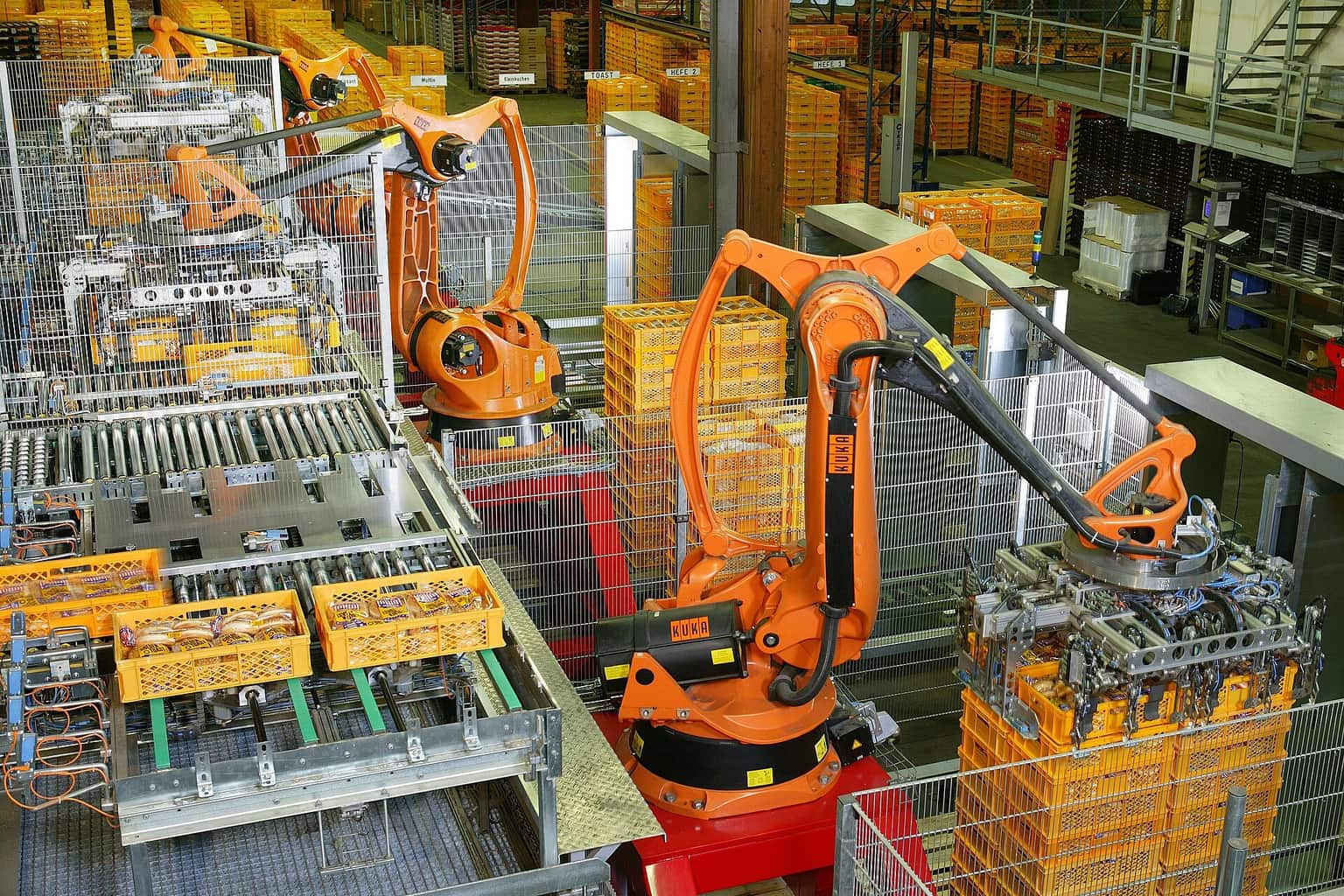
On the floor of Midea's washing machine plant in Wuxi, a six-armed robot has spent more than three months doing a task that used to belong to people: driving the screws that hold the back panel of a washing machine in place. The head of KUKA's embodied robotics innovation center, the German robot maker that Midea owns, says it has fastened back-panel screws on 100,000 machines so far. The figure was given during a media tour organised in mid to late October by the Guangdong Department of Industry and Information Technology.
Screwing is repetitive work. Midea says two-armed humanoids reach only around 30 percent of a worker's efficiency, which is not enough for an appliance production line. Putting six arms on one machine lets its output per square meter of floor space catch up with that of skilled workers. In the Midea Global Innovation Center lab in Shunde, Foshan, reporters watched MIRO U drive an average of six screws in about 10 seconds, with a reported task success rate of 99.8 percent.
MIRO U is the third generation of Midea's humanoid family, first shown in December 2025. It is a wheeled robot that can lift itself vertically and rotate 360 degrees on the spot. Midea follows what it calls an industry-first path: each robot is proven in the company's own plants, the washing machine sites in Jingzhou and Wuxi and a logistics warehouse in Wuhu, before it is offered to outside customers.
MIRO U is part of a wider push in Guangdong. As of September, more than 2,000 humanoid robots had been placed in manufacturing companies in the province this year and were running in real production settings, and the number is expected to pass 3,000 by year-end. At X Square Robot's Shenzhen headquarters, a two-armed robot flips parcels so their labels face up, sorting more than 1,800 packages an hour. Those are the company's and the province's figures, and they are not independently measured.
The gap between a demonstration and a shift on the line is still real. A Huayan Robotics executive said solutions that work well in simulation often lose accuracy in real workshops, where changing light, part variation, vibration, oil and cycle-time pressure all come into play, and executives still describe large-scale rollout as some way off. For appliance makers, the change is concrete: a robot that performs a repetitive assembly step at scale, inside a plant that has already run it, is a tool they could buy once Midea offers it. The next milestone is the one the province has set, with more than 3,000 humanoids working in Guangdong factories by the end of this year.
Sources — read the originals(Paris time)
Read next
Comments
Loading the thread…
Sign in to leave a comment. Sign in