Xiaomi humanoid robot works 8-hour shift on car factory line
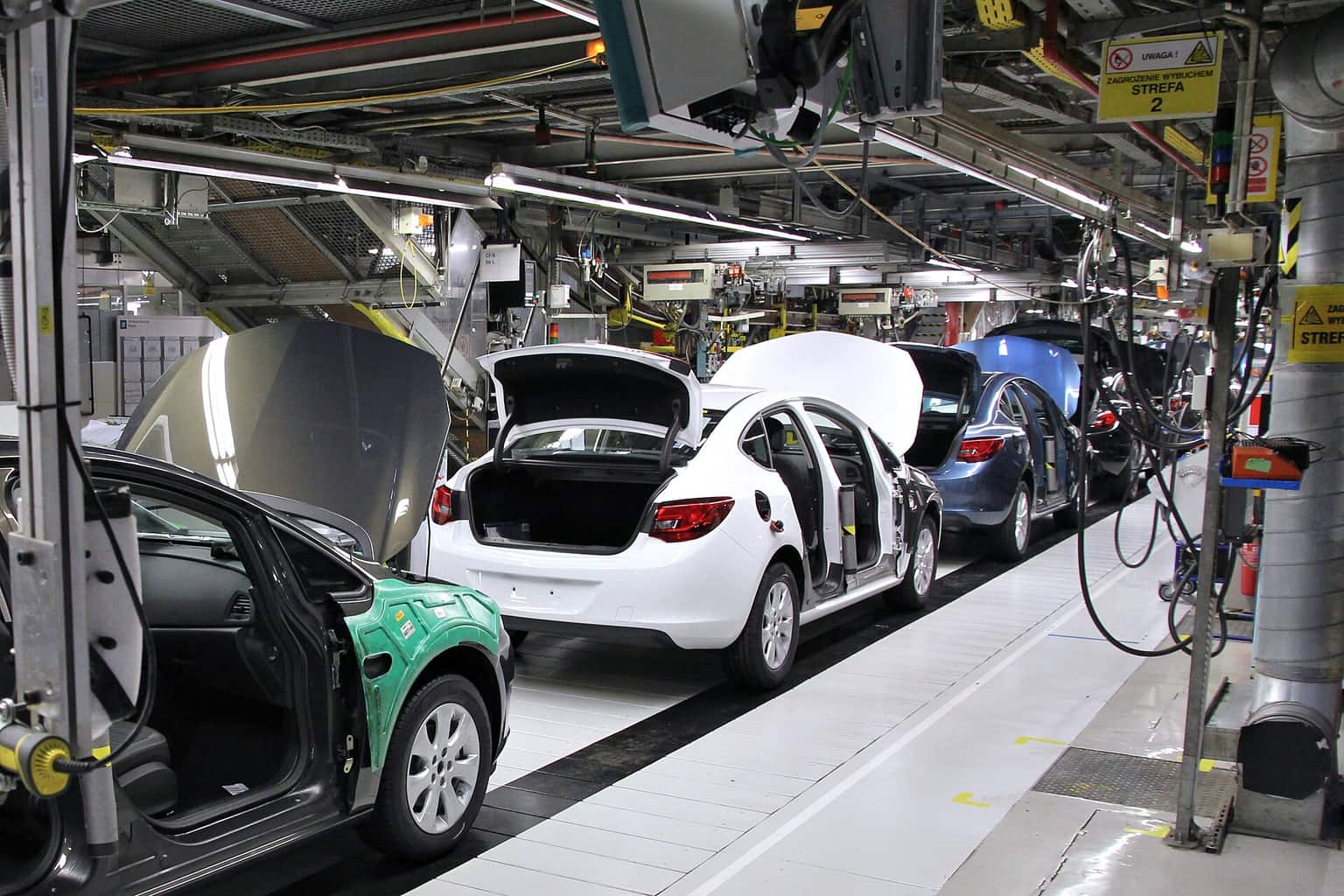
For the first time, according to Xiaomi, its humanoid robot has worked an eight-hour shift at its car factory, and the job was real production work: it covered the full daily production demand of the center console side-cover sorting station. Xiaomi disclosed the milestone at the 2026 World Internet Conference Wuzhen Summit, where its robotics team also received a Leading Technology Award for foundation model technology aimed at large-scale robot manipulation.
The shift is the latest stage of a factory internship that began in March. Then the robot worked three hours autonomously at a self-tapping nut loading station, with a 90.2% two-sided installation success rate and the line's 76-second cycle time to keep up with. By July that success rate had reached 98%, and the robot had taken on two more stations, side-cover sorting and bin folding. Xiaomi puts success rates across the three stations at 94% to 98%. During the eight-hour run, the robot corrected anomalies on its own and coordinated with production line systems. Xiaomi calls this a preliminary validation of line-level capability, not a finished deployment.
What makes this possible is a model that can be reused, not a routine written for one station. Xiaomi-Robotics-1 was pretrained on more than 100,000 hours of real-world manipulation trajectories spanning over 1,700 scenes and 260 task types, then post-trained on more than 10,000 hours of cross-embodiment data, meaning data gathered across different robot bodies, so it can be adapted to mobile manipulators and dual-arm robots. The same base now runs a second job. At a Xiaomi Youth Apartment, the company's rental housing for employees, engineers built an agent system on top of the model, covering data collection, model inference and task execution, and refined it over several rounds of post-training.
In a validation run, that system worked continuously for more than 30 minutes across three rooms and completed more than 50 tasks: preparing tools, tidying a sofa and tables, clearing trash, sorting items back into place, inspecting rooms, rechecking the whole unit and leaving. Xiaomi released a video that presents the run as a single 32-minute take. It is one run, filmed and published by the company, and Xiaomi has not said how many robots are involved in the apartment trial, which apartment hosts it, or how long it will last.
The benchmark figures come from Xiaomi as well. The company says Xiaomi-Robotics-1 ranked first overall on the RoboCasa 365 and RoboDojo leaderboards in July. Its separate vision-language-action model, a model that takes in images and language to drive a robot, is described by Xiaomi as reaching 80-millisecond inference latency on a consumer graphics card. Xiaomi presents the factory and the apartment as one model stack serving both industrial and household scenes, so the same base model is now being tested on a production station and inside a home.
Sources — read the originals(Paris time)
Read next
Comments
Loading the thread…
Sign in to leave a comment. Sign in