NASA's quiet supersonic X-59 reaches Mach 1.4 in a test flight
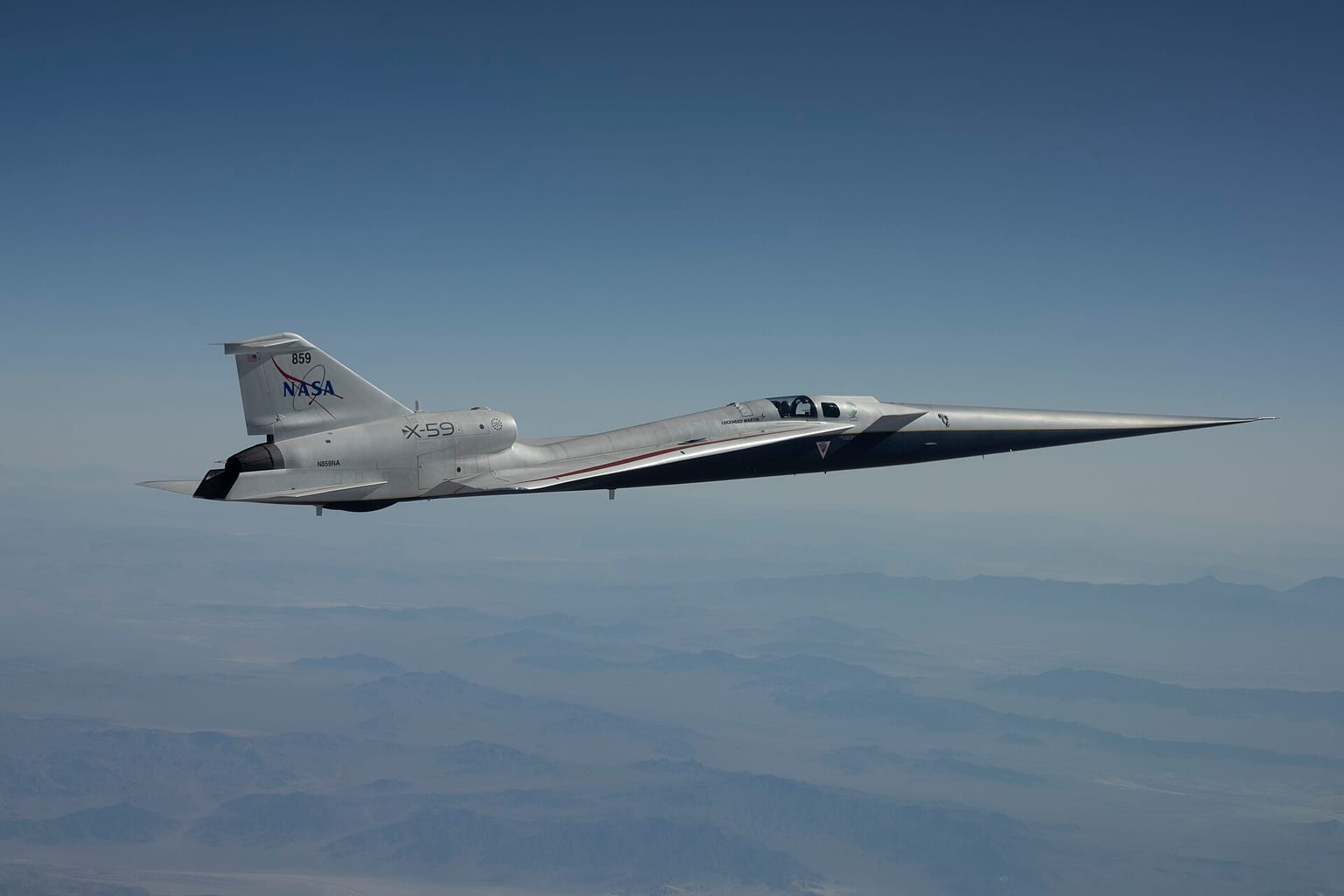
For nearly eleven years, test pilot Mike Lippert pushed high-performance aircraft to their limits, and one career milestone kept eluding him. He had never flown an X-plane. On October 21, he finally took control of NASA's X-59 quiet supersonic research jet, launching from NASA's Armstrong Flight Research Center in Edwards, California. The flight lasted exactly one hour. At its peak, the jet reached Mach 1.4 while cruising at 55,000 feet over the Mojave Desert.
"After completing our high-altitude test points, there was a brief period where we descended and decelerated, where I was able to look outside and recognize that I was flying supersonic in an X-plane over the high deserts of the Mojave," Lippert recalled. "It was a special moment for sure."
That moment rested on months of groundwork. Lippert trained with fellow NASA test pilots Nils Larson and Jim "Clue" Less, spent countless hours in ground simulators mapping every potential variable, and in August performed his first engine run from inside the cockpit, rehearsing communication routines with the mission control team. The jet had flown before, but this was its first flight with him at the controls, and he executed complex maneuvers to test its handling and system integrity.
The X-59 is built around one idea: making supersonic flight quieter. Its needle-like nose is designed to disperse shockwaves, which removes the need for a forward windshield. Pilots instead rely on an External Vision System that streams a virtual 4K forward view to a cockpit monitor. To shorten development time and cut costs, the aircraft reuses parts from established fighter jets, including a T-38 canopy and ejection seat and F-16 landing gear. A single General Electric F414 engine provides 22,000 pounds of thrust with afterburners.
What comes next is the real purpose of the program. Through NASA's Quesst mission, the X-59 will fly over US communities to measure how residents react to quiet supersonic sound, and researchers plan to pass those acoustic findings to aviation regulators so they can write noise standards based on data. For passengers, the payoff depends on that chain: the flight proved the aircraft can fly, but overland supersonic travel stays banned for now, and the evidence from community flights "could eventually" persuade authorities to lift that decades-old ban. No date for that decision has been announced.
Sources — read the originals(Paris time)
Read next
Comments
Loading the thread…
Sign in to leave a comment. Sign in