A supersonic airliner’s engine core runs for the first time
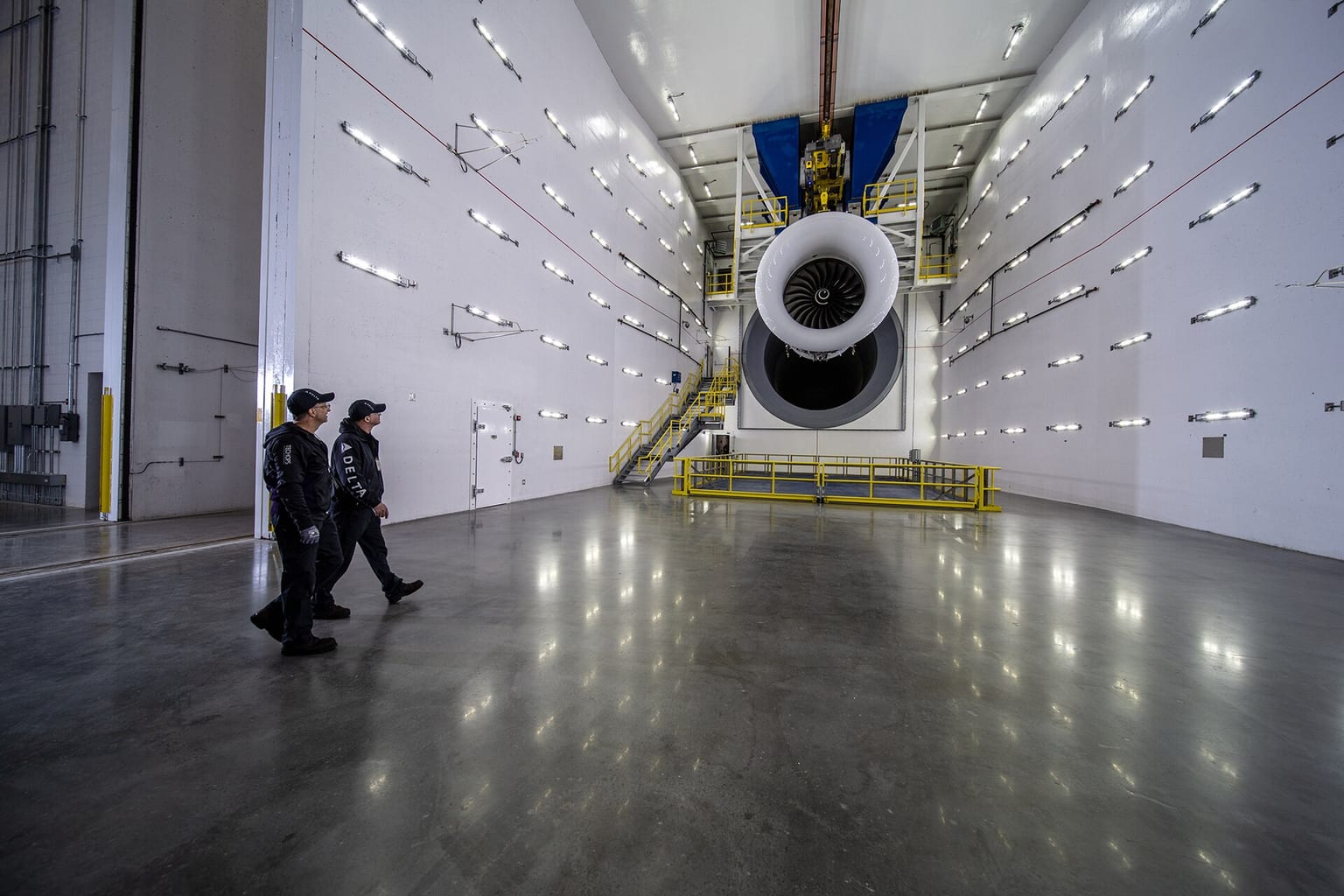
On 21 November, at the Colorado Air and Space Port in Watkins, east of Denver, the core of a new jet engine ignited for the first time. The run worked on the second attempt, and Boom Supersonic’s founder and chief executive, Blake Scholl, had put the odds of success below 50%. “We ran it up to 6,500 rpm,” he told Aviation Week. The run was deliberately short, and the company plans to push the core further over the next couple of months.
The core is the part that matters most. Boom is building it for two very different machines. The first is Overture, an airliner designed to cruise at Mach 1.7, meaning 1.7 times the speed of sound, or about 1,770 km/h, at 18,300 metres, with 60 to 80 passengers. The second is Superpower, a 42-megawatt gas turbine for AI data centres, which will get the core first. Boom has 130 orders and pre-orders for Overture from United, American Airlines and Japan Airlines.
The mechanism is simpler than the name suggests. A compressor squeezes the incoming air, fuel burns in it, and the hot gases drive a turbine that turns the compressor. In the airliner’s engine, called Symphony, that core sits behind a fan that produces about 40,000 lb of thrust. In Superpower the fan disappears: the hot gases spin a separate turbine connected to an electric generator. Boom says the two engines share more than 75% of their parts.
No passenger aircraft has flown faster than sound since Concorde retired in 2003. In 1977 Concorde flew from New York to London in just under 3.5 hours; the same trip now takes around 7 hours. In January 2025 Boom’s XB-1 demonstrator broke the sound barrier, and weeks later it did so without the boom being heard on the ground. But XB-1 flew on secondhand military engines. Boom decided to build its own in 2022, after Rolls-Royce, its engine partner since 2020, withdrew from the project. GE and Safran said they were not interested, and Pratt & Whitney said supersonic engines were not part of its plans.
The turbines are what pay for the airliner. AI data centres are hunting for power wherever they can find it, and many want their own gas turbines, while supply is short. In December 2025 Boom unveiled Superpower with a launch customer, Crusoe, which ordered 29 turbines for US$1.25 billion. That deal fell apart in September, and Crusoe told TechCrunch it would keep using turbines, “just not Boom’s.” Scholl says other customers will receive about 250 MW of turbines next year, without naming them. Boom plans to build 25 turbines a year by 2028 and 50 by 2029, with first deliveries in mid-2027.
The engine is still far from complete. The core is one piece: Boom has yet to add the fan and the low-pressure stages before it can test a full engine, which Scholl expects around the middle of 2027. The airliner’s timeline is slipping. Boom’s official target was 2029, but United’s chief executive, Scott Kirby, said in October that “it’s not going to happen in ’29 – it’s going to take longer.” Scholl later admitted on X that Overture “might be a year or two later than we hoped.” Published figures for Symphony’s thrust also differ, at 40,000 lb in one account and 35,000 lb in another.
What opens next is a set of dates. Boom expects the first Superpower turbine deliveries in mid-2027, the same period as the full-engine test. Scholl says Superpower’s operating and reliability data will feed Symphony’s development. A short run on the ground is a long way from a certified airliner, but for the first time the company has a core it has built itself and lit.
Sources — read the originals(Paris time)
Pages consulted while writing
Read next
Comments
Loading the thread…
Sign in to leave a comment. Sign in